

Off-road riders expect more from a dirt bike than strong acceleration. They want responsive handling, dependable engine performance, and a design that can handle changing trail conditions without making maintenance difficult. For dealers, distributors, and equipment buyers, these expectations also influence product selection and customer satisfaction. A well-designed High-Performance Gas Dirt Bike should balance engine output, frame strength, suspension response, and everyday usability. As a manufacturer, we focus on these practical details to help buyers select dirt bikes that meet different riding needs and market expectations.
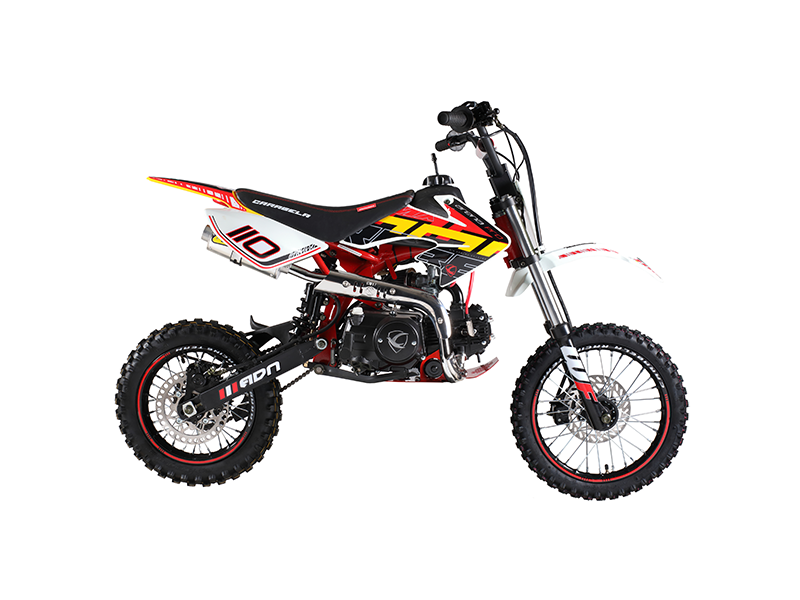
Engine performance directly affects how a dirt bike behaves on uneven trails, loose soil, and uphill sections. Riders need predictable power delivery rather than acceleration that feels difficult to control. When evaluating a gas-powered off-road motorcycle, buyers should consider engine displacement, cooling design, transmission configuration, and throttle response together.
A suitable engine setup helps riders maintain momentum while adapting to different terrain. For distributors, understanding these specifications also makes it easier to match models with beginner, recreational, and experienced riding markets.
Repeated riding over rocks, dirt tracks, and uneven ground places continuous stress on the motorcycle frame. A weak or poorly assembled structure can affect stability and increase maintenance requirements.
Our manufacturing process places attention on frame materials, welding quality, component alignment, and assembly consistency. Buyers should also check how the frame design supports the engine, suspension, and rider position. These details influence handling and long-term product reliability.
Suspension performance plays an important role in rider comfort and control. Front forks and rear shock absorbers need to work together to manage bumps, landings, and changes in ground conditions.
When comparing dirt bikes, buyers should pay attention to:
Matching these components to the intended riding environment helps avoid choosing a model that performs poorly in actual use.
Long riding sessions and demanding terrain can place additional demands on engine temperature management. Buyers should understand whether a model uses air cooling or liquid cooling and how its design supports regular maintenance.
Routine checks should include engine oil, air filters, spark plugs, chain tension, and brake components. A practical maintenance structure is important for both individual riders and dealers who need to provide after-sales support. Clear maintenance instructions can also reduce confusion for first-time owners.
Power alone does not determine riding quality. Braking response, handlebar positioning, footpeg placement, and seat ergonomics all affect how confidently riders operate a dirt bike.
Disc brakes, suitable tire grip, and a balanced riding position can support better control across different conditions. Buyers should also consider whether the model's size and seat height suit its intended rider group. Protective riding equipment and appropriate supervision remain essential, particularly for younger or less experienced riders.
Different markets have different expectations for gas dirt bikes. Some distributors focus on recreational trail riding, while others serve off-road enthusiasts looking for stronger engine performance and durable components.
Before placing a bulk order, business buyers should evaluate:
These considerations help distributors build a product range that reflects actual customer demand rather than relying on appearance or engine specifications alone.
For wholesale buyers, product consistency matters just as much as individual model performance. Differences in assembly, welding, component fitting, and final inspection can affect the ownership experience.
As a manufacturer, we pay attention to material selection, production assembly, functional testing, and finished-product inspection. We also understand that overseas distributors may require different model configurations depending on their target markets. Discussing product specifications, packaging details, and spare parts requirements before an order helps establish clearer expectations.
A carefully selected High-Performance Gas Dirt Bike should deliver a practical balance of engine response, structural durability, rider control, and maintenance convenience. By focusing on these factors, distributors and buyers can make more informed purchasing decisions and build a product range that addresses real off-road riding needs.

Start Your Off Road Journey
+86 158 6791 6333
xmotos308@gmail.com
No. 2, Jinniu Road, Niubeijin Village, Baiyang Street, Jinhua, Zhejiang, China


 English
 русский
 Español