

The Youth Electric Dirt Bike XB29ECT is a high-performance electric off-road motorcycle developed for trail riding, youth rider training, motocross practice, recreational venues, rental operations, and powersports distribution. It combines a brushless mid-mounted motor, removable lithium battery, long-travel suspension, hydraulic disc brakes, selectable riding modes, and deep-tread tires in a purpose-built dirt bike platform.
Unlike ordinary electric bicycles or entry-level recreational scooters, the XB29ECT is designed around the demands of uneven terrain. Its reinforced frame, motorcycle-style suspension, hydraulic braking system, and off-road wheel configuration are intended to support controlled riding on dirt tracks, trails, slopes, and other non-paved surfaces. The design also gives dealers and commercial buyers a flexible platform that can be configured for different riding abilities, regulations, and market requirements.
The stated maximum speed is 65–80 km/h, while the stated riding range is 50–80 km under suitable operating conditions. These figures can vary according to rider weight, terrain, riding mode, speed, temperature, tire pressure, and battery configuration. For B2B customers, the more important advantage is the combination of configurable performance, practical serviceability, and factory-supported customization.
This article examines the main features of the XB29ECT, its advantages over general-purpose electric two-wheelers, its potential applications, and the manufacturing strengths behind the product. It also provides a technical comparison framework, purchasing guidance, and answers to common questions from dealers, distributors, training centers, and commercial fleet operators.
The XB29ECT is developed as an electric dirt bike rather than a road bicycle with an enlarged motor. That distinction is important. Dirt riding places repeated loads on the frame, suspension, wheels, brakes, drivetrain, and electrical system. Riders may encounter loose soil, rocks, ruts, jumps, steep inclines, and sudden changes in traction. A product designed only for paved streets may not provide the structural strength or control needed for these conditions.
The XB29ECT addresses these requirements through a motorcycle-style layout. Its brushless mid-mounted motor is positioned close to the center of the vehicle, helping create a balanced chassis and direct power delivery. Central motor placement can also support improved weight distribution compared with hub-motor designs, especially when the motorcycle is used on uneven ground or during cornering.
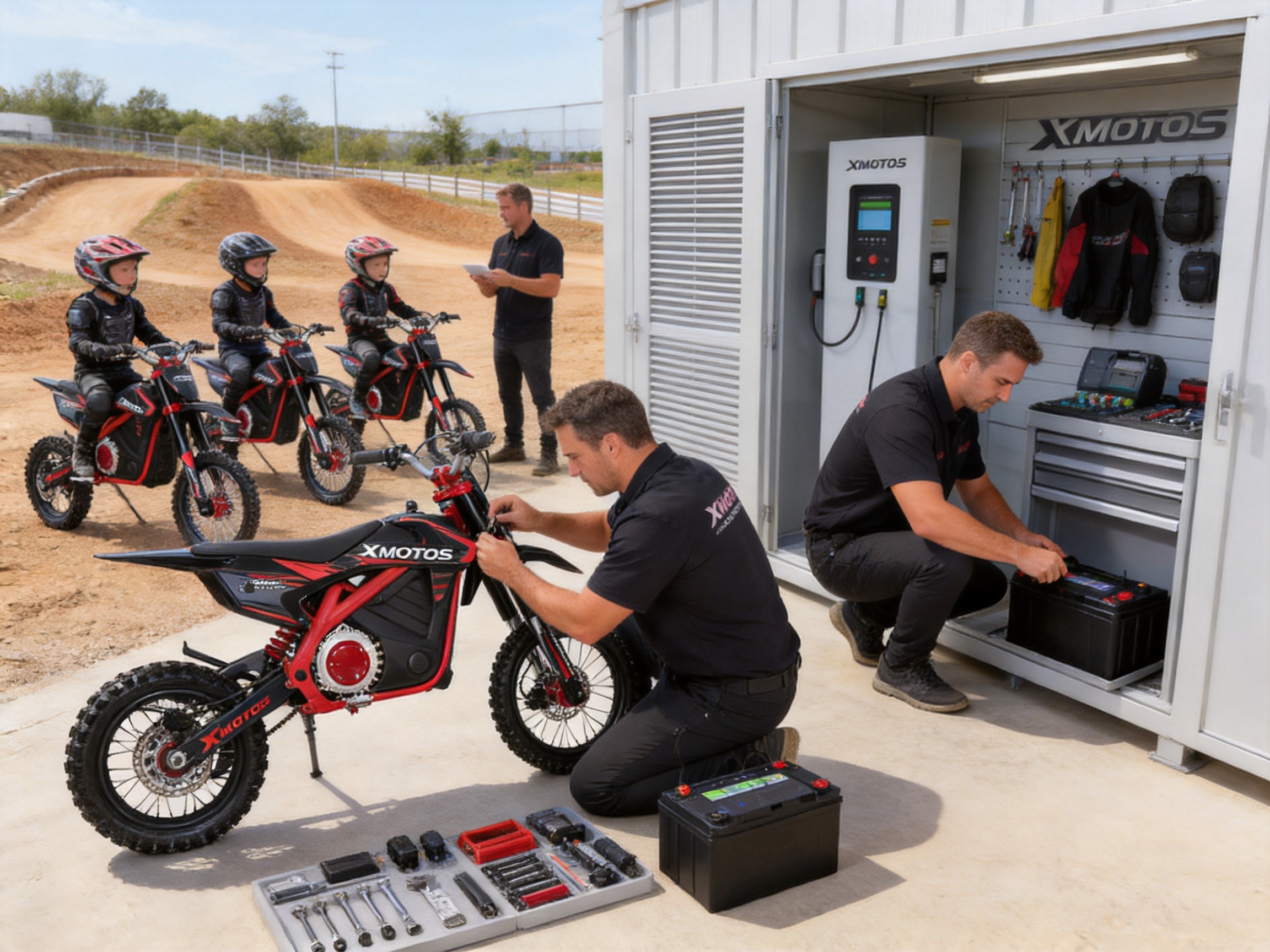
The removable lithium battery adds practical value for both private riders and business operators. A removable battery can be charged away from the motorcycle, making it easier to serve facilities that do not have convenient charging stations beside the riding area. Rental companies and training centers may also benefit from maintaining additional battery packs, allowing a vehicle to return to service more quickly after a battery change, subject to the approved operating and charging procedures.
Electric drive also provides a quiet riding experience compared with gasoline-powered dirt bikes. Lower operating noise is useful for training facilities, camps, tourist venues, and recreational properties located near residential areas or environmentally sensitive spaces. Electric propulsion can make communication between instructors and riders easier, particularly during beginner training sessions.
The product is therefore positioned between basic recreational electric bikes and full-size competition motorcycles. It offers a more substantial off-road platform than a typical electric bicycle while maintaining the smooth, low-noise operation associated with electric power.
The following table summarizes the supplied technical information for the XB29ECT. Exact specifications may vary by configuration, destination market, and approved production version. Buyers should confirm final values before placing an order.
| Specification | Supplied Information | Practical Significance |
|---|---|---|
| Product name | Youth Electric Dirt Bike XB29ECT | Purpose-built electric off-road motorcycle for youth and recreational applications |
| Motor | Brushless mid-mounted motor | Centralized weight distribution and responsive off-road power delivery |
| Peak power | 4–6 kW | Suitable for trail riding, training, slopes, and recreational performance |
| Battery | 60–72 V lithium battery, 30–35 Ah | High-voltage electric system with removable battery configuration |
| Charging time | Approximately 4–6 hours | Practical overnight or scheduled fleet charging |
| Stated range | 50–80 km | Useful operating distance for training, recreation, and rental applications |
| Stated maximum speed | 65–80 km/h | Provides a broad performance range for off-road applications |
| Riding modes | Beginner, Standard, Sport | Allows performance adjustment for different rider experience levels |
| Vehicle weight | Approximately 60–80 kg | Supports maneuverability while providing a substantial motorcycle platform |
| Seat height | Approximately 85–90 cm | Suitable for youth and shorter riders depending on rider height and experience |
| Front suspension | 780 mm front fork | Long-travel configuration for uneven terrain and impact absorption |
| Rear suspension | 310 mm rear shock absorber | Supports traction and control over bumps, ruts, and rough ground |
| Tires | 17-inch front and 14-inch rear deep-tread tires | Designed for dirt tracks, trails, and loose surfaces |
| Brakes | Front and rear hydraulic disc brakes | Responsive braking control in demanding off-road conditions |
| Frame | Lightweight reinforced frame | Balances structural strength, durability, and maneuverability |
| Certifications and documents | ISO9001, CE, EPA, DOT, and COC-related documentation listed | Documentation should be confirmed for the precise configuration and destination market |
The brushless mid-mounted motor is one of the product’s most important design features. A mid-mounted motor transfers power through the central drivetrain area rather than placing the primary drive unit inside the wheel hub. This configuration helps keep the unsprung weight of the wheels lower and can improve the way the suspension responds to uneven terrain.
For off-road riding, predictable torque is often more valuable than simply having a high top speed. Riders need controlled acceleration when exiting corners, climbing inclines, crossing loose soil, or navigating technical sections. The stated 4–6 kW peak output gives the XB29ECT a performance range suitable for recreational trail riding and structured training applications.
The motor’s brushless design is also well suited to repeated use. Brushless motors generally operate without the mechanical brushes used in older motor designs, reducing one source of wear and maintenance. The actual service life will depend on cooling, loading, water exposure, riding conditions, and maintenance practices, but the architecture is appropriate for a modern electric dirt bike.
Compared with a basic hub-motor electric bike, the central motor layout can provide a more motorcycle-like riding feel. The rider experiences propulsion from the central chassis area, while the wheels remain focused on maintaining contact with the ground. This can be particularly useful when the bike is ridden over bumps, berms, and uneven surfaces.
For distributors, motor configuration is also an important customization point. The supplied information indicates that motor power, battery specifications, voltage, and speed-limit settings may be adjusted for different markets and projects. A dealer serving beginner riders may request a softer power delivery and lower speed limit, while a training facility or experienced recreational market may require a higher-performance configuration.
The XB29ECT uses a 60–72 V lithium battery with a stated capacity of 30–35 Ah. The battery is removable, which provides flexibility for charging, storage, service, and fleet management. Lithium battery systems are widely used in modern electric vehicles because they offer a useful balance between energy density, weight, and available power.
The stated range of 50–80 km should be treated as an operating estimate rather than a guaranteed distance. Actual results depend on numerous factors. A rider traveling at high speed on soft ground will use more energy than a rider traveling at moderate speed on a firm trail. Rider weight, elevation changes, tire pressure, ambient temperature, battery age, acceleration frequency, and riding mode can all affect range.
The three riding modes help operators balance performance and energy consumption. Beginner mode can be used for introductory lessons or lower-speed activities. Standard mode can support ordinary trail riding, while Sport mode can provide a more responsive experience for experienced riders where permitted and appropriate. This flexibility is a practical advantage over fixed-output recreational models.
Removability also simplifies charging logistics. A private user may remove the battery and charge it in a suitable indoor location according to the manufacturer’s safety instructions. A rental operator may establish a dedicated charging area where batteries are inspected, charged, labeled, and stored between sessions. Commercial buyers should develop written battery procedures covering charging supervision, storage temperature, inspection, transport, and end-of-life handling.
Before purchase, buyers should confirm the exact battery chemistry, charger specifications, connector type, protection system, replacement cost, warranty terms, and transportation documentation. They should also verify whether the desired battery configuration complies with the regulations of the destination market.
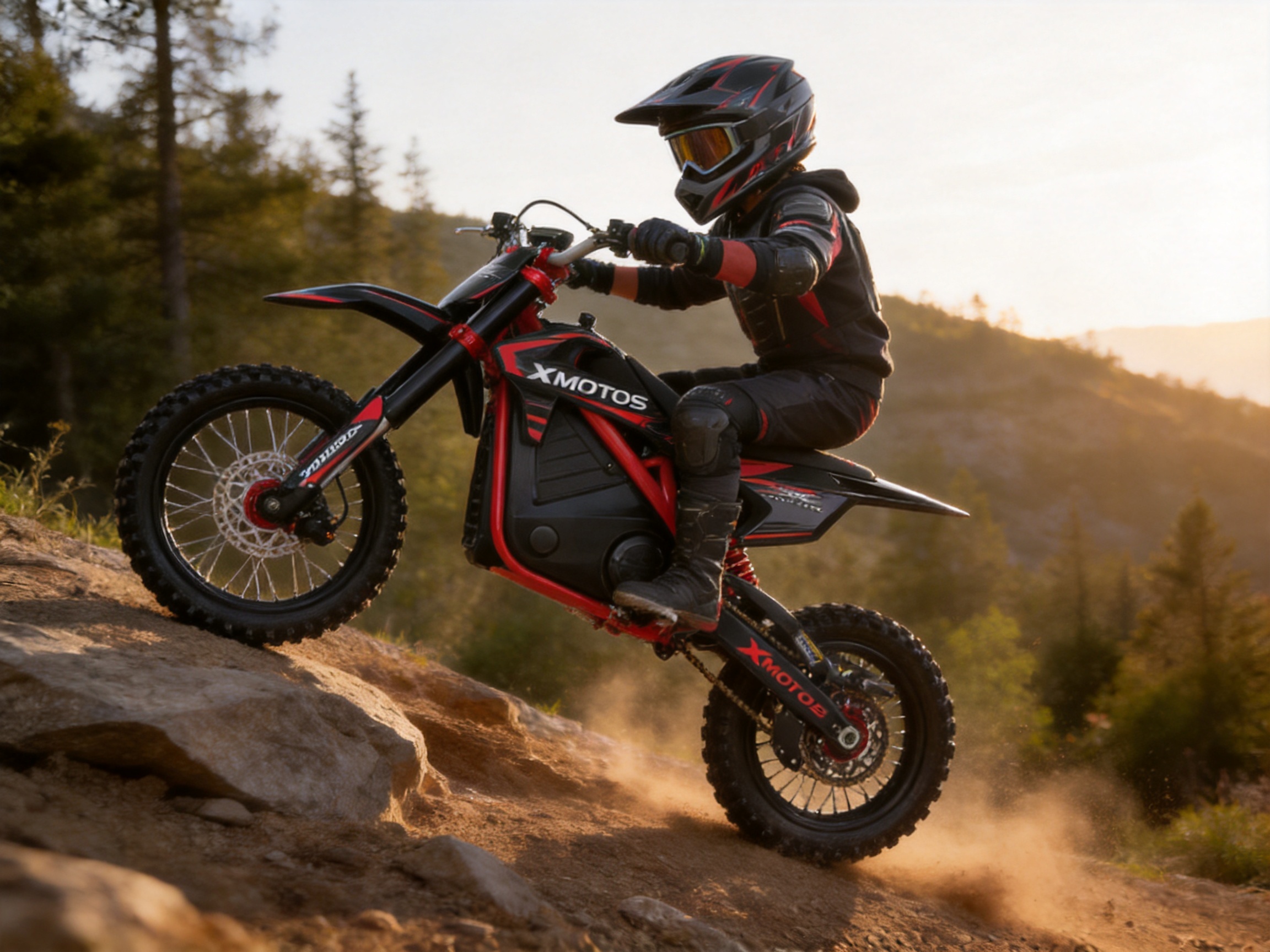
Off-road capability depends heavily on suspension performance. The XB29ECT is specified with a 780 mm front fork and a 310 mm rear shock absorber, with an adjustable option available. These figures describe a long-travel suspension arrangement intended to help the bike absorb bumps and maintain tire contact with the ground.
A long-travel fork can reduce the effect of impacts transmitted to the handlebar and chassis. On a dirt trail, the front wheel may encounter stones, ruts, roots, or abrupt changes in elevation. The suspension allows the wheel to move through part of this terrain while helping the rider maintain steering control.
The rear shock absorber works with the frame and rear wheel to support traction. Maintaining contact with the surface is important during acceleration, braking, and cornering. A well-configured rear suspension system can help reduce bouncing and improve rider confidence, although setup must always be adjusted to the rider’s weight, terrain, and intended use.
The adjustable suspension option is particularly useful for B2B buyers. A training center may need a comfortable setup for repeated low- to medium-speed riding. A motocross-oriented customer may request a firmer configuration. A rental operator may prefer a durable general-purpose setting that can accommodate a broad range of riders.
Dealers should ensure that customers understand suspension adjustment and maintenance. Fork seals, shock components, fasteners, and mounting points should be inspected regularly. Mud and dust should be cleaned from moving parts, and any unusual leakage or loss of damping should be addressed before further riding.
The XB29ECT uses front and rear disc brakes with hydraulic calipers. Hydraulic braking systems are widely favored for performance motorcycles because they can provide strong, progressive control with relatively low lever effort. This is beneficial when a rider must reduce speed on a slope, approach a corner, or respond to changing trail conditions.
Having disc brakes at both ends allows the rider to manage braking balance according to the terrain. The front brake contributes substantial stopping force, while the rear brake helps stabilize the bike and control speed on loose or uneven surfaces. Riders should receive appropriate instruction because abrupt braking on low-grip terrain can cause wheel lock or loss of control.
Brake performance depends on correct adjustment, pad condition, rotor condition, hydraulic fluid condition, tire grip, and rider technique. Commercial operators should include brake inspection in every pre-ride check. Any damage, unusual noise, fluid leakage, soft lever feel, or reduced braking performance requires immediate attention.
Compared with simple mechanical braking systems commonly found on entry-level electric bicycles, hydraulic disc brakes are more appropriate for a motorcycle intended to reach the stated speed range and operate on demanding surfaces. They support the broader purpose-built design of the XB29ECT.
The 17-inch front and 14-inch rear deep-tread tires are configured for off-road riding. The different wheel sizes support the handling characteristics expected from a dirt bike, with the front wheel helping the motorcycle roll over irregularities and the rear wheel contributing traction and acceleration.
Deep tread patterns can provide additional grip on dirt, loose soil, and mixed trail surfaces. However, tire performance always depends on the specific terrain and tire pressure. Tires designed for soft dirt may behave differently on hard-packed surfaces, gravel, wet ground, or paved roads. Operators should use the tire type and pressure recommended for the approved application.
The lightweight reinforced frame is another central feature. An off-road frame must balance several competing requirements. It needs enough strength to withstand repeated impacts and torsional loads, yet excessive weight can make the motorcycle difficult for youth riders to control. The stated vehicle weight of approximately 60–80 kg reflects a platform intended to remain manageable while offering more substantial structure than a lightweight electric bicycle.
Frame geometry, component placement, seat height, and steering position all influence rider confidence. The stated seat height of 85–90 cm may suit many youth and shorter adult riders, but suitability must be assessed according to the rider’s height, inseam, strength, and experience. A rider should be able to control the motorcycle safely before using higher-speed modes.
The Beginner, Standard, and Sport riding modes give the XB29ECT a useful advantage for training and shared-use environments. A fixed-performance motorcycle may be unsuitable for a facility serving riders with widely different abilities. Adjustable modes allow the operator to establish a more gradual learning path.
Beginner mode can be used for initial orientation, low-speed practice, braking exercises, turning drills, and basic trail familiarization. It may also be appropriate for younger or less experienced riders, subject to the facility’s safety policy and local requirements.
Standard mode can serve as the primary setting for ordinary recreational use. It provides a balance between acceleration, speed, and energy consumption. Many dealers may use this mode during product demonstrations because it can show the motorcycle’s capabilities while remaining more manageable than the highest setting.
Sport mode is intended for experienced riders and suitable terrain. It can provide stronger response and a more energetic riding experience. Operators should not assume that Sport mode is appropriate for every rider simply because the rider has completed a basic lesson. Experience, physical control, protective equipment, terrain, and local operating rules must all be considered.
For fleet operators, selectable modes can also support risk management. The operator may limit new riders to Beginner mode, authorize Standard mode after a skills assessment, and reserve Sport mode for approved sessions. The exact operation of the modes and any speed limitation should be verified in the final vehicle documentation.
The XB29ECT has several advantages over general-purpose electric bicycles, scooters, and lightly equipped electric recreational bikes. The first is its purpose-built off-road chassis. Its long-travel suspension, reinforced frame, motorcycle-style tires, and hydraulic disc brakes are selected for terrain that would be unsuitable for many urban electric vehicles.
The second advantage is performance integration. The motor, battery, suspension, brakes, and riding modes are designed as parts of one off-road platform. A general-purpose electric bicycle may have a powerful motor but lack sufficient suspension travel or braking capacity. Alternatively, it may have acceptable tires but a frame and drivetrain intended mainly for paved roads.
The third advantage is commercial flexibility. The XB29ECT can be ordered with different motor power, battery specifications, speed-limit settings, graphics, lighting, instruments, and protective components. This makes it more adaptable for dealers and organizations that need a product aligned with a particular customer group or operating environment.
The fourth advantage is quiet electric operation. Compared with a gasoline dirt bike, the XB29ECT can reduce noise during training and recreation. Electric drive also removes the need for gasoline storage and routine engine oil changes. These differences may simplify certain operating environments, although the motorcycle still requires regular inspection and technical maintenance.
The fifth advantage is the removable battery. The feature supports flexible charging arrangements and can be valuable where a fleet is operated across a large property or where motorcycles are stored away from electrical outlets.
These advantages do not mean the XB29ECT is suitable for every purpose. Buyers must consider local laws, age restrictions, safety requirements, insurance, rider training, terrain, and maintenance capability. The vehicle should be used only in approved environments and within the limits of its final configuration.
Training facilities can use the XB29ECT as a progressive learning platform. The Beginner mode supports initial instruction, while Standard and Sport modes provide opportunities for more advanced riders. The low-noise powertrain allows instructors to communicate more easily than they might around a group of running gasoline motorcycles.
Training programs should include control familiarization, protective equipment, braking practice, throttle management, turning, hill techniques, obstacle awareness, and emergency procedures. Riders should be assessed before moving to higher performance settings.
The motorcycle’s suspension, tires, mid-mounted motor, and hydraulic brakes make it suitable for selected motocross and practice environments. Track operators should confirm that the surface, jumps, rider skill level, and motorcycle configuration match the intended use. A standard recreational configuration should not automatically be treated as a professional competition specification.
For performance-oriented customers, the supplied customization program may include suspension setup, motor and battery specifications, speed settings, graphics, and protective equipment. Final suitability should be confirmed through testing and technical review.
Outdoor camps and adventure venues may use electric dirt bikes for guided trail experiences, skill-building activities, and supervised recreation. The quiet operating profile can be useful when the venue is located near accommodation areas or natural attractions.
Venue operators should establish rider eligibility rules, route classifications, charging procedures, emergency response plans, and maintenance schedules. A fleet should be inspected before every session, with special attention to brakes, tires, controls, fasteners, battery condition, and suspension components.
Rental companies require products that are easy to explain, practical to maintain, and adaptable to different rider abilities. The XB29ECT’s riding modes and removable battery can support these requirements. A rental operator may also request spare-parts packages, additional battery units, branded graphics, and protective components.
Rental fleets should maintain detailed records for each vehicle. Records may include battery cycles, service dates, damage reports, tire replacement, brake inspection, and rider incidents. Clear pre-rental training is essential, and operators should never allow riders to exceed the approved route or vehicle limits.
For powersports dealers, the XB29ECT can complement gasoline dirt bikes and other electric off-road products. It offers a lower-noise alternative for customers seeking trail performance without a conventional fuel-powered engine. Dealers may position it for youth riders, families, training programs, recreational users, and organizations developing electric mobility activities.
Distributors can also use OEM and ODM services to create market-specific versions. Branding, color, graphics, speed settings, lighting, instruments, battery capacity, and accessory packages can be adapted according to the project.
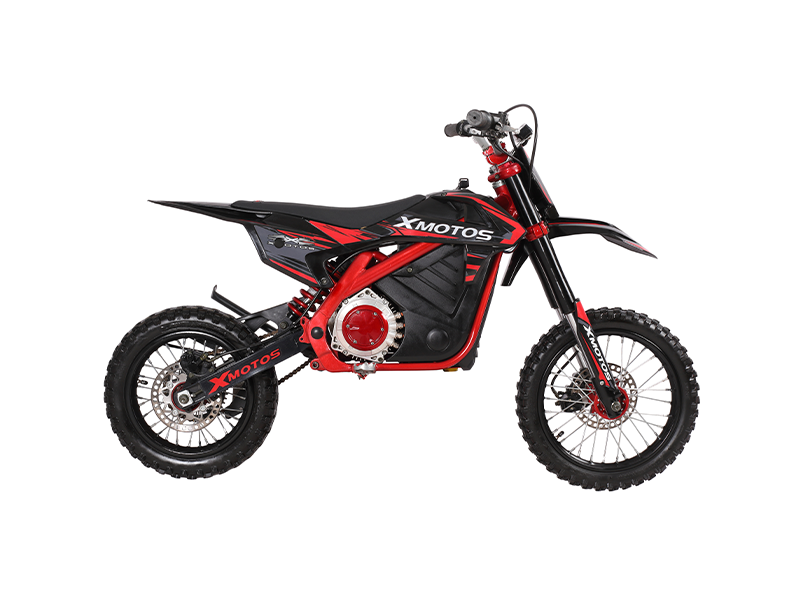
Youth Electric Dirt Bike XB29ECT
The manufacturer behind the product operates as a Chinese off-road motorcycle factory and exporter serving dealers, distributors, and importers. Its business is centered on gas and electric dirt bikes, ATVs, and trials bikes, with OEM and ODM support for international customers.
The company’s manufacturing identity is based on dedicated off-road production rather than general consumer bicycle assembly. This specialization is relevant because off-road motorcycles require different engineering priorities from urban bicycles or ordinary commuter vehicles. Frame strength, suspension durability, wheel alignment, braking, plastics, powder coating, assembly accuracy, and dynamic testing all affect the final riding experience.
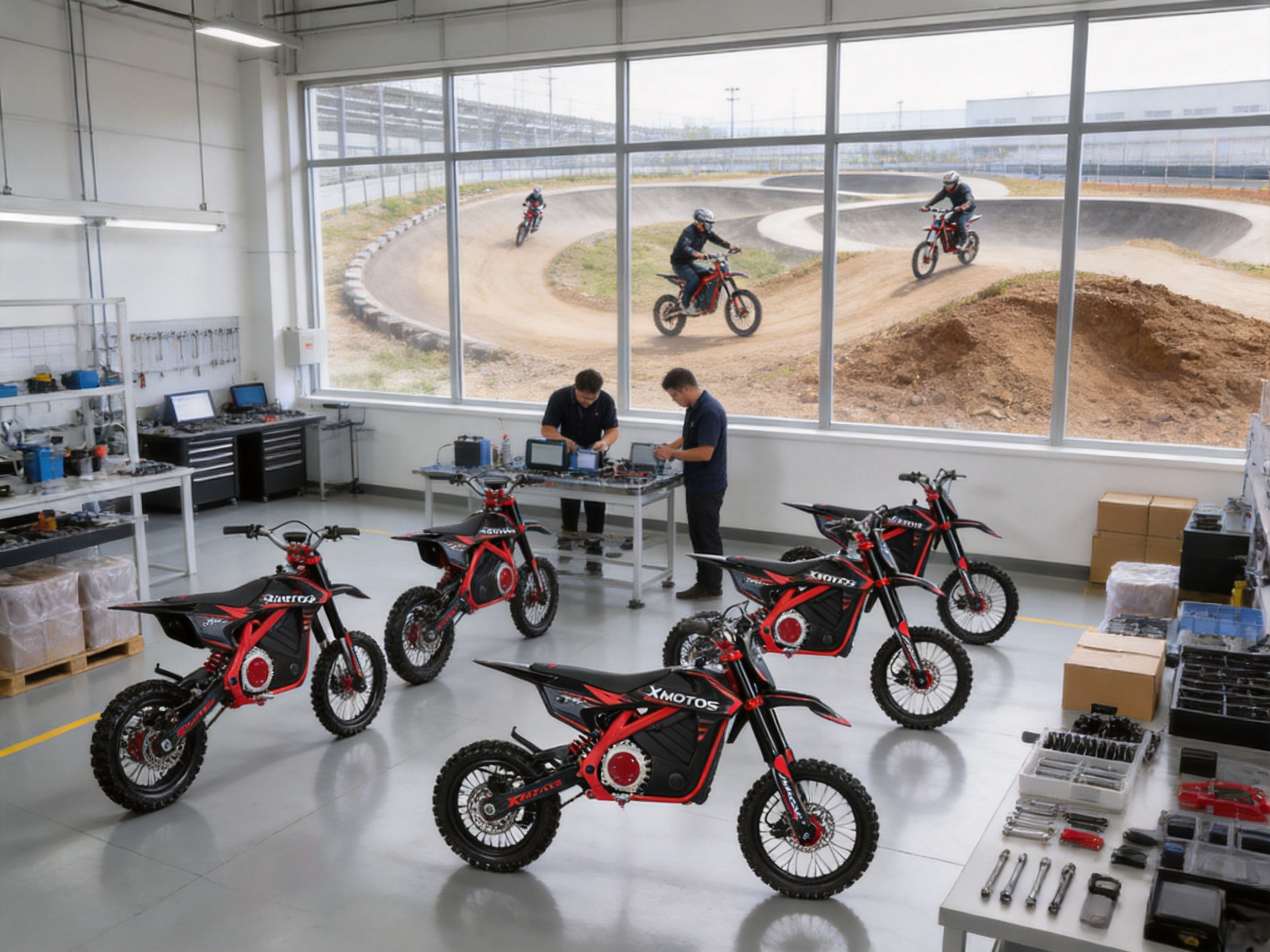
The supplied company information states that the factory employs approximately 220 experienced staff and operates across more than 60,000 square meters. It also has its own professional test track. A dedicated test track can support development, validation, setup testing, and performance checks under controlled off-road conditions.
The company also states that it produces core components such as frames and plastic body parts in-house. Vertical integration can provide several potential advantages. It can improve control over material specifications, component fit, production scheduling, and quality consistency. It may also make it easier to implement design revisions and manage OEM projects requiring specific colors, logos, graphics, or structural changes.
In-house powder coating supports control over surface preparation, color application, coating thickness, and finish consistency. For off-road motorcycles, the finish is more than a visual feature. Proper coating can help protect metal components from environmental exposure, though it does not eliminate the need for cleaning and maintenance after riding in mud, water, or corrosive conditions.
Assembly, testing, and quality inspection are also handled within the company’s manufacturing system. The supplied information states that every motorcycle undergoes end-to-end quality inspection and dynamic performance validation. This process is important because a motorcycle’s real performance depends on how its individual components work together. Static inspection alone may not reveal steering issues, brake behavior, suspension problems, electrical faults, or unusual vibration.
For international buyers, factory integration can simplify communication. Instead of coordinating separate suppliers for frames, plastics, coating, assembly, and testing, a buyer can work with one manufacturer for a broader project. This may help reduce complexity during product development, although all commercial, technical, and quality terms should be documented in the purchase agreement.
The XB29ECT is available for OEM and ODM customization. OEM service generally allows a buyer to sell a factory-produced product under its own brand, while ODM service may involve a deeper level of product adaptation. The precise scope depends on order quantity, engineering requirements, tooling, market regulations, and production planning.
Possible customization areas include motor power, battery voltage, battery capacity, speed limits, suspension settings, colors, graphics, brand logos, lighting, instruments, off-road protection, and spare-parts packages. Buyers should distinguish between changes that can be made through configuration and changes requiring new tooling or engineering validation.
For example, a color or decal change may be relatively straightforward, while a new battery enclosure, revised suspension geometry, or different motor controller may require design review and testing. Every change should be checked for compatibility with the frame, electrical system, braking system, charging equipment, and destination-market requirements.
OEM buyers should prepare a detailed product specification before requesting a quotation. The document should state the target rider group, intended terrain, expected annual volume, motor output, battery capacity, speed limit, wheel and tire requirements, suspension preference, lighting requirements, branding, packaging, spare parts, manuals, warranty expectations, and shipping destination.
A detailed specification reduces misunderstandings and helps the factory provide a more accurate quotation and production schedule. It also makes it easier for the buyer to compare supplier proposals on an equivalent basis.
Quality control for an electric dirt bike should cover incoming materials, component manufacturing, assembly, electrical testing, dynamic testing, and final inspection. The factory’s stated capabilities include frame and plastic production, powder coating, assembly, testing, and inspection, allowing these stages to be coordinated within one organization.
Frame inspection may include dimensional checks, weld inspection, alignment verification, and examination of critical mounting points. Plastic components should be checked for fit, finish, holes, fastening points, and resistance to ordinary handling during assembly and use.
Electrical inspection should include battery connections, controller operation, charger compatibility, wiring protection, display or instrument function, switches, lighting where fitted, and mode selection. Mechanical inspection should cover steering, wheels, tires, suspension, chain or drivetrain components, brake operation, fastener torque, and protective components.
Dynamic validation is especially important for a vehicle intended for off-road use. A test ride or controlled dynamic test can identify issues that are not visible when the motorcycle is stationary. These may include unusual vibration, brake imbalance, steering instability, suspension noise, power interruption, or incorrect riding-mode behavior.
Buyers should request a description of the factory’s inspection procedures and determine which records are supplied with each shipment. For larger orders, a buyer may also consider pre-shipment inspection, sample approval, production audits, or third-party testing, depending on the destination market and commercial requirements.
The supplied purchasing information indicates that the standard model MOQ can begin from one unit, while tiered pricing is available for qualified bulk orders. This allows a dealer or prospective distributor to evaluate a sample before committing to a larger order. Sample testing should be conducted in the intended operating environment whenever possible.
Regular orders are stated to have a lead time of approximately 7–15 days, subject to configuration and production schedule. Large orders require production planning. Buyers should not treat a general lead-time estimate as a guaranteed delivery date. Battery specifications, branding, packaging, certification documents, component availability, inspection requirements, and shipping arrangements can all affect the schedule.
FOB, CIF, and EXW trade terms are available according to the supplied information. These terms allocate responsibilities for transportation, insurance, loading, customs procedures, and delivery at different points. Buyers should ensure that the commercial quotation clearly identifies the selected term, destination, packaging, documentation, battery shipping requirements, and any local charges.
The stated production capacity is approximately 2,000 units per month and above 20,000 units per year. Capacity figures should be discussed in relation to the requested configuration and current factory schedule. A standard model may be produced more quickly than a heavily customized version requiring new components or packaging.
For international shipments, battery transport documents and destination-market requirements should be reviewed early. The importer may need commercial invoices, packing lists, certificates, conformity documents, user manuals, spare-parts lists, and other paperwork. The exact requirements depend on the destination country and vehicle classification.
Buyers should also confirm after-sales support. The supplied product information indicates that technical training, maintenance guidance, spare-parts support, and product configuration assistance are available for business customers. These services are valuable when a dealer is building a new electric off-road product line.
Electric propulsion reduces some maintenance tasks associated with gasoline engines, such as engine oil changes, fuel-system cleaning, spark-plug replacement, and exhaust-system service. However, an electric dirt bike still requires careful mechanical and electrical maintenance.
Before each ride, the operator should inspect the battery installation, charger connector, throttle, brakes, tires, wheels, chain or drivetrain, steering, suspension, frame, controls, and fasteners. The motorcycle should not be used if there is visible frame damage, loose steering, damaged wiring, fluid leakage, severely worn tires, or poor brake performance.
After riding in mud or wet conditions, the motorcycle should be cleaned according to the manufacturer’s instructions. High-pressure water should not be directed at battery seals, connectors, bearings, switches, displays, or other sensitive components. The battery should be inspected and stored in a suitable location.
Periodic service should include brake pad measurement, rotor inspection, hydraulic system checks, suspension inspection, bearing inspection, fastener verification, tire pressure, wheel alignment, drivetrain lubrication where applicable, and battery condition assessment. Rental and training fleets may require shorter inspection intervals because of their higher operating frequency and multiple users.
Battery safety deserves special attention. Batteries should be charged only with the approved charger and under the conditions specified by the manufacturer. Operators should stop using a battery if it shows swelling, physical damage, unusual heat, leakage, odor, or abnormal charging behavior. Commercial facilities should maintain a documented battery-handling procedure and train employees accordingly.
The XB29ECT is a performance off-road motorcycle, not a toy. Its stated speed range requires responsible operation, suitable protective equipment, and appropriate rider training. Riders should wear a certified helmet, eye protection, gloves, suitable boots, long sleeves, long trousers, and protective equipment appropriate for the terrain and riding activity.
The motorcycle should be used only in areas where off-road riding is permitted. Operators must follow local laws governing age, licensing, registration, insurance, safety equipment, and vehicle use. The term “youth” does not remove the need to verify local requirements or assess whether a particular rider can safely control the motorcycle.
Riders should begin in Beginner mode and practice throttle control, braking, balance, turning, and stopping before using higher settings. Riding should take place on suitable terrain with adequate space, clear visibility, and no unnecessary contact with pedestrians, road traffic, or unapproved obstacles.
Commercial operators should create written procedures for rider briefing, vehicle inspection, emergency response, incident reporting, charging, storage, and maintenance. These procedures should be reviewed regularly as the fleet and operating environment develop.
For a dealer, the XB29ECT offers more than a single product specification. It can serve as an entry point into the growing electric powersports segment while maintaining the familiar form of a dirt bike. Customers who already understand off-road motorcycles may find the control layout and chassis concept easier to appreciate than that of a conventional electric bicycle.
The product can be positioned for several customer segments. Families may be interested in supervised youth recreation. Training schools may value selectable modes and quiet operation. Adventure venues may require low-noise vehicles for guided activities. Distributors may seek a customizable platform that can be sold under a local brand.
Dealer value also depends on parts and service support. A dealer should discuss replacement batteries, chargers, brake components, tires, suspension parts, controls, plastics, graphics, and other wear items before placing a bulk order. A clear parts package can reduce downtime and improve customer confidence.
Branding and graphics can help dealers create a differentiated product line. The factory’s OEM and ODM capabilities may allow a distributor to match the motorcycle with its existing identity, provided that the requested branding complies with applicable laws and does not obscure required safety or conformity markings.
A professional buyer should begin by defining the intended use. The same motorcycle may be configured differently for a training center, rental fleet, private recreational market, or competition-oriented customer. The intended use determines the appropriate motor output, speed limit, suspension setup, protective components, spare parts, and documentation.
The second step is to test or evaluate a sample. Buyers should examine acceleration, throttle response, riding modes, braking, steering, suspension, seat height, battery removal, charging, noise, and general ergonomics. Testing should include the type of terrain expected in the target market.
The third step is to confirm technical documentation. This should include the final specification sheet, battery and charger details, wiring information where appropriate, maintenance instructions, parts list, warranty terms, packaging information, and available certification documents.
The fourth step is to review compliance. Certification names listed in a general product description should not be treated as automatic approval for every country or configuration. Buyers should confirm the exact documents available for the precise model and destination market with the manufacturer and the relevant authorities.
The fifth step is to plan after-sales support. The buyer should establish how technical questions are handled, how warranty claims are processed, which spare parts are stocked, how replacement batteries are supplied, and whether training is available for local technicians.
The final step is to agree on commercial and logistical details. The purchase order should identify quantity, configuration, branding, packaging, trade terms, payment schedule, production time, inspection requirements, shipping documents, and acceptance criteria.
The XB29ECT is a youth-oriented electric dirt bike designed for trail riding, off-road training, motocross practice, recreational venues, rental operations, and related commercial applications. It uses a brushless mid-mounted motor, removable lithium battery, long-travel suspension, deep-tread tires, and hydraulic disc brakes.
The supplied specification lists a maximum speed of 65–80 km/h. The exact speed depends on the selected motor, battery, controller, speed setting, rider, terrain, and final configuration. Buyers should confirm the approved speed for their intended market and operating environment.
The stated range is 50–80 km. Actual range varies with riding mode, terrain, rider weight, speed, temperature, tire pressure, acceleration frequency, and battery condition. The range should be treated as a reference estimate rather than a guaranteed distance.
Yes. The supplied product information describes a removable 60–72 V lithium battery with a capacity of 30–35 Ah. Removability can simplify charging and support fleet operations, but the battery must be removed, transported, stored, and charged according to approved safety procedures.
The stated charging time is approximately 4–6 hours. Actual charging time depends on battery condition, charger output, ambient temperature, and the selected battery configuration. Buyers should confirm the exact charger and charging requirements before ordering.
Beginner mode is intended for introductory riding and training. Riders should learn throttle control, braking, steering, balance, and stopping before moving to Standard or Sport mode. The correct setting also depends on the rider’s age, physical ability, training, terrain, and local operating rules.
Yes. Available customization may include motor power, battery specifications, voltage, speed limits, suspension configuration, damping setup, colors, graphics, logos, lighting, instruments, protective components, performance settings, and spare-parts packages. The feasibility of each request should be confirmed with the factory.
It can be suitable for rental and tourism operations when used in an approved environment with proper supervision, maintenance, rider instruction, and fleet procedures. Rental operators should establish clear rules for rider eligibility, safety equipment, route access, charging, inspections, and incident reporting.
Road legality depends on the exact configuration and the laws of the destination market. Off-road capability does not automatically mean that the motorcycle is approved for public-road use. Buyers must confirm registration, lighting, equipment, certification, licensing, insurance, and other applicable requirements.
The supplied information states that technical training, maintenance guidance, spare-parts support, and product configuration assistance are available for business customers. Bulk buyers can also discuss production planning, OEM branding, and technical requirements with the supplier.
The product information lists ISO9001, CE, EPA, DOT, and COC-related documentation. The applicable documents must be confirmed according to the exact vehicle configuration and destination market. Buyers should request current, model-specific documentation before importing or selling the motorcycle.
A bulk-order inquiry should include the required quantity, target market, intended use, motor power, battery voltage and capacity, preferred speed limit, riding modes, suspension requirements, colors, graphics, logos, accessories, spare parts, packaging, trade terms, shipping destination, and requested documentation.
The Youth Electric Dirt Bike XB29ECT is a purpose-built electric off-road motorcycle that combines practical electric propulsion with a dirt bike chassis. Its brushless mid-mounted motor, removable lithium battery, selectable riding modes, long-travel suspension, hydraulic disc brakes, reinforced frame, and deep-tread tires create a platform suited to trail riding, training, recreation, and commercial applications.
Its main advantages over general-purpose electric two-wheelers are the integration of motorcycle-grade off-road features, central motor placement, configurable performance, and commercial customization potential. Compared with gasoline dirt bikes, its quiet electric operation and removable battery can offer practical benefits for selected venues and operating models.
The factory’s reported strengths add value for B2B buyers. Dedicated off-road specialization, a large production facility, experienced staff, in-house frame and plastic manufacturing, powder coating, assembly, quality inspection, dynamic testing, and a professional test track support the development of consistent and configurable products.
For dealers, importers, training centers, rental operators, and distributors, the most important step is to match the final specification to the intended market. Motor output, battery capacity, speed settings, suspension, compliance documents, spare parts, packaging, and after-sales service should all be confirmed before production.
With suitable configuration, responsible operation, and effective maintenance, the XB29ECT can serve as a flexible electric off-road platform for organizations seeking a quieter, customizable, and commercially supportable alternative in the dirt bike market.
1. Supplied technical specification for Youth Electric Dirt Bike XB29ECT, including motor, battery, suspension, braking, tire, range, speed, and purchasing information.
2. Supplied company profile for the Chinese off-road motorcycle manufacturer, including factory capability, workforce, production area, test track, component manufacturing, assembly, testing, and quality inspection.
3. General principles of electric vehicle battery handling, charging, storage, inspection, and maintenance.
4. General powersports guidance concerning off-road rider training, protective equipment, vehicle inspection, responsible operation, and fleet management.
5. General international purchasing considerations for OEM products, including technical specifications, certification review, trade terms, production planning, shipping documentation, and after-sales support.

Start Your Off Road Journey
+86 158 6791 6333
xmotos308@gmail.com
No. 2, Jinniu Road, Niubeijin Village, Baiyang Street, Jinhua, Zhejiang, China


 English
 русский
 Español