

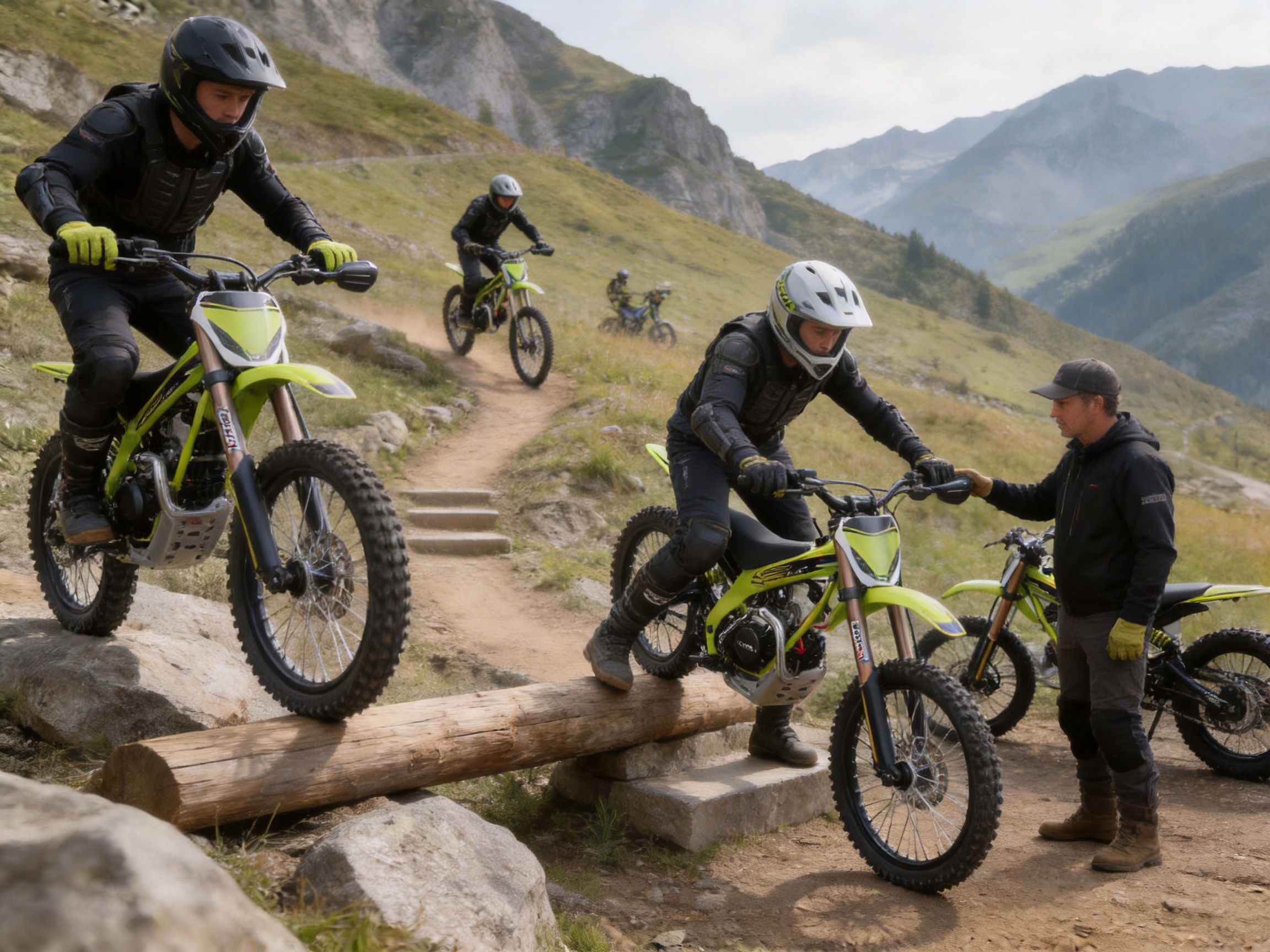
The FR2000 is a gasoline-powered trials motorcycle developed for advanced riders, professional training facilities, off-road clubs, mountain camps, and commercial riding venues. Available with either a 150cc or 190cc single-cylinder, four-stroke, air-cooled engine, it is designed around the requirements of technical riding rather than high-speed trail travel. Its purpose is to help riders manage obstacles, maintain balance, control rear-wheel movement, climb slopes, cross steps, and practice low-speed motorcycle techniques with precision.
Trials riding places unusual demands on a motorcycle. A suitable machine must respond predictably at low speed, remain stable while the rider shifts body position, provide dependable braking on steep terrain, and withstand repeated impacts from rocks, steps, logs, and uneven ground. The FR2000 addresses these requirements through a compact trials-focused chassis, a five-speed transmission, adjustable suspension, a hydraulic clutch, hydraulic disc brakes, 21-inch front and rear trials tires, and protective components intended for demanding off-road use.
For buyers, the motorcycle also offers a practical B2B proposition. The same basic platform can be specified with two engine displacements and adapted for training, rental, distribution, club, or commercial applications. OEM and ODM options can include graphics, logos, vehicle numbers, packaging, speed-limiting settings, reinforced components, manuals, and fleet configurations. This flexibility allows importers and professional operators to purchase a motorcycle platform that can be aligned with their operating environment and customer requirements.
A trials motorcycle is not simply a smaller dirt bike. Its design priorities are different. A conventional trail or motocross motorcycle is often optimized for speed, jumping, acceleration, or long-distance riding. A trials motorcycle is optimized for control. The rider may need to approach an obstacle at walking pace, stop on uneven ground, reposition the motorcycle, lift or unload the front wheel, place the rear tire accurately, and repeat the maneuver many times during training.
This type of riding demands a motorcycle with manageable power delivery and a chassis that responds accurately to rider input. Excessive speed can make technical practice more difficult, while poorly controlled torque can cause wheelspin or loss of balance. The FR2000 therefore uses a four-stroke power platform with a low-speed orientation. Both the 150cc and 190cc versions are intended to deliver usable torque and controllable response for technical off-road conditions.
The motorcycle is suitable for a range of environments, including rocks, slopes, steps, narrow tracks, mountain paths, obstacle parks, and structured training areas. It can also support agricultural or mountain-site mobility where low-speed maneuverability is more important than maximum road speed. Its strongest application, however, is advanced trials training and technical riding development.
Advanced trials riders frequently practice clutch control, throttle modulation, body positioning, front-wheel placement, rear-wheel positioning, balance recovery, and controlled braking. These skills are easier to develop when the motorcycle responds progressively and predictably. The FR2000’s five-speed gearbox provides multiple ratios for adapting the engine response to different obstacles and terrain conditions.
The lightweight hydraulic clutch supports smoother power management. During a technical maneuver, a rider may need to maintain a steady engine speed while feeding power gradually through the clutch. This is particularly useful when climbing a short step, crossing a rock section, or maintaining traction on a slope. The combination of a manageable four-stroke engine and controllable clutch engagement helps make repeated practice more consistent.
The FR2000 is intended for advanced riders rather than first-time recreational users who are looking only for casual transportation. It is especially relevant to riding clubs, training centers, competition-oriented facilities, mountain camps, and operators that need a specialized technical motorcycle for supervised activities.
For commercial operators, a trials motorcycle can provide a different experience from a conventional dirt bike. A training center can use it for balance exercises and obstacle instruction. An off-road club can introduce members to technical riding. A mountain camp can include low-speed motorcycle skills as part of an outdoor program. A rental facility can configure the motorcycle with protective equipment, speed limitations, fleet graphics, and reinforced components according to its operating procedures.
The FR2000 is offered with two engine displacement options: 150cc and 190cc. Both use a single-cylinder, four-stroke, air-cooled configuration. Offering two displacements allows distributors and commercial buyers to select a configuration that matches rider ability, terrain, fleet policy, and market expectations.
The 150cc version can be appropriate for applications that prioritize approachable performance, controlled response, and manageable operating characteristics. It may be suitable for structured training, riders developing advanced skills, or fleets that want a balanced power level for repeated supervised use.
The 190cc version provides a larger displacement platform for applications requiring additional low-speed torque. This can be useful on steeper terrain, when carrying a little more momentum across difficult obstacles, or when experienced riders prefer a stronger response from the engine. The final selection should be based on the terrain, rider profile, speed policy, maintenance program, and intended commercial use.
| Configuration | Primary Characteristics | Potential Application Focus |
|---|---|---|
| 150cc four-stroke | Controlled power delivery and approachable low-speed performance | Advanced training, clubs, supervised riding, and general technical use |
| 190cc four-stroke | Larger displacement and additional low-speed torque potential | Experienced riders, steeper terrain, commercial venues, and demanding obstacles |
| Both configurations | Single-cylinder, air-cooled, five-speed platform with electric and kick starting | Trials riding, obstacle training, off-road clubs, mountain facilities, and fleet use |
Engine displacement should not be considered in isolation. A trials motorcycle’s overall effectiveness depends on the relationship between the engine, gearing, clutch, tires, suspension, chassis, brakes, and rider technique. The FR2000 is designed as an integrated system. Its engine options are combined with a trials-oriented wheel configuration and components selected for slow-speed control.
The FR2000 uses a lightweight, high-strength steel tube frame. This type of frame provides a balance between structural strength, serviceability, and manufacturing practicality. In technical riding, the frame must support repeated loading while allowing the motorcycle to remain responsive when the rider shifts position. A trials-oriented frame also needs to accommodate suspension movement, protective components, and a practical riding layout for standing maneuvers.
Riders often operate a trials motorcycle while standing on the footrests. They use their legs, hips, arms, and upper body to control balance and to move the motorcycle over obstacles. A compact chassis can help the rider make quick corrections and place the motorcycle accurately. This is one of the areas where a specialized trials design has an advantage over a standard recreational dirt bike.
The short chassis contributes to maneuverability in confined terrain. On a narrow mountain track or an artificial obstacle course, the rider may need to turn sharply, pivot around a rock, or reposition the motorcycle in a limited space. A compact platform can make these actions more manageable and can reduce the physical effort required to change direction.
The front suspension uses Fastace adjustable front forks. Adjustment capability is important because technical terrain can vary significantly. A smooth training area, a rocky mountain section, and a steep obstacle course place different demands on suspension response. Depending on the supplied configuration, the suspension can be set up to support the rider’s weight, terrain type, riding style, and desired level of control.
In trials riding, the fork must absorb impacts without making the front end feel unpredictable. It should support the front wheel as it contacts a rock or step, while still allowing the rider to maintain steering accuracy at low speed. Adjustable components give professional operators more options when preparing motorcycles for different riders or environments.
The rear suspension uses a center monoshock. A central shock arrangement supports a clean and balanced chassis layout and is well suited to a motorcycle that must maintain traction over uneven obstacles. When the rear wheel climbs a rock or drops into a depression, controlled suspension movement helps keep the tire connected to the terrain.
Rear-wheel control is central to advanced trials riding. Riders may need to load the rear suspension, lift the front end, place the rear wheel precisely, or maintain traction on an incline. The center monoshock works together with the frame, swingarm, tires, and rider technique to provide a stable platform for these maneuvers.
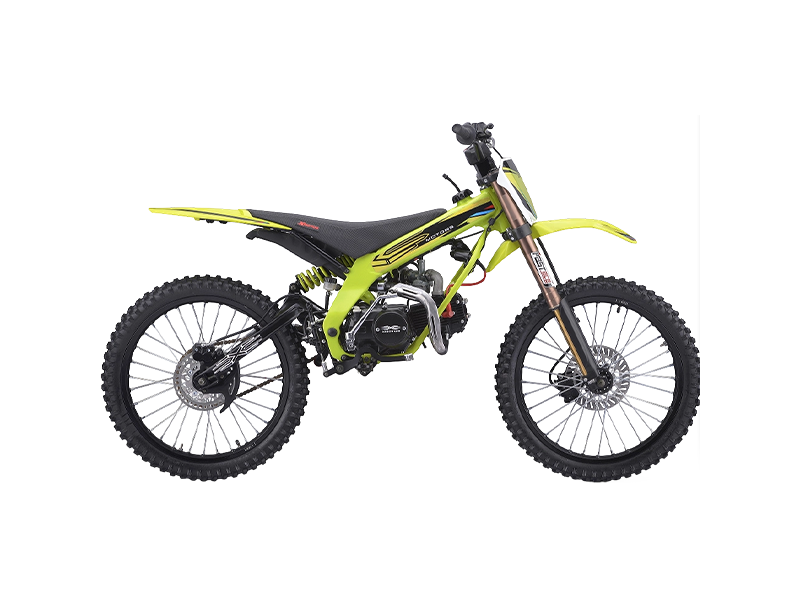
150cc/190cc Gas Trials Bike for Advanced Riders FR2000
The FR2000 uses a 21-inch front wheel and a 21-inch rear wheel fitted with trials tires. This consistent wheel configuration is a defining feature of the motorcycle. The tire design and wheel size are intended to support obstacle riding and off-road terrain rather than high-speed pavement use.
Trials tires are designed to provide a useful contact patch and predictable traction over varied surfaces. Riders may encounter rock, dirt, loose soil, roots, hard-packed ground, and sloped terrain within the same session. Tire performance affects balance, braking, climbing, and the rider’s ability to place the motorcycle accurately.
The 21-inch front wheel can help the motorcycle roll over uneven ground and contact obstacles in a controlled manner. The matching rear wheel provides a consistent setup for technical riding. When both wheels use trials-oriented tires, the rider can develop a predictable relationship between throttle input, tire movement, suspension response, and terrain contact.
Technical riding frequently requires maintaining traction at low speed. A rider may approach an obstacle with little momentum and use throttle and clutch control to cross it. The tire must provide sufficient grip without making the motorcycle difficult to correct. The FR2000’s wheel and tire configuration is intended to support this type of controlled movement.
Actual tire performance depends on tire specification, pressure, terrain, rider weight, weather, and maintenance. Operators should follow the final vehicle instructions and adjust tire pressure only within approved limits. Commercial facilities should also establish inspection procedures for tread condition, sidewall damage, bead seating, and pressure consistency.
The FR2000 is equipped with front and rear hydraulic disc brakes. Hydraulic disc braking provides controlled deceleration for slow-speed riding, downhill sections, obstacle approaches, and repeated training exercises. In technical terrain, braking is not merely used to stop. It is used to regulate speed, hold a position, balance the motorcycle, and prepare for the next maneuver.
Independent front and rear braking allows the rider to manage the motorcycle according to the terrain. On a descent, controlled rear braking can help regulate movement while the rider maintains balance. When approaching an obstacle, front braking can help settle the chassis. Advanced riders develop the ability to combine both brakes smoothly and selectively.
Hydraulic systems can offer a consistent lever and pedal feel when correctly maintained. The braking system should be inspected regularly for pad wear, rotor condition, fluid level, leakage, hose damage, and proper lever or pedal operation. Fleet operators should establish service intervals based on riding hours and environmental conditions rather than relying only on calendar time.
Training centers and rental facilities may place more repetitive demand on braking components than private owners. Many riders may use the same motorcycle, and some may not yet have refined braking technique. The FR2000’s hydraulic disc configuration provides a practical foundation for fleet use, but operator maintenance remains essential.
Before every riding session, staff should check brake operation, tire condition, throttle return, chain tension, fasteners, and protective components. A clear inspection routine improves safety, reduces downtime, and helps preserve the motorcycle’s performance over a longer service period.
The motorcycle includes both electric start and kick start. Dual starting methods are valuable in off-road environments where battery condition, temperature, terrain, or operating conditions may vary. Electric starting can make repeated training sessions more convenient, particularly when the motorcycle is used by multiple riders. Kick starting provides an additional starting method if the battery is low or if the operator prefers a mechanical backup.
For commercial venues, easy starting can improve the daily operating rhythm. A training center may need to restart motorcycles frequently during demonstrations, skill exercises, or group sessions. A backup kick-start system can also reduce the risk of a minor electrical issue interrupting a riding program.
As with all motorcycles, the starting system should be supported by appropriate battery care, correct fuel practices, electrical inspection, and routine engine maintenance. The air-cooled engine design avoids the need for a liquid-cooling radiator and associated coolant system, which can simplify certain aspects of off-road service and reduce the number of components exposed to impact damage.
The supplied configuration includes a full-coverage skid plate, hand guards, engine heat protection, and a fully enclosed chain guard. These components are particularly important for a motorcycle intended to encounter rocks, steps, branches, and other obstacles.
A skid plate protects the lower area of the engine and frame from direct contact with rocks and hard ground. During technical riding, the underside of the motorcycle may touch an obstacle even when the rider is moving slowly. A full-coverage design provides broader protection than a minimal guard and can help reduce damage to exposed lower components.
Hand guards help protect the rider’s hands and the handlebar controls from branches, impacts, and accidental contact with obstacles. They can also provide a degree of protection when the motorcycle tips over during training. Engine heat protection helps reduce contact risk around hot components, while the enclosed chain guard helps protect the chain area from external interference and improves the suitability of the motorcycle for supervised or commercial use.
Protective components are not only safety features; they can also support fleet economics. When a motorcycle is used repeatedly in rocky or technical terrain, damage to exposed components can create downtime and repair costs. A skid plate, hand guards, and chain protection can help preserve key areas of the motorcycle when correctly installed and maintained.
Protection does not eliminate the need for careful riding or inspection. Operators should examine guards for cracks, loose fasteners, bending, and interference with moving parts. Any damaged component should be repaired or replaced before continued use.
The FR2000 configuration includes IPX6 sealed electrical and fuel connectors according to the supplied specification. Sealed connectors are useful in off-road environments where the motorcycle may be exposed to dust, splash, mud, and changing weather. Reliable connector protection can help reduce the risk of contamination and intermittent electrical faults.
However, an IP rating applies to the relevant component or connector under defined test conditions. It does not mean that the complete motorcycle can be submerged or cleaned without limits. High-pressure water should not be directed at bearings, electrical connections, seals, control cables, or other sensitive areas. After wet or muddy riding, the motorcycle should be cleaned appropriately, dried, and inspected.
Buyers should confirm the exact electrical, fuel, and connector configuration before placing an order. Different markets, engine options, customization packages, and production batches may involve configuration differences. This is especially important for distributors who need to prepare spare parts, service manuals, and compliance documentation.
The FR2000 is produced by Zhejiang Kukaqi Industry & Trade Co., Ltd., with the Xmotos brand representing the company’s off-road motorcycle product line. The company is based in Zhejiang, China, and has developed its operations around the design and manufacture of off-road motorcycles.
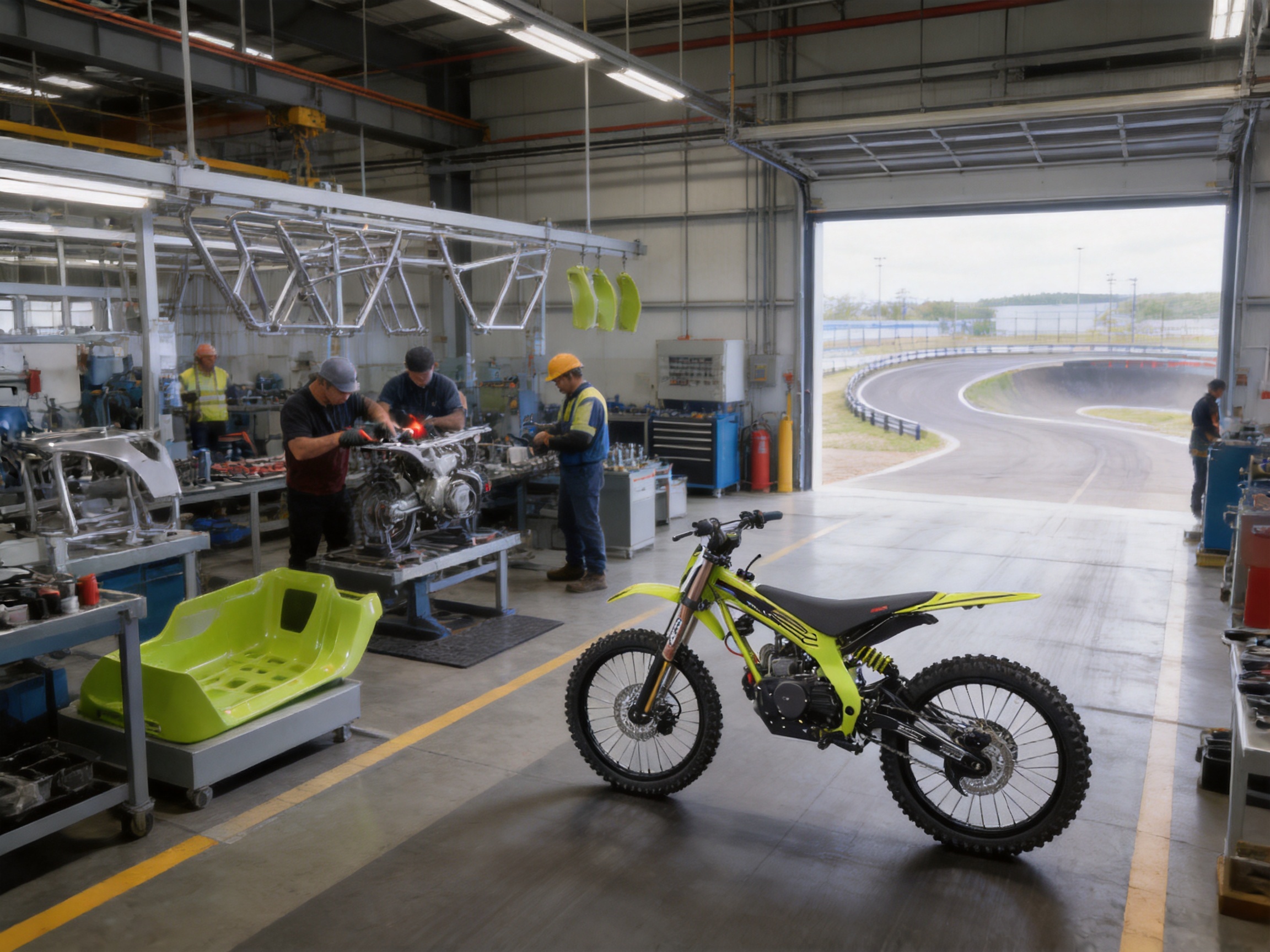
The company reports a workforce of approximately 220 experienced staff, a factory covering more than 60,000 square meters, and a professional test track. These resources provide a foundation for product development, component production, motorcycle assembly, testing, and quality inspection.
A significant manufacturing advantage is vertical integration. The company produces core components such as frames and plastic body parts in-house and also operates facilities for powder coating, assembly, testing, and quality inspection. Vertical integration can help improve communication between engineering, production, and quality teams. It can also support better control over fit, finish, component compatibility, and production scheduling.
Frame manufacturing is particularly important for a technical motorcycle. The frame affects geometry, rider position, suspension alignment, durability, and handling. In-house frame production allows the manufacturer to maintain direct control over fabrication processes, welding procedures, dimensional checks, and finishing operations.
Steel tube frames require careful control of tube preparation, fixture alignment, welding, and post-weld inspection. Variations in alignment can affect suspension operation and handling. A structured manufacturing process helps maintain consistency from one unit to the next, which is valuable for distributors and fleet operators purchasing multiple motorcycles.
Producing plastic body parts internally can support consistency in shape, mounting points, color coordination, and replacement availability. It also gives the manufacturer greater flexibility when developing OEM graphics, color schemes, and custom body designs for importers or commercial operators.
For an OEM customer, this can simplify the process of requesting brand graphics, fleet identification, customer logos, or revised body colors. Instead of treating each customization as an isolated external purchase, an integrated manufacturer can coordinate body production, graphics, assembly, packaging, and documentation more efficiently.
Powder coating is used to provide a durable finish on suitable metal components. Off-road motorcycles are regularly exposed to dust, mud, moisture, stones, and mechanical abrasion. A properly prepared and coated frame can offer useful resistance to everyday environmental exposure while contributing to a consistent visual appearance.
Surface preparation, coating thickness, curing, and inspection all influence final quality. Integrated coating capability gives the manufacturer more control over these stages and can support customized colors for dealer programs, training fleets, and branded distribution projects.
The company states that motorcycles undergo end-to-end quality inspections and dynamic performance validation. Assembly inspection can include checking fasteners, controls, wiring, brakes, suspension, chain adjustment, fuel system connections, and starting operation. Dynamic testing can help identify issues that may not be visible during a static inspection.
For a trials motorcycle, dynamic evaluation is especially important because the product’s performance depends on the interaction of engine response, clutch operation, gearbox selection, suspension movement, braking, tire contact, and chassis balance. Testing on an appropriate track allows the manufacturer to assess the motorcycle in conditions more representative of its intended use.
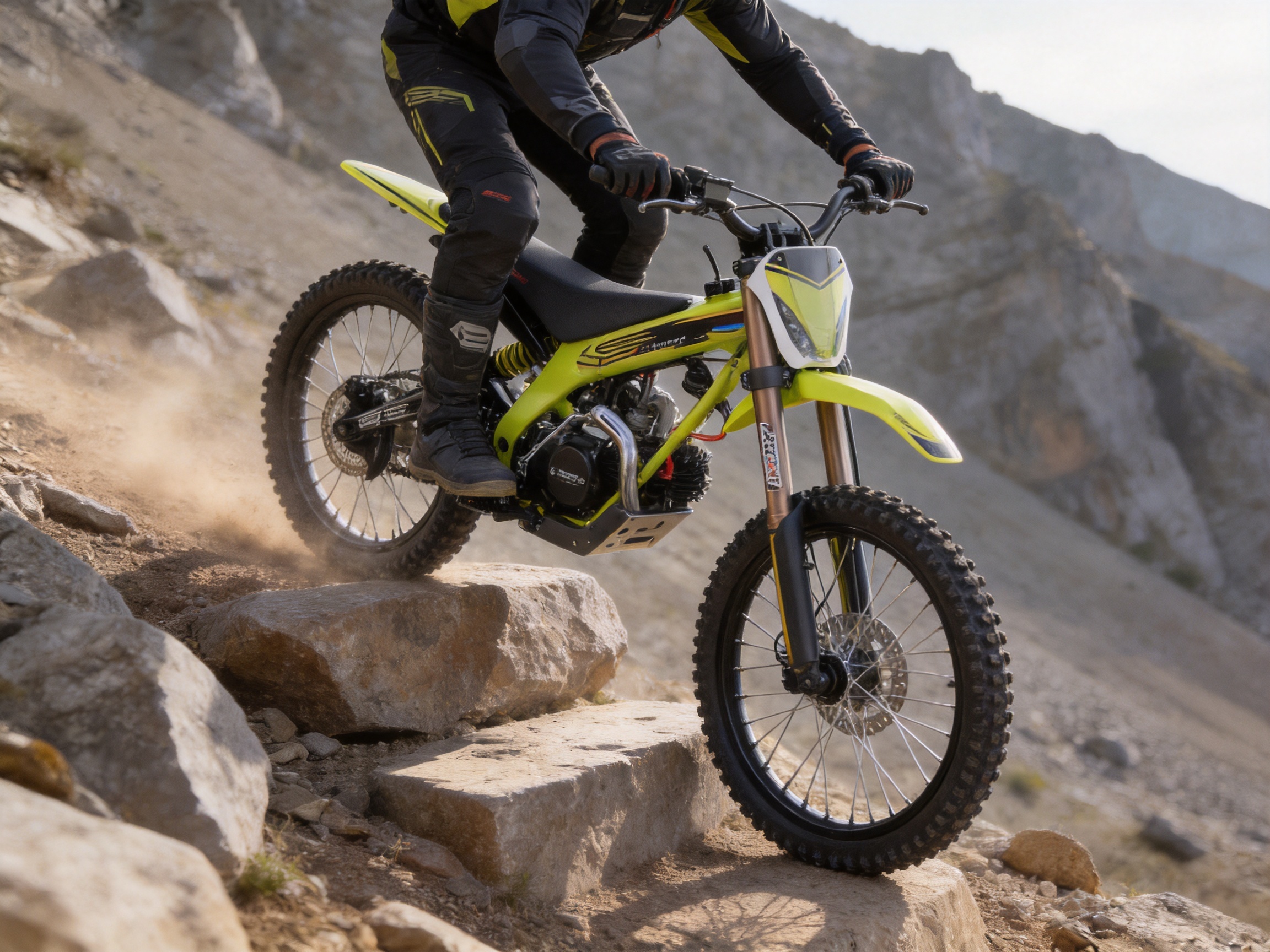
The FR2000 offers several advantages for professional buyers. First, it is a specialized product rather than a generic off-road motorcycle. Its technical positioning gives distributors the opportunity to serve riding clubs, training centers, outdoor venues, and experienced recreational riders seeking a trials-focused machine.
Second, the two engine options create product range flexibility. A distributor may offer the 150cc version for controlled training applications and the 190cc version for riders who want additional low-speed torque. This can help address different price points, rider profiles, and market preferences while using a related platform.
Third, the motorcycle supports OEM and ODM customization. Branding can include customer logos, custom graphics, vehicle numbers, packaging, labels, and manuals. Functional customization may include speed limitation, reinforced footrests, stronger wheels, additional protection, suspension adjustments, and fleet configurations.
Fourth, the supplier provides purchasing options suitable for different business sizes. The standard model can be purchased from one unit, while tiered pricing is available for orders of 50 units or more. This allows a buyer to begin with a sample or small order before developing a larger distribution or fleet program.
Commercial riding venues have different priorities from private consumers. They may need motorcycles that are easy to identify, simple to inspect, suitable for repeated use, and adaptable to supervised riding policies. The FR2000 can be configured with vehicle numbers, fleet graphics, speed limitations, protective components, and reinforced parts according to the agreed specification.
Training centers may also request multiple power configurations. For example, a facility could use 150cc models for structured skill development and reserve 190cc models for advanced sessions. The final arrangement should be determined by the operator’s insurance, safety rules, rider qualification standards, maintenance resources, and local regulations.
The supplier offers FOB, CIF, and EXW trade terms. Overseas warehouse fulfillment and container shipping can also be discussed. The appropriate logistics method depends on order quantity, destination, customs requirements, warehouse availability, delivery urgency, and whether the buyer is ordering complete motorcycles or a mixed shipment with spare parts and accessories.
The stated standard lead time is 7 to 15 days, subject to stock and order quantity. Buyers should confirm the actual schedule before payment because engine selection, customization, packaging, certification documents, and production planning can affect delivery time.
For larger orders, the company states an annual production capacity of more than 20,000 units. Capacity information is useful for distributors planning repeat orders, but buyers should still confirm production availability, peak-season scheduling, component supply, and quality-control arrangements for each purchase program.
| Purchasing Item | Available Information | Buyer Confirmation Point |
|---|---|---|
| Minimum order | Standard model from 1 unit | Confirm sample configuration and shipping method |
| Bulk pricing | Tiered pricing available from 50 units or more | Confirm engine mix, customization, packaging, and spare parts |
| Lead time | Approximately 7–15 days, subject to stock and quantity | Confirm production slot and final inspection schedule |
| Trade terms | FOB, CIF, and EXW available | Confirm destination port, insurance, and responsibility for local charges |
| Delivery | Container shipping and overseas warehouse fulfillment can be discussed | Confirm destination regulations, unloading, and warehouse conditions |
| Customization | OEM and ODM options available | Approve graphics, logos, manuals, labels, and technical configuration before production |
The listed certification references include ISO9001, CE, EPA, DOT, and COC, subject to market and configuration. Buyers should not assume that every certificate applies automatically to every model, engine option, or destination. Certification requirements vary by country and may depend on engine specification, emissions equipment, lighting, noise limits, vehicle classification, and intended use.
Before importing, a buyer should request the exact documentation package for the destination market. This may include commercial invoices, packing lists, certificates of origin, conformity documents, emissions information, user manuals, spare-parts lists, and test reports. Local authorities or a qualified customs and compliance adviser should be consulted where necessary.
The FR2000 can be customized to meet different training, club, rental, and distribution needs. The most basic customization is engine selection between the 150cc and 190cc versions. Buyers can also discuss speed-limiting settings for supervised facilities, although the actual limitation range must be confirmed according to the final configuration.
Appearance customization can include body colors, graphics, customer logos, vehicle numbers, packaging, labels, and manuals. These options are valuable for distributors that want a consistent market identity or commercial venues that need clear fleet management.
Functional customization can include reinforced footrests, wheels, frame sections, skid plates, hand guards, and other protective parts. A venue with rocky terrain may prioritize underbody protection, while a rental operator may prioritize durable controls and clear vehicle identification. Customization should be evaluated carefully because additional components can affect weight, balance, maintenance, and final cost.
A successful OEM project begins with a clear technical brief. The buyer should specify the target market, rider profile, terrain, engine displacement, expected annual volume, color requirements, branding, packaging, spare parts, documentation, and desired delivery schedule.
It is also important to identify which specifications are fixed and which are open to discussion. For example, the buyer may require the 190cc engine but allow flexibility in graphics, or may require a specific fleet color while accepting the standard protective package. Clear priorities help the manufacturer prepare a more accurate quotation and reduce changes during production.
Sample approval is recommended before a large production order. The buyer should inspect the sample motorcycle, branding, packaging, controls, protective parts, and documentation. Any changes should be documented and approved before mass production begins.
Although the FR2000 is designed for demanding off-road use, proper maintenance remains essential. The engine oil, air filter, chain, brakes, tires, suspension, fasteners, cables, electrical connectors, and protective components should be inspected according to the manufacturer’s instructions and the intensity of use.
Technical riding can place high loads on the chain and sprockets because riders frequently use low gears, clutch modulation, and sudden changes in traction. Chain slack should be maintained within the specified range, and the chain should be cleaned and lubricated after exposure to mud, water, or abrasive dust.
The air filter deserves particular attention in dusty environments. A blocked or contaminated filter can reduce engine performance and increase wear. Training centers should establish a filter-cleaning and replacement schedule based on riding hours and local conditions.
Suspension components should be checked for leakage, damage, loose fasteners, and abnormal movement. The Fastace adjustable front fork and center monoshock should be set up according to rider weight and operating conditions, but adjustments should remain within the approved range.
Brakes should be checked before every session. Operators should inspect pads, rotors, fluid, hoses, levers, and pedal movement. Tires should be checked for damage, tread condition, pressure, and secure installation. Protective parts should be inspected for cracks, deformation, and loose hardware after riding over major obstacles.
The FR2000 is intended for off-road use and advanced riding applications. Riders should wear a certified helmet, eye protection, gloves, boots, protective clothing, and suitable body protection. Training should take place in an area appropriate for motorcycle use, away from public traffic and avoidable hazards.
Riders should learn basic controls before attempting advanced obstacles. Training should begin with throttle control, clutch engagement, braking, balance, standing position, turning, and controlled stops. Obstacles should be approached progressively, with supervision when the rider is developing new techniques.
Commercial operators should establish written procedures covering rider eligibility, instruction, protective equipment, motorcycle inspection, emergency response, weather conditions, and maintenance reporting. Speed-limiting configurations may be considered for training fleets, but they should be selected and verified according to the venue’s operating plan and local requirements.
The most important advantage of the FR2000 over a general-purpose off-road motorcycle is specialization. A conventional dirt bike may be better suited to speed, jumps, or longer trail distances, while the FR2000 is designed for precise low-speed maneuvering and technical obstacle work.
Its 21-inch front and rear trials tires create a consistent platform for obstacle riding. Its adjustable front fork and center monoshock support terrain adaptation. Its five-speed transmission and hydraulic clutch provide control over power delivery. Its protective structure is designed for contact with difficult terrain. Together, these features create a motorcycle that is more focused on technical riding than a basic recreational model.
The FR2000 also offers a practical advantage over a single-displacement product by allowing buyers to choose between 150cc and 190cc engines. This can support different rider groups and commercial applications without requiring the buyer to source two unrelated motorcycle platforms.
Compared with a purely competition-specific motorcycle, the FR2000 may also provide broader commercial flexibility through electric and kick starting, OEM customization, speed-limiting options, protective components, and fleet-oriented packaging. The final suitability will depend on the buyer’s technical requirements and the regulations of the intended market.
Training centers can use the FR2000 for balance drills, obstacle techniques, clutch exercises, controlled braking, slope riding, and advanced motorcycle handling. The 150cc model can support controlled instruction, while the 190cc model can be assigned to more experienced riders or more demanding terrain.
Clubs can use the motorcycle for organized practice sessions, technical riding events, demonstrations, and rider development. The adjustable suspension and protective equipment make it suitable for repeated use across changing terrain conditions.
Mountain camps and outdoor venues can integrate the FR2000 into structured riding experiences. Its low-speed focus allows activities to be organized around obstacle skills rather than maximum speed. The facility can specify graphics, vehicle numbers, protection, and speed control to support organized operation.
Rental and commercial venues can benefit from a motorcycle platform that is customizable and supported by a manufacturer with production and OEM capabilities. Fleet identification, reinforced parts, training settings, and customized manuals can help create a more consistent customer experience.
Although the FR2000 is primarily a trials motorcycle, its low-speed off-road capability may also be useful on farm or mountain sites where maneuverability is important. Buyers should confirm whether the motorcycle’s configuration and local regulations permit the intended use, especially if public-road travel is involved.
The FR2000 is available with a 150cc or 190cc single-cylinder, four-stroke, air-cooled engine. The 150cc version is suited to controlled performance and advanced training, while the 190cc version offers a larger displacement platform for riders and applications that require additional low-speed torque.
The motorcycle is primarily designed for advanced trials riding and technical training. Beginners may use it only under suitable instruction and supervision. Operators should establish rider qualification standards and use speed-limiting or training configurations where appropriate.
Its trials-focused features include a compact chassis, low-speed power orientation, five-speed transmission, hydraulic clutch, adjustable front fork, center monoshock, 21-inch front and rear trials tires, hydraulic disc brakes, and protective components for technical terrain.
Yes. The FR2000 includes electric start and kick start. The dual-starting arrangement provides convenience for regular operation and a backup method for outdoor or commercial environments.
Yes. Customization can include engine selection, speed limitation, suspension and braking configurations, colors, graphics, logos, vehicle numbers, reinforced parts, protective components, packaging, labels, manuals, and rental or training fleet specifications.
Yes. The motorcycle can be adapted for rental and commercial use through fleet graphics, vehicle numbers, reinforced components, protective equipment, speed-limiting settings, and customized documentation. The operator should also establish inspection, maintenance, rider training, and emergency procedures.
The front suspension uses Fastace adjustable front forks, and the rear suspension uses a center monoshock. The adjustment range and setup should be confirmed in the final technical documentation and matched to the rider, terrain, and operating conditions.
The 21-inch front and rear wheel configuration supports a consistent trials-oriented setup for obstacle riding and uneven off-road terrain. The final tire pressure and maintenance settings should follow the manufacturer’s instructions.
The listed configuration includes a full-coverage skid plate, hand guards, engine heat protection, and a fully enclosed chain guard. Buyers should confirm the exact protective package when ordering customized units.
The listed certification references include ISO9001, CE, EPA, DOT, and COC, subject to market and configuration. Buyers must confirm which documents apply to the selected engine, vehicle specification, and destination market.
The standard model can be purchased from one unit. Tiered pricing is available for orders of 50 units or more, subject to the agreed configuration and commercial terms.
The stated standard lead time is approximately 7 to 15 days, subject to stock, order quantity, customization, and production scheduling. A confirmed delivery schedule should be obtained before placing an order.
FOB, CIF, and EXW terms are available for discussion. Overseas warehouse fulfillment and container shipping can also be considered according to destination and order requirements.
Buyers can discuss mixed engine configurations as part of an OEM or bulk order. The final quotation, production schedule, packaging, spare parts, and documentation should be confirmed according to the requested mix.
The FR2000 is a specialized gas trials motorcycle developed for riders and organizations that value technical control over maximum speed. Its 150cc and 190cc engine choices, five-speed transmission, hydraulic clutch, adjustable suspension, 21-inch trials wheel setup, hydraulic disc brakes, dual starting system, and protective structure provide a balanced foundation for advanced obstacle riding.
Its value extends beyond the motorcycle’s core specification. The product is supported by a manufacturer with in-house frame and plastic component production, powder coating, assembly, testing, inspection facilities, a professional test track, and stated annual capacity exceeding 20,000 units. These capabilities can help support consistent production, OEM development, fleet customization, and long-term distributor cooperation.
For professional training centers, clubs, mountain camps, rental venues, and importers, the FR2000 offers a flexible platform that can be configured around different rider levels and operating requirements. Buyers should confirm the final engine, protective package, compliance documentation, customization details, delivery schedule, and maintenance support before ordering. With appropriate setup and responsible operation, the FR2000 can serve as a capable tool for advanced trials development, technical off-road riding, and commercial motorcycle programs.
1. Zhejiang Kukaqi Industry & Trade Co., Ltd. Product information and technical specification sheet for the FR2000 150cc/190cc gas trials motorcycle.
2. Zhejiang Kukaqi Industry & Trade Co., Ltd. Company profile and manufacturing capability information.
3. General principles of motorcycle chassis design, suspension setup, braking systems, and off-road vehicle maintenance.
4. General guidance for trials motorcycle rider training, technical obstacle control, and supervised off-road operation.
5. General principles of international motorcycle import documentation, conformity assessment, and market-specific compliance review.

Start Your Off Road Journey
+86 158 6791 6333
xmotos308@gmail.com
No. 2, Jinniu Road, Niubeijin Village, Baiyang Street, Jinhua, Zhejiang, China


 English
 русский
 Español