

The 110cc/125cc Kids Gas Dirt Bike XB27 is an entry-level gasoline pit bike developed for youth riders, beginners, training facilities, recreational venues, rental operators, powersports dealers, and regional distributors. It combines compact dimensions with practical off-road equipment, giving buyers a flexible platform for introductory riding, light trail use, and commercial applications.
Available with either a 110cc or 125cc single-cylinder four-stroke engine, the XB27 can be configured to meet different market requirements. Buyers may also select a manual clutch, semi-automatic, or automatic transmission, allowing the same basic motorcycle platform to serve riders with different experience levels. This configuration flexibility is one of the product’s most valuable advantages for dealers and fleet operators.
The motorcycle is built around a high-strength steel tube frame and uses a 14-inch front wheel with a 12-inch rear wheel. An inverted front fork, center-mounted rear shock absorber, and hydraulic disc brakes at both ends provide a balanced equipment package for a youth-oriented off-road motorcycle. Electric start and kick start are also included, supporting convenience during regular use and providing a backup starting method when necessary.
For businesses, the XB27 is more than a recreational motorcycle. It can function as a training model, rental-fleet unit, dealer inventory product, or private-label vehicle. Its available engine sizes, transmission options, customization services, spare-parts packages, and international purchasing support make it suitable for a broad range of B2B applications.
The XB27 is positioned as an accessible gasoline dirt bike for riders who are developing basic off-road skills. It is not designed as a competition-only motorcycle or a high-performance racing machine. Instead, its focus is practical usability, manageable dimensions, straightforward maintenance, and adaptable configuration.
This positioning allows it to compete in a segment where buyers often need dependable equipment rather than highly specialized race technology. A riding school may require several motorcycles that are easy for beginners to understand. A rental venue may prioritize durable components, replacement-part availability, and adjustable specifications. A dealer may want one model that can be marketed to several customer groups. The XB27 addresses these requirements through its modular options and practical chassis design.
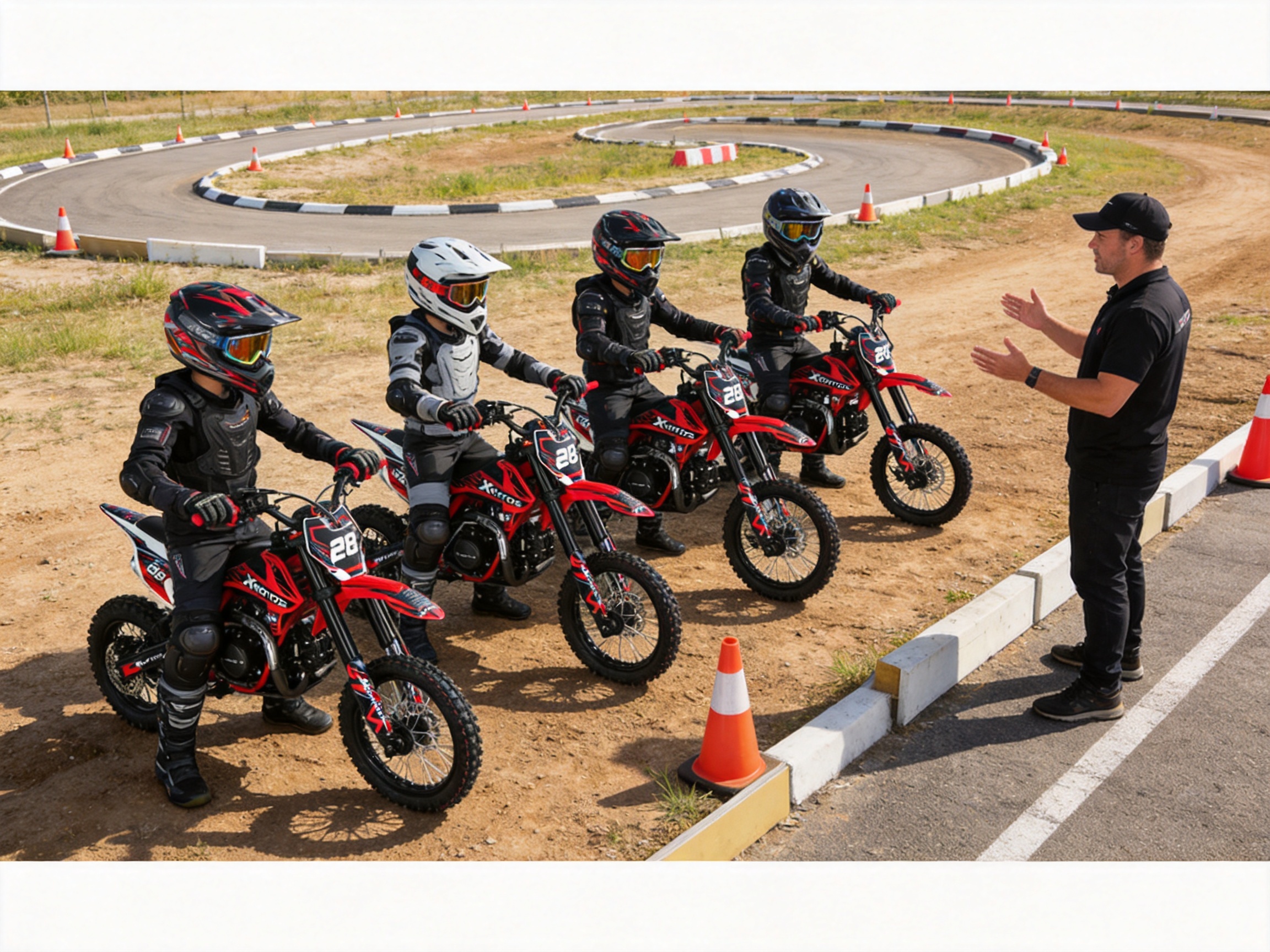
Training organizations can use the XB27 as an introductory motorcycle for students learning throttle control, braking, shifting, body position, cornering, and low-speed balance. The available transmission choices allow a facility to introduce riders gradually. Automatic or semi-automatic versions can simplify the first riding experience, while manual-clutch versions can support more advanced training.
The compact wheel layout and stated seat-height range of approximately 65 to 80 centimeters can help accommodate a variety of youth riders, although the correct fit must always be checked for each individual. A rider should be able to maintain suitable control of the motorcycle and place the feet securely when required by the training program.
For schools, speed settings can also be discussed as part of the customization process. A lower-speed configuration may be appropriate for controlled practice areas, while a higher specification can be considered for experienced users and suitable private off-road environments. Any speed adjustment should be confirmed before production and used in accordance with local laws and facility safety procedures.
Outdoor recreation venues can use the XB27 for supervised experience sessions on dirt, grass, gravel, and hard-packed training surfaces. Its deep-tread tires and long-travel suspension are designed for light off-road conditions rather than normal road commuting. This makes the motorcycle suitable for private tracks, beginner loops, recreational grounds, and other controlled sites.
Venue operators can specify organization numbering, customized graphics, safety accessories, and spare-parts packages. Numbered body graphics can help staff identify motorcycles in a fleet, while additional protective components may help reduce operating interruptions in a rental environment.
Rental fleets place different demands on a motorcycle than private ownership. A rental motorcycle may be used by multiple riders, experience repeated low-speed drops, and require frequent inspections. For this reason, rental buyers may request reinforced footrests, frame-related improvements, stronger wheel components, protective accessories, and replacement-part inventories.
The XB27 can be discussed as a rental-oriented configuration rather than a fixed specification. The basic model provides the core engine, chassis, suspension, and braking platform, while fleet operators can request equipment suited to their operating environment. This approach gives buyers an opportunity to balance purchase cost, durability, rider accessibility, and maintenance requirements.
For dealers, the model offers several sales configurations without requiring a completely different motorcycle platform for every customer group. A dealer may stock an automatic version for new riders, a semi-automatic version for families seeking a simple learning path, and a manual-clutch version for customers who want greater rider control.
The 110cc and 125cc engine options also enable market segmentation. The 110cc model can be positioned as an accessible entry-level product, while the 125cc model can appeal to riders seeking additional displacement and a stated maximum speed of approximately 65 kilometers per hour. Actual performance depends on configuration, rider weight, terrain, maintenance, and operating conditions.
Private-label graphics, exterior colors, logos, and spare-parts packages can support dealer branding. For distributors, the availability of FOB, CIF, and EXW trade terms provides several possible purchasing structures, subject to final quotation and logistics arrangements.
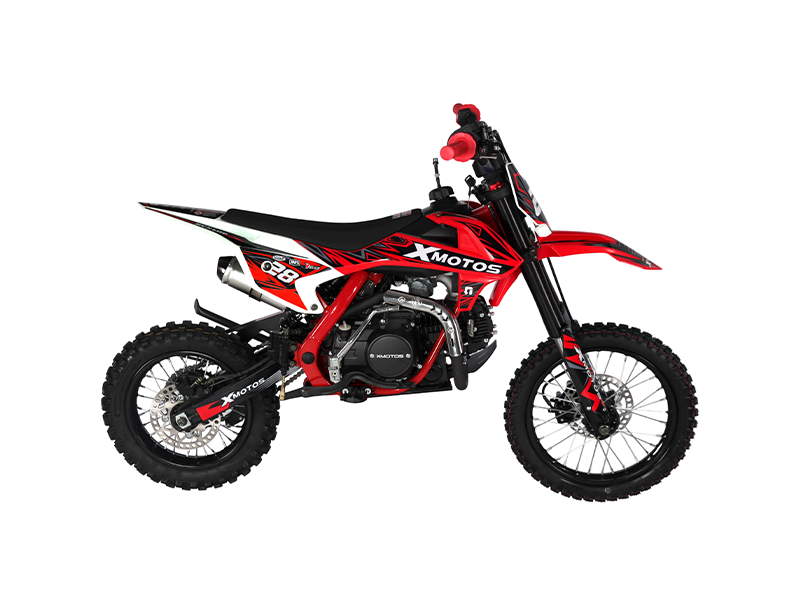
110cc/125cc Kids Gas Dirt Bike XB27
The XB27 uses a single-cylinder, four-stroke, air-cooled engine platform and is available in 110cc and 125cc versions. Four-stroke engines are widely used in entry-level recreational motorcycles because they offer a familiar operating layout, predictable power delivery, and a practical balance between performance and operating simplicity.
The air-cooled design avoids the additional components associated with liquid cooling, such as a radiator, coolant circuit, and related plumbing. This can simplify the overall structure and may make routine inspection more straightforward. The engine still requires correct lubrication, suitable fuel, regular filter service, and appropriate operating intervals.
The 110cc version is designed for customers who want a manageable entry-level motorcycle. Its stated maximum speed is approximately 55 to 60 kilometers per hour. This specification may be appropriate for beginner training, supervised recreational riding, and markets where a lower-performance configuration is preferred.
The 110cc option can also help dealers offer a lower entry price or a more approachable product to families purchasing their first youth dirt bike. The final suitability depends on rider size, experience, local requirements, and the intended terrain.
The 125cc version provides additional engine displacement and has a stated maximum speed of approximately 65 kilometers per hour. It can be considered by buyers who want more capability for larger youth riders, advanced beginners, or recreational users operating on private off-road tracks.
The 125cc engine does not eliminate the need for proper training. Greater available performance requires appropriate supervision, protective equipment, riding space, and rider judgment. Dealers and operators should communicate these conditions clearly to customers.
One of the strongest competitive advantages of the XB27 is the availability of three transmission configurations: manual clutch, semi-automatic, and automatic. This allows the motorcycle to be matched to different rider development stages and commercial requirements.
An automatic configuration can reduce the number of controls that a new rider must learn at the beginning. It may be useful for experience venues, introductory programs, and customers who want the simplest operating process.
A semi-automatic transmission can provide a transition between automatic operation and full manual clutch control. It allows riders to learn gear selection while reducing the coordination required to operate a hand clutch.
The manual-clutch version is suitable for riders who want to develop complete motorcycle control skills. It can also appeal to enthusiasts and training facilities that include clutch operation, gear changes, engine braking, and more advanced low-speed techniques in their instruction.
Transmission availability may vary by engine configuration, destination market, or production arrangement. Buyers should confirm the exact combination of engine, transmission, starting system, graphics, and documentation before placing an order.
The XB27 uses a high-strength steel tube off-road frame. Steel remains a practical choice for many entry-level and fleet motorcycles because it offers a combination of strength, repair familiarity, production flexibility, and cost control. A steel frame can also support customization for different target applications.
The compact frame and short-wheelbase layout are intended to support easier low-speed control. This is important for beginners, who often spend significant time practicing starts, stops, turns, and balance at modest speeds. A compact motorcycle can also be easier to transport, store, and maneuver in a training facility or rental compound.
The front suspension uses a 660-millimeter inverted fork. Inverted fork construction places the larger-diameter fork section toward the upper part of the assembly, which can provide a rigid and controlled front-end structure. For a small off-road motorcycle, this design contributes to steering stability and helps the front wheel respond consistently when riding over uneven ground.
The suspension system offers approximately 120 to 150 millimeters of total travel, depending on configuration. This amount of movement is intended for light off-road conditions, including compact dirt, grass, gravel, and small surface irregularities. It should not be interpreted as authorization for extreme jumps or professional competition use.
The rear suspension uses a 260-millimeter center-mounted shock absorber. The rear shock supports preload adjustment, allowing the setup to be adapted within its intended range for differences in rider weight or operating conditions.
Preload adjustment does not replace correct suspension tuning or professional setup. However, it gives dealers, training facilities, and experienced owners a useful adjustment point. A rental operator, for example, may establish a standard fleet setting, while a private owner may make a modest adjustment after consulting the operating manual or qualified technician.
The motorcycle is equipped with a 14-inch front tire and a 12-inch rear tire. This wheel combination supports the compact chassis while providing a useful balance between maneuverability and obstacle rollover capability. Deep-tread off-road tires are intended to provide traction on loose or mixed surfaces such as dirt, grass, gravel, and hard-packed riding areas.
Tire pressure has a significant effect on grip, steering response, rim protection, and tire life. Operators should inspect pressure before use and follow the recommended specification for the exact configuration. Tire selection and pressure should also be adjusted only within manufacturer-approved limits for the terrain and load.
The XB27 uses front and rear hydraulic disc brakes. Hydraulic disc brakes provide direct braking control and can offer consistent response when properly maintained. A separate braking system at each wheel helps the rider manage speed and stopping performance according to the terrain and riding situation.
For beginner use, braking instruction is especially important. Riders should learn to apply both brakes progressively, maintain suitable body position, and avoid abrupt control inputs on loose surfaces. The presence of hydraulic disc brakes improves the equipment package, but it does not remove the need for training or supervision.
The dual starting system combines electric start with kick start. Electric start improves convenience during routine operation and can be valuable for rental venues or training schools where motorcycles may be started repeatedly throughout the day. Kick start provides a mechanical backup method and can be useful if the battery is not sufficiently charged.
Operators should maintain battery condition, electrical connections, engine oil, fuel-system components, and starting controls according to the service schedule. Reliable starting performance depends on the complete system rather than on the starter motor alone.
The youth dirt-bike market includes many low-cost models with limited configuration options. The XB27 can offer several advantages over basic competitors when the buyer values flexibility, equipment completeness, and commercial support.
Many entry-level motorcycles are sold in only one engine size and one transmission type. The XB27 is available with 110cc and 125cc engines and can be specified with manual, semi-automatic, or automatic transmission. This gives importers and dealers more options when developing a product range.
A distributor can use the same platform to address different customer profiles, reducing the need to source several unrelated models. A training operator can select a configuration for new riders, while a dealer can request a different transmission for a more experienced market segment.
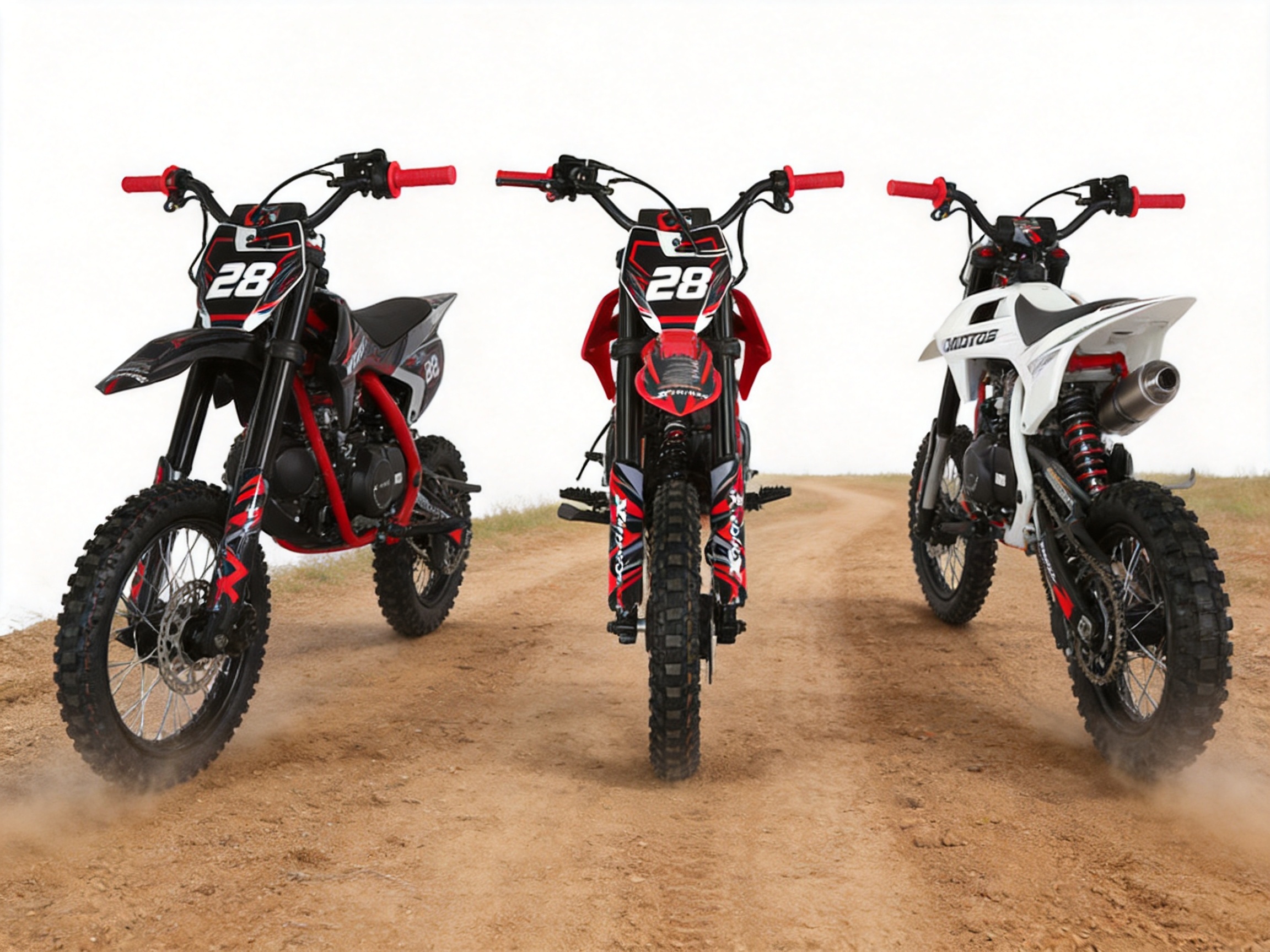
The combination of an inverted front fork, rear center-mounted shock, deep-tread tires, hydraulic disc brakes, and dual starting system gives the XB27 a more complete equipment package than a very basic recreational motorcycle. These components address practical concerns including terrain control, braking response, convenience, and rider development.
Equipment should always be evaluated in relation to price, intended use, and maintenance requirements. Nevertheless, buyers comparing products should examine the entire specification rather than focusing only on engine displacement.
Customization is another area where the XB27 can compete effectively. Buyers may discuss engine size, transmission type, speed settings, exterior colors, graphics, private-label branding, safety accessories, reinforced components, organization numbering, and spare-parts packages.
This is particularly valuable for B2B purchasers. A rental company may need fleet identification and wear-resistant equipment. A riding school may need speed control and protective accessories. A regional importer may require colors and graphics that match local consumer preferences. A distributor may want a private-label product for its own network.
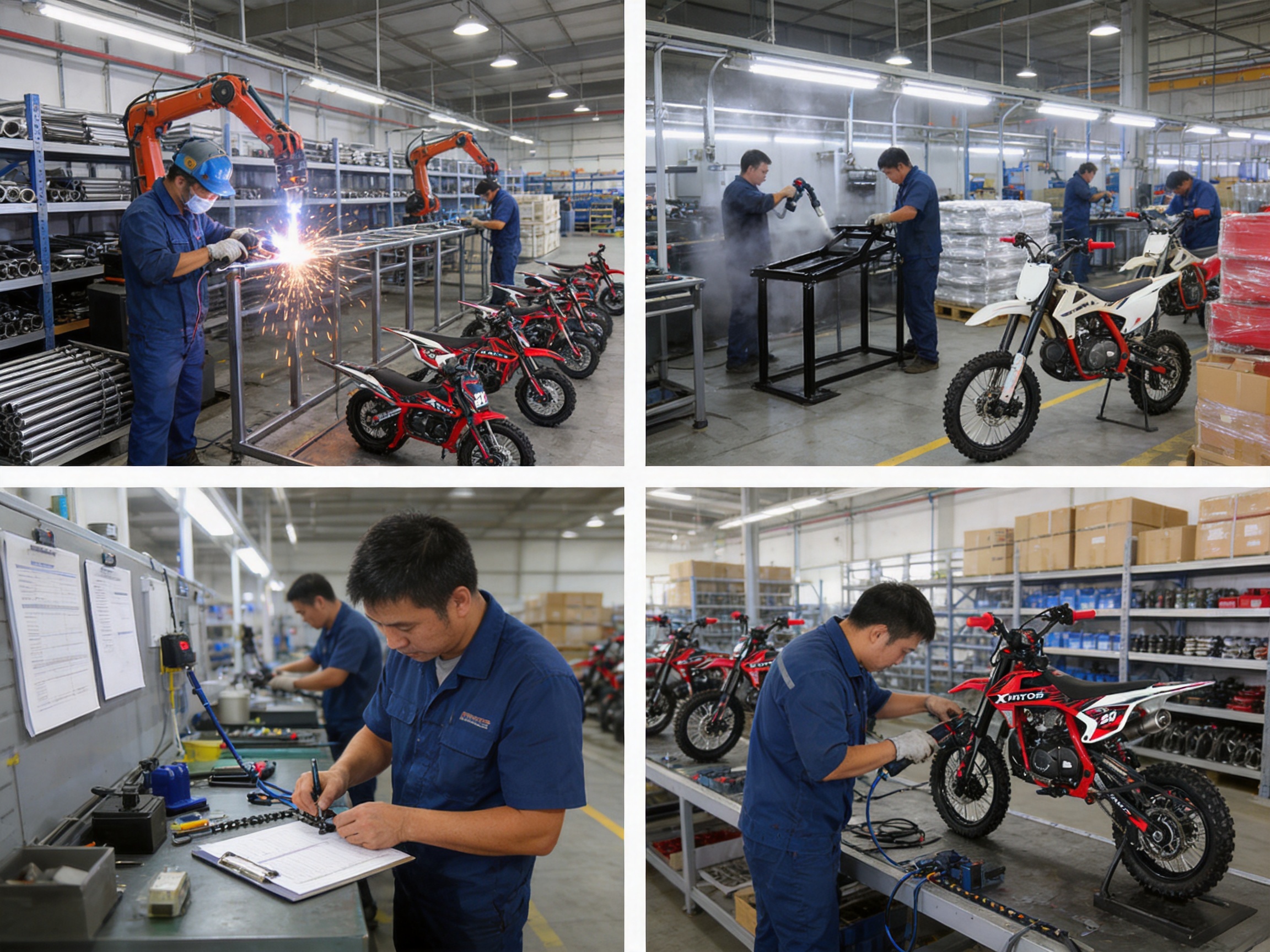
The manufacturer operates an integrated production system that includes frame and plastic body-part manufacturing, powder coating, assembly, testing, and quality inspection. In-house control of important processes can support consistency between batches and improve communication when customization is required.
Manufacturing integration may also reduce dependence on multiple external suppliers for core structural and appearance components. This can help the factory coordinate design changes, production scheduling, surface finishing, assembly standards, and inspection procedures more efficiently.
The model is supported by purchasing arrangements intended for dealers, importers, fleet operators, and distributors. Standard model orders may begin from one unit, while tiered pricing is available for larger orders of 50 units or more. Lead time is stated as approximately 7 to 15 days, subject to stock status and order quantity.
Production capacity is stated as more than 20,000 units annually. Capacity information is useful for distributors planning repeat orders, although actual production timing should always be confirmed according to the selected specification, season, component availability, and destination requirements.
The manufacturer is an off-road motorcycle producer based in Zhejiang, China, with a factory exceeding 60,000 square meters, approximately 220 experienced employees, and a dedicated professional test track. These resources provide a foundation for product development, assembly, validation, and export-oriented manufacturing.
Frame production is a critical process for an off-road motorcycle. The frame affects alignment, handling, suspension mounting, load distribution, and long-term structural integrity. Producing frames within the company’s manufacturing system allows closer coordination between design requirements, welding processes, surface preparation, and final inspection.
A high-strength steel tube frame must be produced with appropriate material control, accurate fixture positioning, consistent welding, and dimensional inspection. After welding, the frame should be checked for alignment and visible defects before moving to coating and assembly stages. Effective process control helps reduce variation between individual motorcycles.
Body panels influence the motorcycle’s appearance, fit, rider interface, and protection of selected components. In-house production of plastic body parts can support more consistent color, shape, mounting points, and graphic integration.
It also makes design customization more practical. Dealers and fleet buyers can discuss different colors, body graphics, logos, and numbering systems without requiring a completely separate vehicle development program.
Powder coating is used for selected metal components to create a durable finished surface. The process generally involves surface preparation, powder application, and heat curing. When properly controlled, powder coating can provide a uniform appearance and resistance to normal wear, moisture, and environmental exposure.
For motorcycles used outdoors, surface finishing is important because frames and brackets may encounter dirt, water, stones, cleaning chemicals, and repeated handling. Coating quality should be supported by proper cleaning, curing, thickness control, and inspection.
Motorcycle assembly requires coordination among the engine, frame, suspension, braking system, electrical system, wheels, controls, body panels, and fasteners. A structured assembly process helps ensure that components are installed in the correct sequence and adjusted according to production standards.
Important assembly checks may include steering movement, brake operation, wheel alignment, chain adjustment, cable routing, fastener torque, electrical function, fluid levels, throttle return, starting performance, and suspension movement. These checks are especially relevant for youth motorcycles because predictable control operation is essential for beginner riders.
The manufacturer maintains its own professional test track and performs dynamic performance validation. Testing on a suitable track allows engineers and inspectors to evaluate starting, acceleration, braking, steering, suspension response, gear engagement, handling, and general operating behavior under controlled conditions.
Dynamic testing complements visual and dimensional inspection. A motorcycle may appear correctly assembled yet still require adjustment in the braking system, chain tension, control routing, or suspension setup. Test-track validation provides an additional opportunity to identify such issues before shipment.
The company states that each motorcycle undergoes end-to-end quality inspection and dynamic performance validation. For buyers, this suggests a quality-control approach that extends beyond checking isolated components. The finished motorcycle should be evaluated as a complete operating vehicle.
Importers should still perform their own receiving inspection when products arrive. This may include checking packaging, frame condition, wheel alignment, brake operation, electrical functions, fluid levels, fasteners, accessories, documentation, and spare parts. Factory inspection and customer receiving inspection work together to reduce avoidable problems.
The XB27 can be adapted for different commercial programs through OEM and ODM services. OEM support generally involves manufacturing according to a buyer’s branding or specified configuration, while ODM cooperation may include product adaptations, appearance changes, and application-oriented development.
Buyers can discuss whether the required product should use the 110cc or 125cc engine. Transmission selection can then be matched to the intended users. A distributor serving beginner families may favor automatic or semi-automatic versions, while a training center may require a combination of automatic and manual-clutch motorcycles.
Speed settings can be considered for organized training programs. A lower-speed setup may support controlled instruction, while a standard configuration may be preferred for general recreational use. Any adjustment should be confirmed in technical documentation and evaluated against destination-market requirements.
Exterior colors, graphics, brand logos, private-label designs, and organization numbering can help buyers create a consistent commercial identity. This is useful for dealers that want exclusive graphics, rental venues that need fleet numbering, and distributors that want a product aligned with an existing brand portfolio.
Training and rental operators may request additional safety accessories, reinforced footrests, strengthened wheel components, protective parts, or other wear-related improvements. These features should be selected based on actual operating conditions rather than added without a clear purpose.
Spare-parts packages can be prepared for dealers, rental fleets, and training schools. Recommended inventory may include wear parts, control components, brake-related items, cables, levers, filters, chains, sprockets, fasteners, body panels, and other configuration-specific parts.
A sensible spare-parts program should consider fleet size, expected utilization, shipping lead time, local service capability, and the availability of equivalent parts in the destination market. Buyers should request a detailed parts list and identify which items are included with the motorcycle and which are quoted separately.
The XB27 is available for international B2B purchasing. Buyers should provide the intended engine displacement, transmission type, order quantity, application, customization requirements, destination country, preferred trade term, and delivery schedule when requesting a quotation.
| Purchasing Item | Available Information | Buyer Confirmation Required |
|---|---|---|
| Engine | 110cc or 125cc four-stroke air-cooled engine | Selected displacement and applicable market specification |
| Transmission | Manual clutch, semi-automatic, or automatic | Exact transmission configuration |
| Starting system | Electric start plus kick start | Electrical and battery specification |
| Standard MOQ | From one unit for the standard model | Stock status and available configuration |
| Bulk pricing | Tiered pricing for orders of 50 units or more | Quantity-based quotation |
| Lead time | Approximately 7 to 15 days, subject to stock and quantity | Production schedule and shipping date |
| Trade terms | FOB, CIF, and EXW can be discussed | Selected Incoterm and destination port |
| Delivery | Overseas warehouse fulfillment and container shipping can be discussed | Available logistics route and delivery arrangement |
| Documentation | ISO9001, CE, EPA, DOT, and COC-related documentation listed | Applicable documents for the exact configuration and market |
Certification requirements vary by destination. The listed documentation should not be interpreted as a universal approval for every country or every configuration. Before ordering, the buyer should confirm whether the exact motorcycle complies with local requirements for off-road vehicles, youth products, emissions, noise, labeling, safety equipment, importation, and registration.
Trade terms define the division of responsibility for freight, insurance, export clearance, import clearance, taxes, port handling, and delivery. Buyers who are unfamiliar with international purchasing should work with a qualified freight forwarder or customs specialist.
Container shipping may be suitable for larger orders, while smaller orders may require different logistics arrangements. Packaging method, assembly level, spare-parts inclusion, and documentation should be clarified before shipment. The buyer should also confirm whether motorcycles are shipped fully assembled, partially assembled, or prepared in transport-efficient packaging.
Regular maintenance is essential for safe and reliable operation. The engine oil, air filter, spark plug, chain, sprockets, brakes, tires, suspension, steering bearings, battery, cables, and fasteners should be inspected according to the service schedule.
Rental operators and training centers should establish a written inspection procedure. A pre-ride check can include fuel level, engine oil, throttle return, brake lever feel, brake pedal operation, tire condition, chain tension, wheel security, handlebar alignment, clutch engagement where applicable, and visible damage.
After use, staff should inspect the motorcycle for loose parts, bent controls, damaged footrests, leaking fluid, abnormal noise, body-panel damage, and changes in chain condition. Problems should be recorded and corrected before the motorcycle is returned to service.
Fleet operators should maintain service records for each unit. Records can include operating hours, rider incidents, repairs, replaced parts, oil changes, tire replacement, brake service, and inspection dates. This helps identify recurring issues and supports more accurate parts planning.
Storage conditions also affect reliability. Motorcycles should be protected from unnecessary moisture, extreme weather, contamination, and unauthorized use. Fuel-storage procedures should follow local regulations and the engine manufacturer’s recommendations.
The XB27 is intended for responsible off-road use under suitable supervision. Riders should use a properly fitted helmet, eye protection, gloves, long sleeves, long pants, boots, and appropriate protective equipment. Kneepads, elbow protection, and a chest protector may be appropriate depending on the riding environment.
Children and beginners should receive instruction before operating the motorcycle. Training should cover controls, starting and stopping, throttle use, braking, turning, shifting where applicable, body position, terrain awareness, and emergency procedures.
Riding should take place only in legal, controlled, and suitable areas. Public-road operation may be restricted or prohibited depending on local law. The motorcycle should not be used beyond the rider’s ability, the machine’s intended design, or the conditions of the riding area.
Parents, instructors, and operators should evaluate rider height, weight, maturity, skill, and ability to follow instructions before permitting use. The stated speed and seat-height specifications are reference figures, not substitutes for a personal fit assessment.
The motorcycle is available with 110cc and 125cc single-cylinder, four-stroke, air-cooled engine options. The stated maximum speed is approximately 55 to 60 kilometers per hour for the 110cc version and approximately 65 kilometers per hour for the 125cc version. Actual results vary with configuration, rider weight, terrain, maintenance, and operating conditions.
An automatic transmission may be the simplest option for a complete beginner because it reduces the number of controls that must be learned. A semi-automatic transmission can support a gradual transition to gear selection. A manual-clutch version is appropriate when the rider is ready to learn complete motorcycle control. The decision should be based on age, size, maturity, training goals, and supervision.
The XB27 is positioned as an entry-level and recreational off-road motorcycle for training, light trails, experience venues, rentals, and beginner use. It is not presented as a dedicated professional racing motorcycle. Competition organizers and experienced riders should select equipment specifically approved for the intended racing class and conditions.
The deep-tread tires and approximately 120 to 150 millimeters of suspension travel are suitable for dirt, grass, gravel, hard-packed surfaces, and other light off-road terrain. The motorcycle should not be used for terrain or jumps beyond its design capability. Site conditions, rider ability, weather, and local safety requirements must always be considered.
Yes. The listed starting system includes electric start and kick start. Electric start provides convenience, while kick start offers a backup method. Reliable operation still depends on battery condition, fuel quality, engine maintenance, and correct starting procedures.
The XB27 uses a 14-inch front wheel and a 12-inch rear wheel with deep-tread off-road tires. This compact wheel combination supports maneuverability while providing useful traction for light off-road riding.
Yes. Rental-oriented customization can include speed settings, transmission selection, exterior colors, graphics, organization numbering, protective accessories, reinforced footrests, strengthened wheel components, and spare-parts packages. The exact options should be confirmed according to the order quantity and destination market.
OEM and ODM services are available for buyers who require brand logos, private-label graphics, custom colors, and other appearance changes. Buyers should provide artwork, technical requirements, packaging expectations, and target-market information during the quotation process.
The standard model can be purchased from one unit, subject to stock and configuration availability. Bulk-order pricing is available for orders of 50 units or more. Custom products may require a different minimum order quantity, so buyers should request confirmation before finalizing an order.
The stated standard lead time is approximately 7 to 15 days, subject to stock status and order quantity. Custom colors, graphics, private labeling, special components, documentation, and production scheduling may affect the final lead time.
FOB, CIF, and EXW terms can be discussed. The correct term depends on the buyer’s logistics plan, destination port, import arrangements, freight preferences, and experience with international purchasing.
The available information lists ISO9001, CE, EPA, DOT, and COC-related documentation. The applicable documents must be confirmed for the exact motorcycle configuration and destination market. Buyers should verify import, emissions, labeling, safety, and registration requirements independently.
The stated seat height is approximately 65 to 80 centimeters, depending on configuration. Buyers should confirm the exact measurement for the selected version. Rider fit should be checked personally, including reach to the controls and ability to manage the motorcycle safely.
Dealers should request an illustrated parts list, maintenance schedule, technical specifications, warranty terms, troubleshooting guidance, and recommended spare-parts inventory. Staff should be familiar with chain adjustment, brake inspection, control adjustment, oil service, battery care, and pre-delivery inspection.
The XB27 combines a straightforward gasoline powertrain with a flexible commercial specification. Its two engine options and three transmission configurations allow buyers to address multiple rider categories. Its compact steel frame, off-road wheel package, inverted front fork, center-mounted rear shock, hydraulic disc brakes, and dual starting system provide a well-rounded foundation for entry-level use.
Its value is particularly clear for buyers who need more than a single fixed retail configuration. Training centers can prioritize accessibility and speed management. Rental operators can discuss reinforcement and spare-parts support. Dealers can select different engine and transmission combinations. Distributors can develop private-label graphics and organize repeat purchases around a scalable product platform.
The manufacturing organization behind the motorcycle adds further value through integrated production capabilities, in-house frame and plastic-part manufacturing, powder coating, assembly, testing, quality inspection, and dynamic validation. A factory of more than 60,000 square meters, supported by experienced personnel and a dedicated test track, provides the infrastructure required for ongoing product development and export production.
As with every powersports product, the final buying decision should be based on the exact specification, destination-market requirements, rider suitability, maintenance plan, and commercial operating conditions. Buyers should confirm all technical details, documentation, lead times, packaging, warranty arrangements, and customization terms before placing an order.
The 110cc/125cc Kids Gas Dirt Bike XB27 is designed to make entry-level off-road riding more accessible while giving commercial buyers meaningful configuration flexibility. Its 110cc and 125cc four-stroke engine options, manual, semi-automatic, and automatic transmissions, electric and kick starting, compact chassis, off-road tires, long-travel suspension, and hydraulic disc brakes form a practical package for youth riders and beginners.
For B2B customers, the product’s strongest advantages include broad application potential, customizable specifications, private-label support, reinforced rental configurations, spare-parts planning, and international purchasing options. These benefits are supported by a manufacturing system with in-house component production, powder coating, assembly, testing, inspection, and dynamic performance validation.
With the correct setup, responsible supervision, suitable protective equipment, and regular maintenance, the XB27 can serve as a dependable platform for training schools, recreational facilities, rental parks, powersports dealers, and regional distributors seeking an adaptable entry-level dirt bike.
1. Product technical specification sheet for the 110cc/125cc Kids Gas Dirt Bike XB27.
2. Manufacturer-provided information regarding engine options, transmission configurations, suspension, braking, tires, dimensions, purchasing terms, and customization services.
3. Manufacturer-provided company profile covering production facilities, workforce, integrated manufacturing processes, testing resources, and quality-control procedures.
4. General off-road motorcycle maintenance and inspection principles for engines, chains, brakes, tires, suspension, controls, and electrical systems.
5. General youth powersports safety guidance concerning rider fit, supervision, protective equipment, controlled riding areas, and responsible operation.

Start Your Off Road Journey
+86 158 6791 6333
xmotos308@gmail.com
No. 2, Jinniu Road, Niubeijin Village, Baiyang Street, Jinhua, Zhejiang, China


 English
 русский
 Español