

The ATV-XM150 is a 150cc sport all-terrain vehicle developed for riders and operators who need more capability than a basic entry-level quad can provide. It combines a four-stroke oil-cooled engine, automatic CVT transmission, reinforced steel construction, adjustable hydraulic suspension, 10-inch off-road tires, and front and rear disc brakes in a practical recreational platform. The result is an ATV intended for intermediate riders, training centers, rental parks, outdoor leisure facilities, off-road clubs, rural users, and distributors seeking a versatile mid-level gas ATV.
Many entry-level ATVs are designed primarily for simple recreational use at modest speeds and on relatively easy terrain. As riders gain experience, however, they often require stronger acceleration, improved suspension control, more effective braking, and a chassis that can tolerate more frequent use. The ATV-XM150 addresses this progression by increasing engine displacement while retaining the convenience of automatic operation. It is not positioned merely as a larger version of a beginner model; it is a step-up platform designed to offer a broader operating range and a more substantial riding experience.
For business buyers, the vehicle also offers practical purchasing advantages. The standard model can be ordered from one unit, while tiered pricing is available for larger orders of 50 units or more. FOB, CIF, and EXW trade terms can be discussed, and overseas warehouse fulfillment or container shipping may be available according to the project. OEM and ODM options allow buyers to adapt the ATV for rental fleets, training programs, branded distribution, recreational parks, and specialized commercial applications.
The vehicle is manufactured by Zhejiang Kukaqi Industry & Trade Co., Ltd., a Chinese off-road vehicle producer with integrated capabilities covering frame production, plastic body manufacturing, powder coating, assembly, testing, and quality inspection. These in-house processes provide a foundation for consistent production and support customization requests from international buyers.
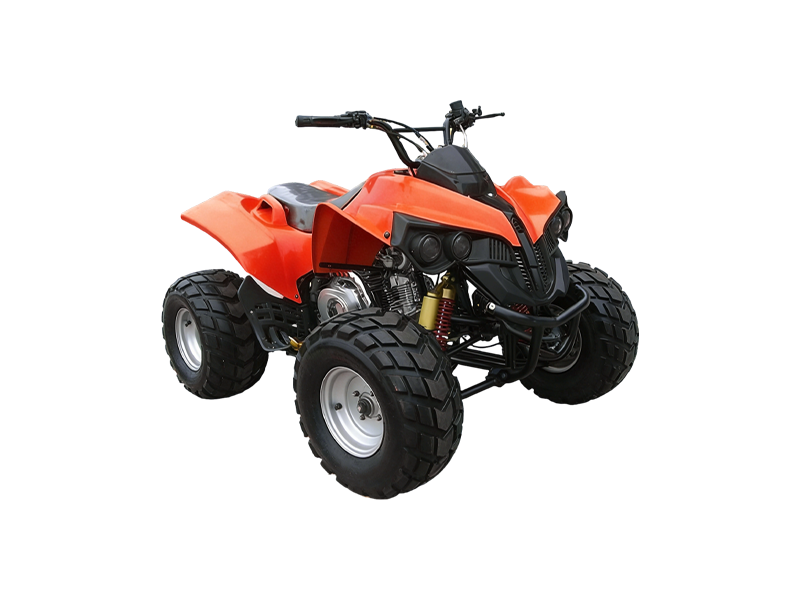
150cc Sport All-Terrain Vehicle for Advanced Riders ATV-XM150
The market for all-terrain vehicles includes several different performance levels. Small-displacement models are often selected for new riders, younger users, or low-intensity recreational operations. Larger utility and sport ATVs may provide greater power, but they can also involve higher purchase costs, increased operating complexity, or a level of performance that is unnecessary for many venues. A mid-level 150cc ATV occupies the space between these two categories.
The ATV-XM150 is intended for riders moving beyond the entry-level stage. Its approximately 80 km/h maximum speed and 150cc oil-cooled engine provide a meaningful performance increase over common 125cc air-cooled configurations. At the same time, the automatic CVT transmission keeps operation straightforward. Riders do not need to manage a manual clutch or select conventional gears while navigating trails, practice areas, or recreational courses.
This combination is important for commercial operators. A rental venue may serve customers with different experience levels, and not every customer is ready for a high-performance manual ATV. A training facility may want a vehicle that introduces riders to stronger acceleration and more responsive handling without creating unnecessary operational difficulty. A dealer may need a model that can appeal to customers seeking an upgrade but who are not yet looking for a large-displacement utility or racing quad.
The vehicle also has a rear-wheel-drive layout and chain final drive. This configuration is relatively simple to understand and service. For businesses operating several units, uncomplicated driveline architecture can help technicians perform regular maintenance efficiently. Chain inspection, lubrication, and adjustment can be included in normal service procedures, while the electric-start system supports convenient daily operation.
At the center of the ATV-XM150 is a 150cc single-cylinder, four-stroke, oil-cooled gasoline engine. The displacement provides more output potential than a typical 125cc entry-level engine, making the ATV better suited to riders who want stronger response on open trails, inclines, loose surfaces, and recreational courses.
A four-stroke engine is a practical choice for a vehicle intended for repeated recreational and commercial use. It provides a familiar operating format for dealers, mechanics, and owners. The single-cylinder layout keeps the engine architecture relatively straightforward, which can be beneficial when conducting routine inspection and maintenance. Operators can establish service schedules around engine oil changes, air-filter cleaning, spark-plug inspection, drive-system checks, and general fastener verification.
Oil cooling supports thermal management during extended operation. Compared with a basic air-cooled configuration, an oil-cooled engine can provide an additional method of transferring heat away from important engine areas. This is particularly useful when the ATV is used repeatedly in warm conditions, on slow technical sections, or in rental operations where the vehicle may experience more frequent cycles of acceleration and deceleration.
The larger engine does not automatically make the vehicle suitable for every rider or every environment. Operators should always match the vehicle to local regulations, rider training, site conditions, and approved operating limits. Nevertheless, the 150cc configuration provides a useful balance. It offers more capability than a small beginner quad while remaining more approachable and potentially more economical to operate than a much larger sport or utility model.
The gasoline powertrain also offers flexibility for locations where charging infrastructure is limited. Outdoor rental parks, farms, rural recreation sites, and temporary event venues may not have sufficient electrical capacity for a large fleet of battery-powered vehicles. A gasoline ATV can be refueled through established fuel logistics, although operators must follow all applicable storage, ventilation, fire-safety, and environmental requirements.
The ATV-XM150 is described as an ATV for advanced riders in relation to entry-level products, but the term should be understood in context. It is a step-up recreational model rather than a competition racing machine. Its purpose is to provide intermediate riders with a more capable and stable platform for controlled off-road use.
The approximately 80 km/h stated maximum speed gives experienced users additional pace on suitable open sections. Speed should always be controlled according to the terrain, visibility, rider ability, local law, and operating rules of the venue. Rental businesses and training centers may choose to configure speed limitations or establish operating zones so that the vehicle can serve different customer groups safely.
The approximate gradeability range of 30 to 39 degrees indicates the vehicle’s ability to approach demanding inclines under suitable conditions. Actual hill-climbing performance depends on rider weight, surface traction, tire condition, slope length, throttle control, temperature, and vehicle setup. The figure should therefore be treated as a reference specification rather than a guarantee for every terrain condition.
The automatic CVT transmission is one of the ATV-XM150’s most accessible features. CVT systems allow the engine and drivetrain to deliver power without requiring the rider to select a series of conventional gears manually. This reduces the learning curve for customers who are familiar with recreational vehicles but have limited experience with manual transmissions.
The transmission includes forward, neutral, and reverse functions. Forward mode supports normal trail and recreational riding. Neutral is useful during starting, parking, inspection, and stationary operation. Reverse improves maneuverability in confined areas, near storage facilities, or around loading zones. Together, these functions provide the basic control arrangement expected from a practical recreational ATV.
Compared with a manual-clutch model, the automatic layout can reduce the number of operating actions required from the rider. This is valuable in rental environments, where customers may have different levels of experience and limited time for instruction. It is also helpful in training programs because instructors can concentrate on steering, throttle control, braking, body positioning, and terrain awareness rather than teaching clutch coordination at the same time.
The CVT system still requires correct operation. Riders should avoid abusive throttle inputs, unnecessary wheel spinning, and prolonged operation under conditions outside the manufacturer’s recommendations. Regular inspection of the drive belt, pulleys, cooling passages, and transmission housing is important, particularly for fleets that operate in sand, mud, dust, or wet environments.
For dealers and importers, the automatic transmission expands the potential customer base. Some riders specifically prefer manual control, but many recreational users prioritize ease of operation. The ATV-XM150 can therefore be positioned as a practical sport gas ATV for customers who want stronger performance without the added complexity of a manual gearbox.
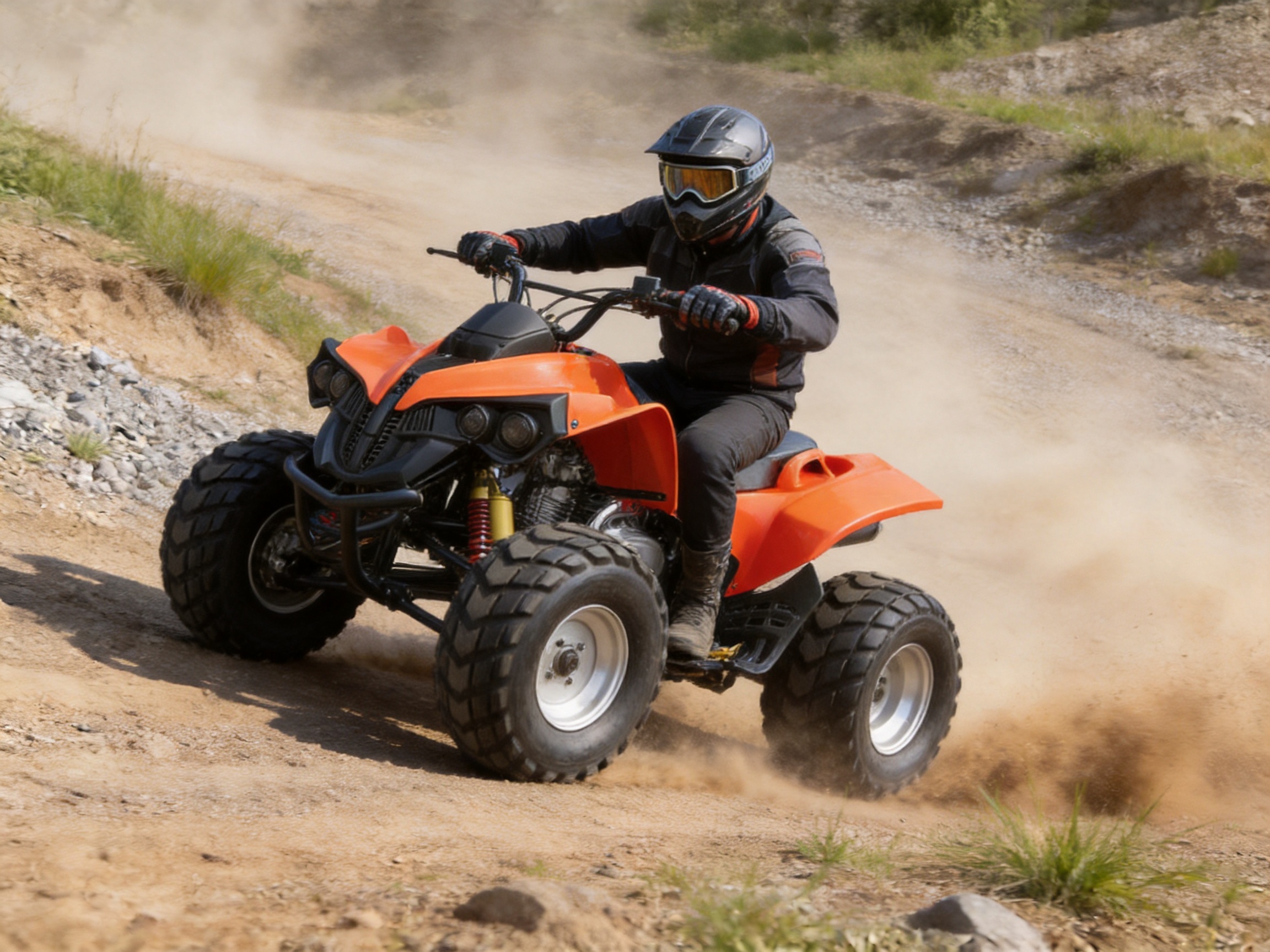
The ATV-XM150 uses a reinforced high-strength steel tube frame. The frame forms the foundation for the engine, suspension, steering, braking system, body panels, seat, wheels, and rider loads. A stable frame is especially important when an ATV is used on uneven terrain, because the chassis must manage changing loads as the vehicle climbs, descends, turns, lands, or crosses ruts.
The stated curb weight is approximately 202 kilograms. This substantial platform weight contributes to a planted feel compared with very light recreational quads. A heavier and reinforced chassis can help the ATV maintain stability when traveling across mixed surfaces, although weight also affects transportation, recovery, fuel consumption, and handling. Operators should consider these factors when designing routes and selecting loading equipment.
The frame is suited to a range of recreational and light-duty applications, but it should not be treated as an unlimited heavy-work utility chassis. The product is designed primarily for sport recreation, training, rental use, clubs, outdoor leisure, and light off-road transport. Loads should remain within the stated operating limits, and the vehicle should not be used for tasks that exceed its design purpose.
The reinforced structure also creates a useful base for commercial customization. Rental companies may request additional protection around vulnerable areas. Training facilities may need equipment mounts or identification systems. Distributors may want specific color schemes, decals, or model labels. Subject to engineering review and production confirmation, these requirements can be discussed as part of an OEM or ODM project.
The ATV-XM150 has an approximate maximum payload of 236 kilograms. Payload normally includes the rider and any equipment or accessories carried by the vehicle. This specification gives the vehicle flexibility for recreational users who carry personal gear or for light-duty applications in rural areas.
Payload must be distributed carefully. Excessive weight placed too high or too far toward one end of the vehicle can affect steering, braking, suspension movement, and rollover risk. Operators should use approved racks or storage locations and should avoid carrying unstable, oversized, or unsecured objects. Rental staff should inspect accessories and loading arrangements before releasing vehicles to customers.
For commercial fleets, payload information should be incorporated into training materials and operating signs. Clear communication helps customers understand that a sport ATV is not a substitute for a heavy agricultural utility vehicle. The ATV-XM150 is appropriate for light transport and recreational support, but all loads must remain within the manufacturer’s specified limits and local safety requirements.
The ATV-XM150 uses front and rear hydraulic suspension with adjustable damping. This is an important distinction from basic models that may use simpler suspension arrangements with limited adjustment. Hydraulic damping helps control the movement of the suspension as the wheels travel over bumps, ruts, gravel, sand, and uneven ground.
Adjustable damping allows the setup to be adapted to different conditions. A softer setting may provide a more comfortable response over certain rough surfaces, while a firmer setting may improve support during faster riding or when carrying a heavier rider within the approved payload. Adjustments should be made carefully and consistently. Commercial operators should document preferred settings for common routes rather than allowing untrained users to make random changes.
The suspension is described as including air chambers and adjustable damping. These features provide additional tuning potential, but they do not remove the need for regular inspection. Seals, mounting points, bushings, fasteners, and shock bodies should be checked for leaks, damage, or unusual movement. Suspension performance can change as components wear, so service intervals are important for fleet reliability.
Compared with a basic entry-level quad, adjustable hydraulic suspension can provide a more adaptable riding experience. It helps the vehicle serve different users and surfaces without requiring a completely different model for every application. For a rental park, this flexibility can be useful when the same fleet operates on compact soil, grass, gravel, sand, or specially prepared off-road trails.
The ATV-XM150 is equipped with 10-inch off-road tires mounted on aluminum alloy wheels. Tire design has a direct influence on traction, steering response, ride comfort, braking, and resistance to surface changes. The deep-tread pattern is intended for recreational use on grass, sand, mud, gravel, and other unpaved terrain.
On loose surfaces, tread blocks can help the tire maintain contact with the ground while the vehicle is moving forward. On compacted gravel or hard-packed soil, the same tires can provide a balance between grip and predictable steering. Tire pressure must be maintained according to the recommended operating range because overinflation and underinflation can both affect handling and component wear.
Aluminum alloy wheels contribute to the vehicle’s sport-oriented appearance and can help reduce unsprung weight compared with certain steel wheel designs. Regardless of wheel material, operators should inspect rims for dents, cracks, loose fasteners, and damage caused by rocks or hard impacts. Tires should also be checked for cuts, uneven wear, embedded objects, and adequate tread depth.
The tires are designed for off-road use and should not be assumed to provide the same performance as road-focused tires on paved surfaces. Operators must comply with local rules regarding road registration, lighting, insurance, and use on public highways. The vehicle should be operated only in environments appropriate for its configuration and legal classification.
Front and rear disc brakes provide braking at both ends of the ATV. This arrangement supports more controlled deceleration than a basic system with less comprehensive braking equipment. Disc brakes can offer consistent response when properly maintained, which is valuable for training, rental operations, and recreational trail use.
Braking performance depends on more than the presence of disc rotors. Brake pads, calipers, hydraulic lines, fluid condition, rotor surfaces, tire traction, and rider technique all influence stopping behavior. Operators should establish routine inspections and replace worn components before performance becomes unacceptable. Mud, sand, and water can accelerate wear or contaminate components, making post-ride cleaning particularly important in harsh conditions.
Riders should learn to apply the brakes smoothly and maintain a suitable speed before entering turns, slopes, or unfamiliar terrain. Sudden braking on loose surfaces can cause the wheels to lose traction. Training programs should include controlled braking exercises in a safe area before riders are permitted to enter more challenging routes.
For fleet buyers, front and rear disc brakes can be an important selling point because they support a more complete equipment specification than many basic recreational quads. However, no braking system eliminates the need for responsible riding, protective equipment, appropriate speed limits, or professional supervision.
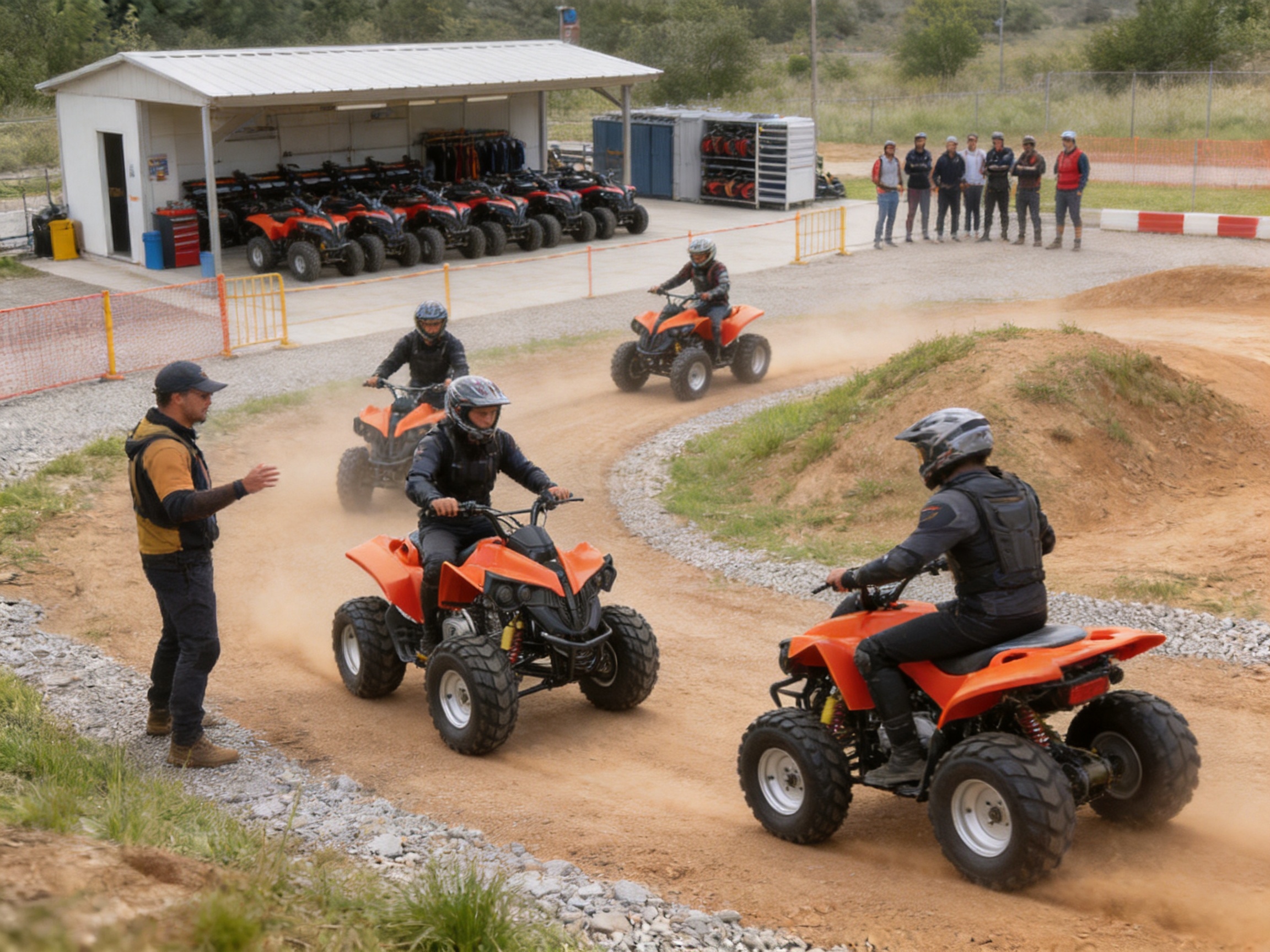
The ATV-XM150 can serve as an intermediate training platform for schools that teach off-road riding skills. Its automatic CVT reduces the initial operating complexity, allowing instructors to focus on steering control, throttle modulation, braking, body position, line selection, and terrain awareness.
As students progress, the 150cc engine gives them experience with stronger acceleration and a heavier chassis than a basic beginner quad. This can help prepare riders for more capable recreational vehicles, provided that training is conducted progressively and within a controlled environment. Speed-limiting configurations may be considered for introductory sessions or younger adult learners where legally permitted.
Training operators can also use the customization service to add school branding, unit numbers, safety decals, emergency shutdown systems, or protective components. Clearly numbered vehicles simplify instructor communication and maintenance tracking.
Tourist attractions and beach parks often require vehicles that are visually appealing, easy to operate, and capable of handling unpaved surfaces. The ATV-XM150’s sport styling, automatic transmission, off-road tires, and adjustable suspension make it suitable for guided tours and controlled recreational circuits.
Sand places special demands on drivetrains, tires, air filters, and cooling systems. Operators should create maintenance routines for cleaning sand from moving parts, checking belt housings, inspecting filters, and monitoring engine temperature. Routes should be designed to avoid environmentally sensitive areas and comply with local land-use rules.
For tourist venues, speed control and clear customer instruction are essential. The available option for speed limitation can help an operator match vehicle behavior to the design of the route. Branding, color schemes, vehicle numbers, and customized packaging can also create a consistent fleet appearance.
Rental businesses need vehicles that are simple to operate, sufficiently durable for repeated use, and straightforward to inspect between rental sessions. The ATV-XM150 addresses these requirements with automatic F-N-R operation, a reinforced frame, hydraulic suspension, disc brakes, and a larger engine than a typical entry-level ATV.
A rental fleet should still be managed systematically. Each unit should have a service record covering engine oil, air filters, CVT components, chain condition, brake wear, tire pressure, suspension settings, battery condition, and frame inspection. Operators should conduct a pre-rental inspection and a post-rental check, especially when vehicles are used in mud, water, sand, or rocky terrain.
OEM options such as customer logos, vehicle numbers, protective guards, underbody protection, emergency shutdown devices, and remote speed-control systems can support fleet management. These features should be confirmed during the quotation and engineering process because availability may depend on quantity, market, and configuration.
Off-road clubs often need a model that can accommodate members with different experience levels. The ATV-XM150 can provide a common platform for recreational rides, club training, skill-building sessions, and organized trail activities. Its adjustable suspension allows experienced operators to fine-tune the vehicle for different routes, while the automatic transmission keeps the vehicle approachable for new members.
Club operators should establish route classifications and rider requirements. Easy trails may be suitable for new users, while steep, muddy, or technical sections should be reserved for properly trained riders. The ATV’s stated gradeability and payload figures are reference points, not replacements for site assessment or risk management.
The ATV-XM150 can support light-duty transport on farms and in rural areas. It may be used to move small tools, inspect property, access fields, or travel between nearby work areas where permitted. The rear-wheel-drive layout and off-road tires are suitable for many unpaved surfaces.
It remains important to distinguish this sport-oriented model from a dedicated utility ATV. Heavy towing, large loads, prolonged low-speed work, and specialized agricultural attachments may require a different vehicle category. Rural operators should evaluate ground conditions, slope angles, load requirements, and local regulations before assigning tasks.
The first major advantage is engine displacement. A 150cc oil-cooled engine provides additional capacity compared with many 125cc air-cooled entry-level models. This can improve acceleration and provide more flexibility when carrying a rider and equipment within the approved payload.
The second advantage is thermal management. Oil cooling may be beneficial during longer recreational sessions or repeated commercial use, particularly when compared with a basic air-cooled setup. It does not eliminate the need for correct maintenance, but it contributes to a more developed engine specification.
The third advantage is chassis equipment. A reinforced high-strength steel tube frame, adjustable front and rear hydraulic suspension, and front and rear disc brakes create a more complete package than a simple beginner quad. These components are especially relevant for riders transitioning to uneven terrain and operators managing rental or training fleets.
The fourth advantage is the combination of performance and accessibility. The automatic CVT transmission provides a simple control interface, while the larger engine and sport-oriented chassis give experienced riders more capability. This balance can make the ATV attractive to customers who are not ready for a manual or high-displacement sport model.
The fifth advantage is commercial flexibility. The vehicle can be ordered in small quantities for evaluation or pilot operations, while bulk pricing is available for larger orders. Customization options allow the same core platform to be adapted for different business models. These advantages are particularly relevant to importers and distributors who need a product that can serve several customer segments.
| Feature | ATV-XM150 Position | Commercial or Rider Benefit |
| Engine | 150cc single-cylinder four-stroke oil-cooled | More capability than many basic 125cc configurations |
| Transmission | Automatic CVT with F-N-R | Accessible operation for training and rental users |
| Drive system | Rear-wheel drive with chain final drive | Simple, familiar drivetrain layout for service |
| Suspension | Front and rear hydraulic suspension with adjustable damping | Adaptation to different surfaces and rider requirements |
| Brakes | Front and rear disc brakes | Controlled braking for recreational and commercial use |
| Wheels | 10-inch off-road tires with aluminum alloy wheels | Traction and sport-oriented appearance on unpaved terrain |
| Frame | Reinforced high-strength steel tube frame | Stable platform for repeated recreational operation |
| Maximum speed | Approximately 80 km/h | Performance step above basic entry-level models |
| Maximum payload | Approximately 236 kg | Capacity for rider and approved equipment |
| Customization | OEM and ODM options | Adaptation for dealers, rental fleets, schools, and venues |
The manufacturer behind the ATV-XM150 is Zhejiang Kukaqi Industry & Trade Co., Ltd., an established Chinese producer and exporter of gas and electric off-road vehicles. The company operates under the Xmotos professional off-road motorcycle brand and has experience supporting international dealers, importers, and distributors.
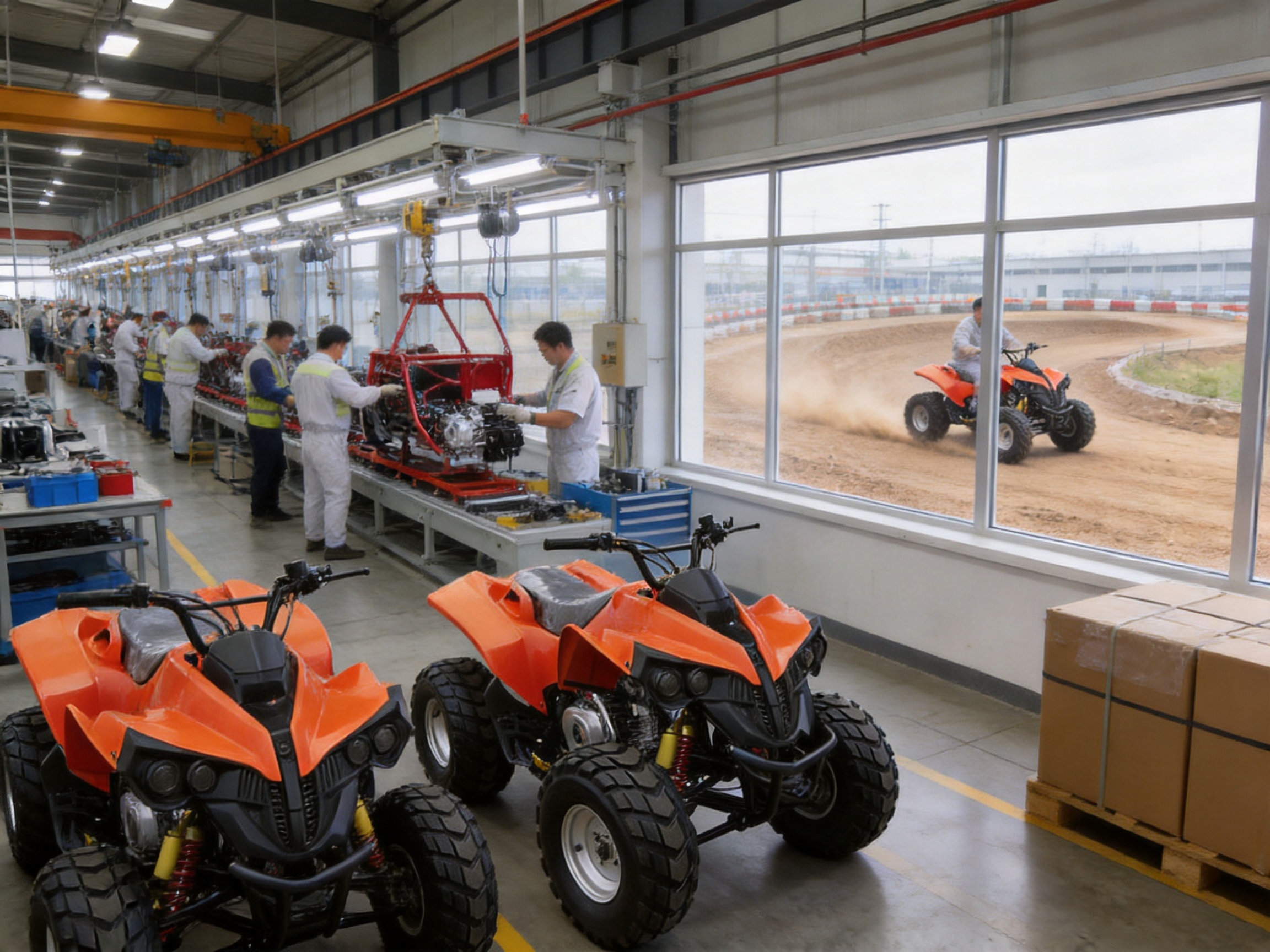
The company reports a workforce of approximately 220 experienced employees and a factory covering more than 60,000 square meters. It also operates a dedicated professional test track. These resources are relevant because off-road vehicles require more than simple assembly. They must be evaluated under dynamic conditions involving acceleration, braking, suspension movement, steering, vibration, and uneven terrain.
One of the company’s strengths is vertical integration. Core components such as frames and plastic body parts are manufactured in-house, while powder coating, assembly, testing, and quality inspection are also included within the production system. In-house production can improve communication between departments and allow engineering changes to be coordinated more efficiently.
Frame manufacturing is particularly significant for an ATV. Dimensional accuracy, weld quality, mounting-point alignment, and surface protection all affect the final vehicle. A controlled frame process helps support consistent suspension geometry and reliable component installation. It also provides a stronger foundation for OEM customization, because frame-related modifications can be evaluated within the manufacturer’s own production environment.
In-house plastic body production offers another advantage. Body panels influence fit, appearance, airflow, rider contact points, and brand presentation. When plastic parts are produced within the company’s manufacturing system, color, mold, fitment, and graphic requirements can be coordinated more directly with assembly.
Powder coating provides a durable finish for suitable metal components. The process can support consistent color appearance and surface protection when properly controlled. For commercial fleets, coating quality is important because vehicles may be exposed to dust, mud, moisture, and frequent cleaning. Buyers can discuss standard colors or customized finishes according to quantity and project requirements.
Every motorcycle produced by the company is described as undergoing end-to-end quality inspections and dynamic performance validation. For an ATV, relevant inspection areas may include frame dimensions, weld appearance, fastener torque, steering movement, brake operation, suspension function, electrical connections, engine starting, transmission engagement, tire installation, and visual finish.
Dynamic testing is valuable because some issues are not visible during static inspection. A vehicle may require road or track evaluation to confirm acceleration behavior, brake response, steering stability, suspension movement, and drivetrain operation. The professional test track gives the manufacturer a controlled environment for this type of validation.
Certification information for the ATV-XM150 includes ISO9001, CE, EPA, DOT, and COC, subject to market and configuration. Buyers should confirm which certifications and documents apply to their destination country, engine specification, emissions requirements, road-use classification, and final vehicle configuration. Certification names should not be interpreted as universal approval for every market without document verification.
For importers, documentation is an important part of the purchase process. Before placing a production order, buyers should confirm the commercial invoice, packing list, certificate of origin, applicable conformity documents, user manuals, spare-parts list, warranty terms, and shipping requirements. The manufacturer can then align production and documentation with the buyer’s destination market.
The ATV-XM150 is available for OEM and ODM discussions. Customization may include speed-limitation configurations, customer logos, vehicle numbers, body colors, graphics, reinforced components, emergency shutdown systems, remote speed-control options, suspension settings, cargo racks, protective guards, underbody protection, packaging, and product labels.
Speed limitation can be especially useful for rental parks, introductory training sessions, tourist facilities, and private venues with defined operating rules. The final method, speed range, and regulatory suitability should be confirmed during technical review. A customization should never be added without considering braking, cooling, transmission behavior, and the overall operating environment.
Customer logos and vehicle numbers help businesses create a recognizable fleet. Numbering also supports maintenance records, rental agreements, incident reporting, and inventory management. Color and graphic packages can distinguish different route levels or identify vehicles assigned to particular locations.
Protective equipment may include guards for vulnerable body areas, underbody protection, reinforced footrests, cargo racks, and other high-wear components. These options can be valuable in commercial use, but every structural modification should be reviewed for compatibility with ground clearance, suspension movement, cooling airflow, rider ergonomics, and service access.
Customized packaging and labels can help importers prepare vehicles for regional distribution. Buyers should provide artwork, language requirements, label dimensions, barcode information, warning statements, and packaging standards before production. Early confirmation reduces the risk of changes late in the manufacturing process.
Business buyers should begin with a clear definition of the intended application. A rental park may prioritize durability, speed control, fleet identification, and replacement parts. A distributor may focus on packaging, market certification, colors, warranty support, and container loading. A training center may require adjustable speed, protective components, and a supply of high-wear service parts.
The standard model has a stated minimum order quantity from one unit. This makes it possible for a dealer or operator to evaluate the ATV before committing to a larger fleet. For orders of 50 units or more, tiered pricing can be discussed. Actual pricing depends on configuration, customization, packaging, destination, shipping terms, and order quantity.
The standard lead time is stated as approximately 7 to 15 days, subject to stock and order quantity. Buyers should request a current production schedule because lead time may change according to customization, seasonal demand, component availability, inspection requirements, and shipping arrangements.
FOB, CIF, and EXW trade terms are available for discussion. Each term allocates transportation responsibilities and costs differently. Buyers should confirm the named port or location, insurance coverage, export documentation, inland transportation, import clearance, taxes, and final delivery arrangements before signing a purchase agreement.
Overseas warehouse fulfillment and container shipping can also be discussed. Warehouse fulfillment may be useful for smaller regional orders or faster local delivery, while container shipping can offer better efficiency for larger quantities. Buyers should compare the total landed cost rather than considering only the factory unit price.
The company states an annual production capacity of more than 20,000 units. Capacity is an important indicator for distributors planning repeat orders, but buyers should still confirm available production slots and component allocation for the required period. A realistic forecast can help both parties plan inventory and avoid interruptions.
Before quotation, buyers should confirm engine displacement, transmission configuration, quantity, intended application, customization requirements, destination market, delivery schedule, packaging requirements, and documentation needs. It is also useful to specify whether the vehicles will be used on private land, in rental operations, for training, in rural work, or for export distribution.
Buyers should ask for a complete specification sheet and clarify whether the quoted unit includes standard accessories, tools, manuals, spare parts, protective equipment, and shipping packaging. If local regulations require specific lights, reflectors, warning labels, emissions documentation, or safety equipment, these requirements should be discussed before production.
For fleet purchases, it is advisable to request recommended maintenance intervals and a suggested spare-parts package. Commonly needed items may include air filters, spark plugs, brake pads, drive belts, chains, sprockets, levers, cables, suspension components, electrical parts, tires, and body panels. The exact list depends on usage intensity and terrain.
Regular maintenance is essential for preserving the performance and reliability of any off-road vehicle. The ATV-XM150 should be inspected before and after use, particularly when operated in mud, sand, water, dust, or rocky terrain. A basic inspection should include tire pressure, tread condition, brake response, steering movement, throttle operation, oil level, visible leaks, chain condition, suspension components, battery connections, and fastener security.
Engine oil and other fluids should be serviced according to the manufacturer’s instructions. Oil cooling depends on proper oil condition and adequate circulation, so incorrect oil level or neglected oil changes can affect engine performance. Air filters require special attention in dusty environments because restricted or contaminated filters can reduce performance and increase engine wear.
The CVT system should be inspected for belt wear, contamination, unusual noise, and overheating symptoms. Mud and sand can enter areas that are relatively clean in ordinary use. Rental fleet operators should shorten inspection intervals when vehicles are used heavily or in abrasive conditions.
The chain final drive should be cleaned, lubricated, and adjusted as necessary. A chain that is too loose, too tight, dry, or contaminated can accelerate sprocket wear and reduce power transmission efficiency. Brake pads and discs should be inspected for wear, while brake fluid and hydraulic lines should be maintained according to service recommendations.
Suspension and steering components require attention because they experience repeated impact loads. Operators should look for bent parts, loose bolts, leaking shock absorbers, damaged bushings, and abnormal play. Prompt repair can prevent a minor issue from becoming a more expensive structural or handling problem.
Fleet managers should record each vehicle’s operating hours, rental sessions, repairs, inspections, and replaced parts. A digital or paper maintenance log makes it easier to identify recurring problems and schedule preventative service. It also provides evidence that the operator has implemented a responsible maintenance program.
The ATV-XM150 is a capable off-road vehicle and should be operated only by users who receive appropriate instruction. Riders should wear a certified helmet, eye protection, gloves, long sleeves, long trousers, and suitable boots. Additional protective equipment may be required by the venue or local regulations.
Before riding, users should learn the controls, including the ignition, throttle, brakes, transmission selector, reverse function, and emergency shutdown system if installed. They should practice starting, stopping, turning, and reversing in an open area. Operators should explain the effects of body position, slope angle, loose surfaces, and sudden throttle changes.
Speed should be adapted to terrain and visibility. Even a vehicle with an approximately 80 km/h stated maximum speed may need to be operated much more slowly on narrow trails, wet surfaces, crowded areas, steep descents, or unfamiliar ground. Riders should maintain safe spacing and should never carry passengers unless the vehicle is specifically designed and approved for that purpose.
Rollover risk must be taken seriously. Sharp turns at excessive speed, traversing slopes incorrectly, climbing beyond the vehicle’s capability, and carrying poorly secured loads can all reduce stability. Operators should establish clearly marked routes and prohibit access to unsuitable terrain.
Commercial venues should maintain emergency procedures covering accidents, mechanical failures, missing riders, fuel incidents, severe weather, and environmental hazards. Staff should know how to isolate a vehicle, provide first response within their training, contact emergency services, and document an incident.
A competitive ATV is not defined only by its engine size or appearance. International buyers also need confidence in the production system behind the product. A manufacturer with integrated frame production, body-part manufacturing, coating, assembly, testing, and inspection can provide stronger coordination than a company that relies entirely on disconnected external suppliers.
For the ATV-XM150, the reported factory scale, experienced workforce, test track, and vertical manufacturing structure support the needs of dealers and fleet operators. These capabilities can help the company respond to specification changes, maintain production continuity, and investigate quality issues more efficiently.
The company’s focus on off-road motorcycles is also relevant. Off-road vehicles require knowledge of suspension behavior, ground clearance, chassis strength, steering geometry, tire selection, rider ergonomics, and dynamic testing. A manufacturer dedicated to this product category can apply specialized experience to ATV development and production.
OEM and ODM service is another important strength. Buyers are not limited to purchasing an anonymous standard unit. They can discuss branding, colors, labels, speed management, protective equipment, and packaging to create a product suited to their sales channel or operating environment.
At the same time, buyers should maintain a professional verification process. They should review specifications, request applicable certification documents, inspect samples when possible, confirm warranty procedures, and define acceptance standards in the purchase agreement. A strong manufacturing partner welcomes clear technical communication because it reduces misunderstanding and improves the final result.
The ATV-XM150 uses a 150cc single-cylinder four-stroke oil-cooled gasoline engine. Its larger displacement is intended to provide more output than a typical 125cc entry-level configuration while retaining a relatively straightforward engine structure.
No. The ATV uses an automatic CVT transmission with forward, neutral, and reverse functions. Riders do not need to operate a manual clutch or shift through a conventional gear sequence.
The model is designed primarily for riders progressing beyond entry-level vehicles. Its automatic transmission can be approachable for new users, but the engine capacity, weight, speed potential, and off-road capability mean that riders should receive proper instruction and begin in a controlled environment.
Yes. The reinforced frame, automatic transmission, adjustable suspension, front and rear disc brakes, and available speed-control options make it suitable for many rental and recreational applications. Operators should establish inspection routines, route controls, rider training, and fleet maintenance procedures.
The vehicle is intended for recreational and light off-road use on surfaces such as grass, sand, mud, gravel, and hard-packed unpaved ground. Actual performance depends on terrain, tire pressure, rider ability, weather, load, and vehicle condition. Riders should avoid terrain that exceeds the vehicle’s capability or local operating rules.
The stated maximum speed is approximately 80 km/h. This figure is a reference specification, and actual speed may vary according to rider weight, terrain, maintenance, weather, and configuration. Operators should set lower limits whenever required by the route, venue, or applicable law.
The stated maximum payload is approximately 236 kilograms. This figure should be understood as the combined permitted load of the rider and carried equipment, subject to the manufacturer’s operating instructions and local requirements.
Yes. The CVT transmission includes forward, neutral, and reverse functions. Reverse improves maneuverability during parking, loading, storage, and low-speed positioning.
The ATV uses front and rear hydraulic suspension with adjustable damping. The adjustment allows operators to adapt the suspension response to different surfaces and rider requirements, provided that adjustments are made within the recommended range.
The ATV has front and rear disc brakes. Braking performance depends on the condition of the pads, discs, hydraulic system, tires, and ground surface. Regular inspection and correct rider technique remain essential.
OEM and ODM customization can include speed limitation, customer logos, vehicle numbers, body colors, graphics, reinforced components, emergency shutdown systems, remote speed control, suspension configuration, cargo racks, protective guards, underbody protection, packaging, and labels. Exact availability should be confirmed for each order.
The stated standard model minimum order quantity starts from one unit. This allows a dealer, operator, or evaluator to inspect the product before considering a larger purchase. Bulk pricing is available for qualifying higher-volume orders.
FOB, CIF, and EXW terms can be discussed. The buyer and seller should confirm the named location, transportation responsibilities, insurance, export documentation, import clearance, taxes, and final delivery arrangements.
The product information lists ISO9001, CE, EPA, DOT, and COC, subject to market and configuration. Buyers must confirm the exact documents applicable to their destination country and intended use before placing an order.
Buyers should confirm required quantity, engine displacement, transmission configuration, application, customization, destination market, delivery schedule, packaging, certification, spare parts, and trade terms. Providing complete information helps the manufacturer prepare a more accurate quotation and production plan.
The ATV-XM150 is positioned as a practical upgrade for riders and businesses that have moved beyond basic entry-level ATV requirements. Its 150cc oil-cooled four-stroke engine, automatic CVT transmission, F-N-R functions, reinforced steel frame, adjustable hydraulic suspension, off-road tires, and front and rear disc brakes create a well-rounded mid-level platform.
Compared with simpler 125cc recreational quads, it offers greater engine capacity, more developed suspension equipment, a stronger chassis specification, and a broader range of commercial customization possibilities. These features make it relevant to intermediate rider training, rental operations, tourist attractions, off-road clubs, recreational venues, farms, and light-duty rural use.
The manufacturing system is an important part of the product’s value. In-house frame and plastic production, powder coating, assembly, quality inspection, dynamic testing, an experienced workforce, a large production site, and a professional test track provide a foundation for consistent production and OEM support.
For international buyers, the best purchasing decision will come from matching the ATV to a clearly defined application. Dealers and importers should verify local regulations, certification requirements, shipping terms, customization details, service support, and replacement-parts availability. When used within its intended limits and supported by proper training and maintenance, the ATV-XM150 can serve as a capable and adaptable sport gas ATV for both recreational users and commercial operators.
1. ATV-XM150 Product Technical Specifications and Purchasing Information, manufacturer-provided product materials.
2. Manufacturer Profile and Company Information for Zhejiang Kukaqi Industry & Trade Co., Ltd., manufacturer-provided corporate materials.
3. General Principles of All-Terrain Vehicle Operation, Maintenance, and Rider Training, industry reference materials.
4. General Off-Road Vehicle Chassis, Suspension, Tire, and Brake Maintenance Practices, technical service reference materials.
5. General International Trade Terms and Export Purchasing Procedures for Recreational Vehicles, commercial logistics reference materials.

Start Your Off Road Journey
+86 158 6791 6333
xmotos308@gmail.com
No. 2, Jinniu Road, Niubeijin Village, Baiyang Street, Jinhua, Zhejiang, China


 English
 русский
 Español