

The Adult Electric Dirt Bike XB38ECT is designed for riders and businesses that require more than basic recreational transportation. It is a high-performance electric off-road motorcycle developed for competitive riding, professional training, advanced trail use, racing programs, and powersports distribution. Its specification combines a high-output brushless mid-mounted motor, a high-voltage removable lithium battery, a lightweight forged aluminum alloy frame, long-travel suspension, hydraulic disc brakes, and selectable electronic riding modes.
With a stated maximum speed of 80–100 km/h, a stated riding range of 80–100 km, and a peak motor output of 6–10 kW, the XB38ECT occupies a performance-focused position within the adult electric dirt bike market. It is intended for experienced riders, training centers, racing teams, off-road academies, professional dealers, and importers seeking a configurable electric motorcycle for demanding applications.
Unlike entry-level electric dirt bikes that are generally designed for low-speed recreational riding, the XB38ECT is configured around power delivery, controllability, chassis balance, braking response, and off-road durability. Its mid-mounted motor helps centralize the power unit within the frame, while the removable high-voltage battery supports practical servicing and fleet management. The platform can also be discussed for OEM and ODM customization, allowing distributors and professional users to specify battery capacity, motor cooling, power curves, suspension settings, graphics, and other equipment.
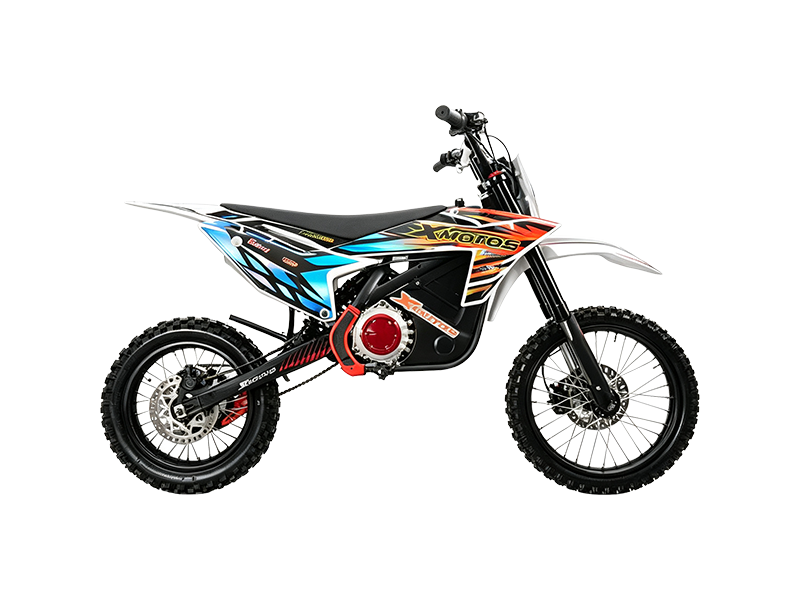
Adult Electric Dirt Bike XB38ECT
Adult riders increasingly expect electric dirt bikes to provide the same level of control and capability associated with performance-oriented petrol motorcycles. A successful electric off-road motorcycle must deliver more than a powerful motor. It must combine acceleration, battery endurance, suspension travel, braking control, structural strength, ergonomics, and electronic adjustability in a balanced package.
The XB38ECT addresses these requirements through a complete performance system rather than a single headline specification. Its brushless mid-mounted motor is positioned to support balanced weight distribution. Its 72–100V lithium battery system is specified for strong electrical performance and can be removed for charging or servicing. The forged aluminum alloy frame is intended to reduce unnecessary weight while maintaining a rigid foundation for the suspension and drivetrain.
The motorcycle is available with air-cooled or water-cooled motor configurations. This gives professional users more flexibility when selecting a setup for their local climate, riding intensity, track conditions, and maintenance preferences. Air-cooled configurations can offer simpler construction and easier servicing, while water-cooled options may be appropriate for sustained high-load operation and demanding racing or training environments.
Three riding modes—Beginner, Standard, and Sport—allow the same motorcycle to be adapted to different rider experience levels and operating conditions. A new rider can begin with a less aggressive power response, while an experienced rider can select a sport-oriented setting for stronger acceleration and more immediate throttle response. For training centers and rental fleets, selectable modes can also help instructors match performance to rider ability.
The motor is one of the most important differences between an ordinary electric trail bike and a competition-oriented electric dirt bike. The XB38ECT uses a brushless mid-mounted motor with a stated peak output range of 6–10 kW. The brushless design is intended to provide efficient operation, reduced brush-related maintenance, and precise electronic control of torque delivery.
The mid-mounted layout is especially valuable for off-road riding. By positioning the motor near the center of the chassis, the design can help maintain a balanced front-to-rear weight relationship. A centrally located power unit can also support more predictable handling when the bike is cornering, climbing, landing from jumps, or crossing uneven terrain.
For professional riders, controllable torque is often more useful than maximum power alone. Excessive or poorly managed torque can make a motorcycle difficult to control on loose surfaces. The intelligent electronic control system allows the XB38ECT to manage power output through different riding modes and configurable power curves. This supports smoother power delivery for technical trails and more aggressive response for open tracks.
The motor specification can be selected within a 6–10 kW peak range, depending on the intended application and configuration. A distributor serving recreational riders may prefer a more manageable power setup, while a racing team or advanced training organization may request a higher-output version. This flexibility allows one basic platform to serve several market segments without requiring an entirely different vehicle architecture.
Compared with low-power hub-motor electric bikes, a mid-mounted motor can provide advantages in weight distribution, drivetrain layout, and off-road handling. It also allows the chassis to be designed around a more motorcycle-like powertrain arrangement. These characteristics are valuable when the motorcycle is expected to perform on motocross tracks, rocky trails, steep sections, and uneven terrain rather than only on flat private roads.
The XB38ECT is specified with a 72–100V lithium battery system and a stated capacity of 35–50Ah. The battery is removable, an important feature for users who need flexible charging, replacement, inspection, or fleet operation. A removable battery can be charged outside the motorcycle when garage access, workshop layout, or storage conditions make in-bike charging inconvenient.
The high-voltage electrical architecture supports the power requirements of the brushless motor while helping the system manage current demand efficiently. The exact battery configuration should be confirmed for each order because voltage, capacity, cooling, charger specification, controller settings, and destination-market requirements may vary.
The stated range is 80–100 km. Actual range will depend on rider weight, terrain, speed, temperature, tire pressure, riding mode, elevation changes, battery condition, and the frequency of acceleration. On a closed racing track or steep technical trail, energy consumption may be considerably higher than during moderate-speed riding on smoother terrain. For this reason, professional buyers should evaluate range according to their real operating cycle rather than relying only on a laboratory or promotional figure.
The removable battery is also beneficial for commercial users. A training center can maintain spare battery packs and exchange them between sessions. A dealer can display the motorcycle and battery separately for easier handling. A racing team can organize charging and battery inspection in a dedicated workshop area. Fleet operators can also track battery use and maintenance more systematically.
The product information states that fast charging can take approximately 1.5 hours. Charging time depends on the selected charger, battery condition, ambient temperature, and charging infrastructure. Before purchase, buyers should confirm the charger type, input requirements, charging protections, connector standard, and documentation applicable to the destination country.
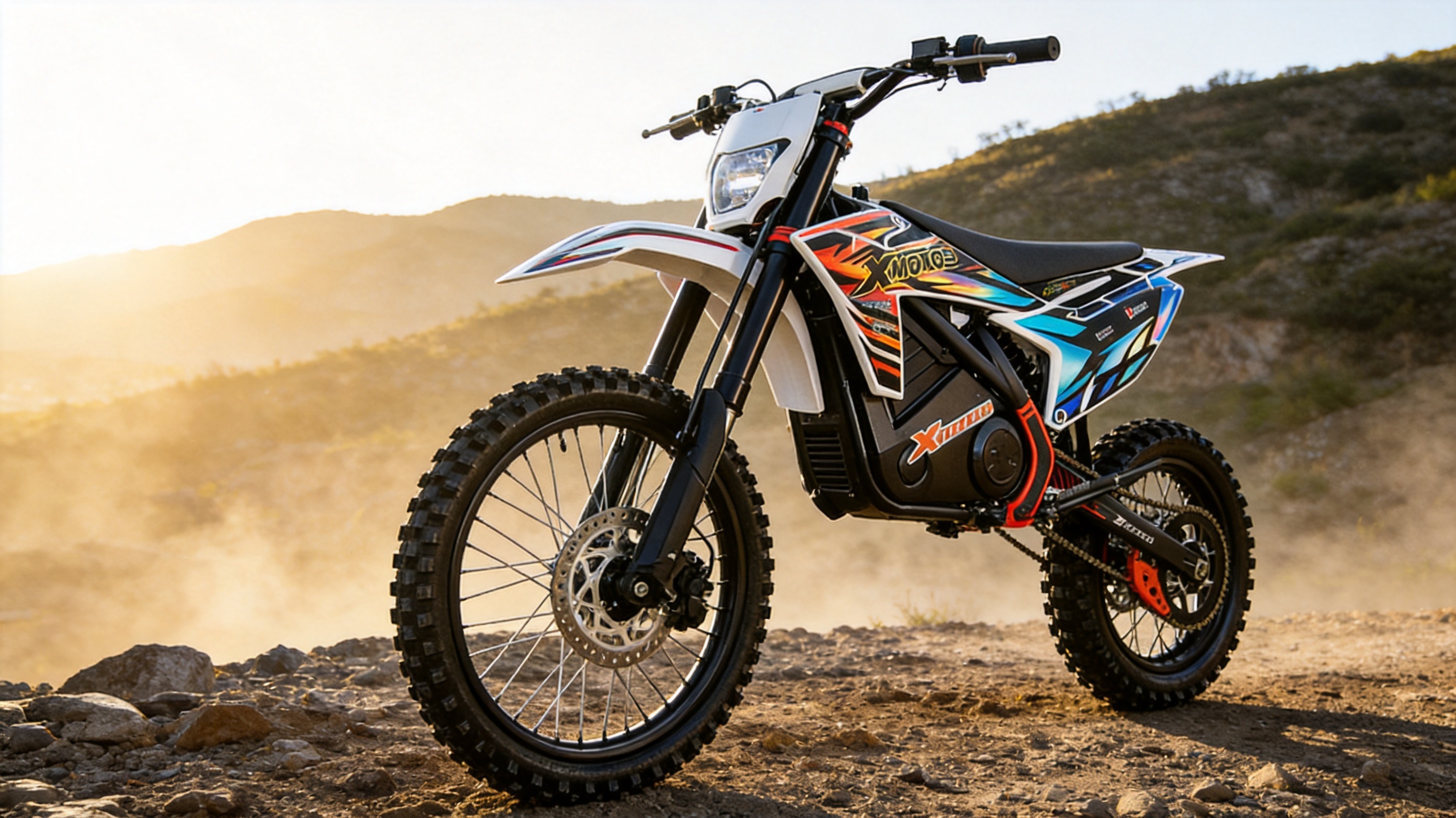
The electric dirt bike market includes many low-power models intended for children, casual users, or low-speed private-property riding. Those motorcycles may be suitable for simple recreational use, but they often have limited range, lower suspension travel, less sophisticated braking systems, and fewer options for professional configuration.
The XB38ECT is positioned differently. Its adult-oriented dimensions, 80–100 km/h stated maximum speed, high-voltage battery architecture, and 6–10 kW peak motor output place it in a more demanding performance category. The motorcycle is designed for riders who need responsive acceleration, adjustable control, and a chassis capable of handling challenging terrain.
Its 19-inch front and 16-inch rear deep-tread off-road tires are selected for dirt riding and uneven surfaces. The larger front wheel can help the motorcycle roll over obstacles, ruts, and irregular terrain, while the rear wheel supports traction and maneuverability. Tire selection should still be matched to the operating environment, since motocross tracks, rocky trails, sand, mud, and hard-packed soil require different tread characteristics.
The suspension system includes a stated 780 mm front fork and a 310 mm rear shock absorber, with adjustable options available. Long-travel suspension is essential when riding over jumps, holes, roots, stones, and repeated surface impacts. Adjustable suspension allows professional users to adapt compression, rebound, preload, or related settings according to rider weight, terrain, speed, and riding style, subject to the final configuration.
Front and rear disc brakes with hydraulic calipers provide a more controlled braking platform than simple mechanical drum or cable-operated systems. Hydraulic calipers can offer consistent lever feel and strong stopping response when correctly maintained. For racing and training applications, the ability to brake repeatedly and predictably is as important as acceleration.
The lightweight forged aluminum alloy frame is another important distinction. A lighter chassis can make the motorcycle easier to maneuver, especially during cornering, jumps, technical climbs, and rapid changes in direction. The stated vehicle weight range is 70–95 kg, depending on configuration. Buyers should confirm the final weight because battery capacity, motor cooling, equipment, and optional components can affect the finished motorcycle.
Off-road performance depends heavily on how the motorcycle behaves when traction changes unexpectedly. A well-balanced motorcycle gives the rider more time to react when the front tire crosses a rut, the rear tire loses grip, or the surface changes from hard soil to loose gravel. The XB38ECT is engineered around a central motor layout, a lightweight frame, adjustable suspension, and adult-sized wheel geometry.
The forged aluminum alloy frame provides a rigid structural base for the steering head, suspension mounts, battery enclosure, and motor system. Forging can produce a strong and consistent component shape while allowing designers to control material distribution. The final frame design, welding quality, heat treatment, finishing process, and inspection standards all contribute to durability, so buyers should confirm technical documentation for the chosen model and market.
The 85–95 cm seat-height range is suited to taller adult riders and professional users. A higher seat can provide greater ground clearance and more room for standing riding positions. Standing on the footrests is common in technical off-road riding because it allows the rider to absorb impacts with the legs and shift body weight more effectively.
At the same time, seat height should be matched to the rider and application. Training organizations may request a configuration that is easier for less experienced riders to mount and control. Racing teams may prefer a taller or more specialized setup. OEM customization discussions can address ergonomics, suspension settings, footpeg position, handlebar equipment, and other application-specific requirements.
The suspension system is designed for uneven tracks, jumps, and demanding terrain. A 780 mm front fork and 310 mm rear shock absorber provide the basis for long-travel off-road operation. The final suspension performance depends on spring rates, damping settings, wheel alignment, tire pressure, rider weight, and regular maintenance.
Electric motorcycles can use software and electronic control to adjust performance more precisely than many traditional mechanical systems. The XB38ECT includes Beginner, Standard, and Sport riding modes. These settings can help control acceleration characteristics, power delivery, and the overall riding experience.
Beginner mode can be useful for new riders, supervised training, or low-traction conditions where smooth response is more important than maximum acceleration. Standard mode can provide a balanced setting for general trail use and routine riding. Sport mode is intended for experienced riders who require faster response and stronger performance, subject to safety rules and terrain conditions.
The intelligent control system is also described as supporting APP-based adjustment, power adjustment, data collection, and vehicle status monitoring. Available functions should be confirmed for the selected configuration because software capability can depend on the controller, display, communication module, battery system, and destination market.
For racing teams, digital adjustment can support repeatable setup work. A team may record a preferred power curve for one track and use a different configuration for another. Training organizations can use controlled settings when teaching throttle control, corner exit technique, or hill riding. Dealers can also present the motorcycle as a configurable platform rather than a fixed specification product.
Electronic control does not remove the need for mechanical inspection. Throttle operation, brake function, wiring, fasteners, suspension components, tire condition, and battery mounting should be checked before every serious riding session. Software settings should be used to complement, not replace, proper rider training and maintenance.
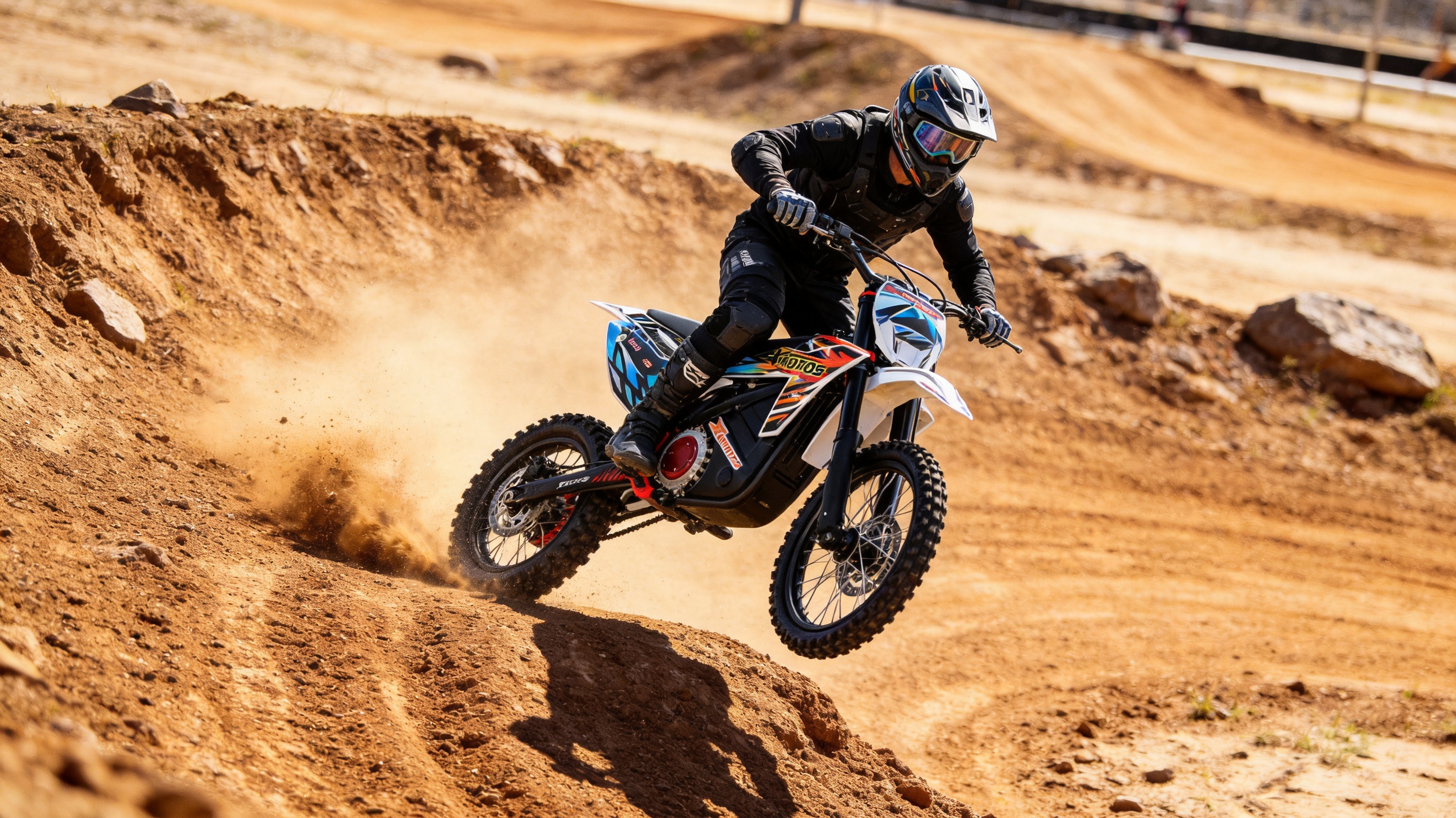
The XB38ECT is suitable for discussion as a platform for motocross and off-road racing programs. Its high-output motor, adult dimensions, hydraulic braking system, long-travel suspension, and deep-tread tires support the basic requirements of high-intensity dirt riding. Racing teams may also request different power curves, cooling systems, battery capacities, tires, suspension packages, graphics, and data equipment.
Electric power can offer a different competition experience because torque is available without a conventional multi-speed gearbox. Riders can concentrate on line selection, body position, braking points, and traction management. The absence of fuel combustion also reduces direct exhaust emissions at the riding location, although battery production, charging energy, transport, and end-of-life recycling remain important environmental considerations.
Training schools and riding academies require motorcycles that can be adjusted to match different skill levels. The three riding modes allow instructors to begin with a controlled power response and gradually introduce more performance as the rider improves. Adjustable suspension and configurable power curves can help create a more consistent training environment.
Electric motorcycles can also simplify communication during training because they produce less mechanical noise than petrol-powered motorcycles. Instructors may find it easier to communicate basic technique in selected environments, although applicable track and safety regulations must always be observed.
Technical trails place different demands on a motorcycle than a smooth motocross track. Riders may need precise low-speed torque, strong traction, robust suspension, high ground clearance, and predictable braking. The XB38ECT’s selectable modes and mid-mounted motor are relevant to these conditions, while its removable battery can help riders or operators plan charging for longer outings.
Range should be evaluated carefully for extreme trail use. Frequent climbing, wheelspin, repeated acceleration, soft ground, and heavy braking can increase energy consumption. Professional trail operators should consider spare batteries, charging facilities, recovery procedures, and route planning before using the motorcycle commercially.
For importers and distributors, the XB38ECT offers a performance-oriented product with multiple configuration points. A dealer can specify a standard model for general sale or discuss a market-specific package with different battery capacity, cooling arrangement, graphics, lighting, instruments, or accessories.
The stated standard-model MOQ begins from one unit, which can reduce the entry barrier for product evaluation, showroom display, demonstration riding, or market testing. Tiered pricing is available for qualified bulk orders. Buyers should request a formal quotation that identifies the exact specification, packaging, spare-parts provision, warranty terms, shipping method, and applicable documentation.
Customization is important for professional users because different markets operate under different regulations, customer expectations, riding environments, and service infrastructures. The XB38ECT can be discussed for OEM and ODM projects involving both technical and visual changes.
Possible technical customization includes motor power, battery voltage, battery capacity, motor cooling, controller calibration, power curves, riding modes, suspension settings, damping components, tires, braking-related equipment, lighting, instruments, and data collection modules.
Visual customization can include exterior colors, graphics, rider numbers, team logos, dealer branding, and fleet identification. A racing team may require matching graphics across several motorcycles. A training center may need color coding for different rider levels. A distributor may request a private-label appearance for a regional product line.
Fleet customers can also discuss maintenance tool packages, spare batteries, replacement plastics, suspension components, chargers, diagnostic equipment, and service documentation. These additions can improve operational continuity and help dealers support customers after delivery.
Customization should be confirmed through a written specification before production. The document should identify motor output, battery voltage and capacity, charger type, controller settings, cooling system, suspension package, tire dimensions, lighting, display, packaging, certifications, and destination-market requirements. Clear confirmation helps avoid discrepancies between the quotation, production order, shipping documents, and delivered motorcycles.
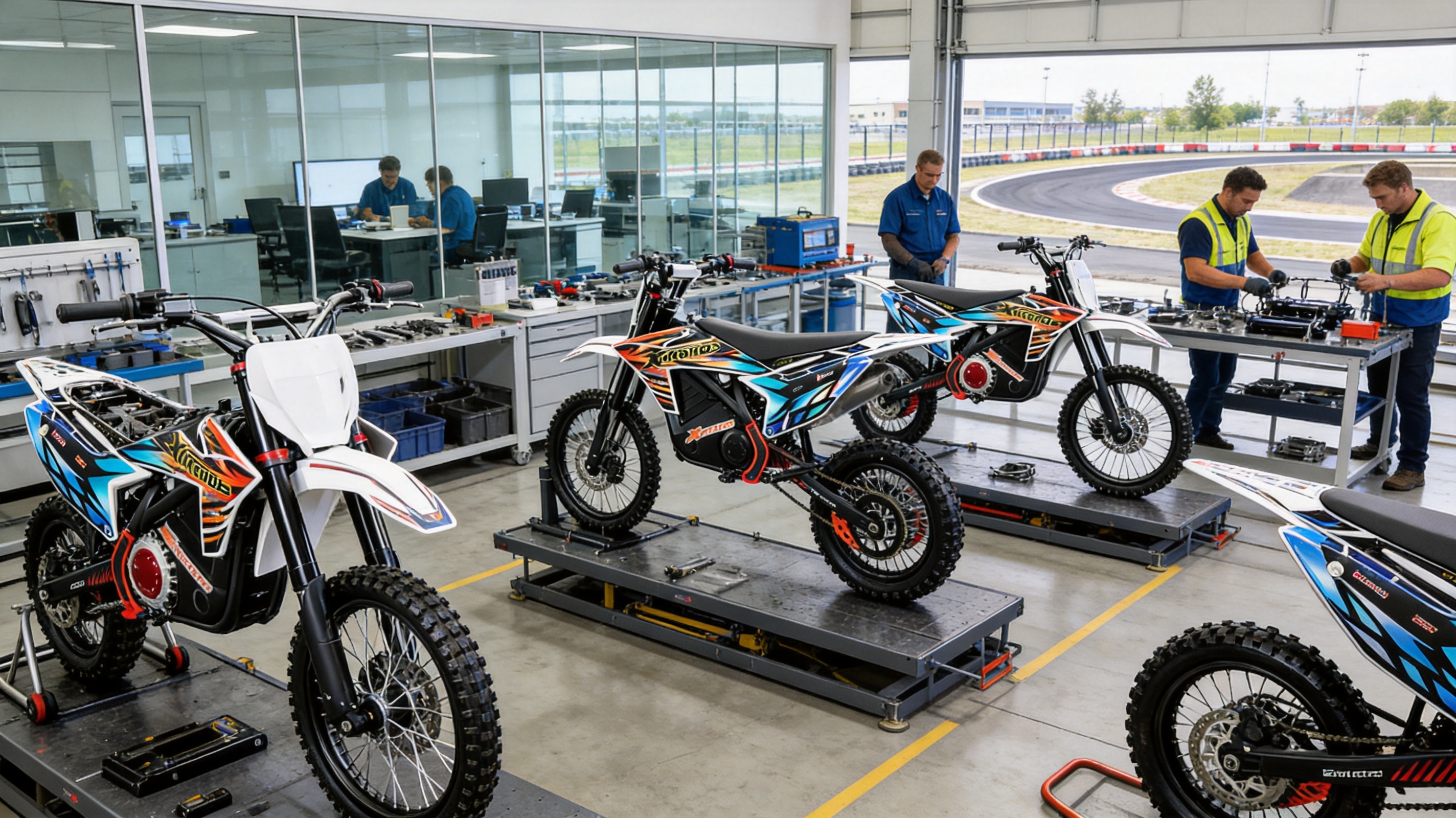
The manufacturer behind the product operates as a professional off-road motorcycle producer with an integrated manufacturing structure. The company is based in Jinhua, Zhejiang, China, and has more than 220 experienced staff, a factory area exceeding 60,000 square meters, and its own professional test track.
A dedicated test track is particularly valuable for off-road motorcycles. Product development and quality verification require more than static assembly inspection. Motorcycles must be evaluated under acceleration, braking, cornering, suspension movement, vibration, impact, and repeated dynamic loading. A professional test facility enables engineers and inspectors to examine vehicle behavior in conditions closer to actual customer use.
The company manufactures important components in-house, including frames and plastic body parts. It also operates powder coating, assembly, testing, and quality inspection facilities. Vertical integration can improve coordination between design, production, finishing, assembly, and quality control. It may also help reduce dependence on unrelated suppliers for critical structural or appearance components.
In-house frame manufacturing supports closer control of dimensional accuracy, welding, finishing, and inspection. Plastic body production allows the manufacturer to manage fit, surface quality, color consistency, and replacement-part availability more directly. Powder coating provides a durable finish for selected components and can support consistent color production across standard and customized orders.
Assembly operations bring together the frame, motor, battery, controller, wiring, suspension, brakes, wheels, plastics, and controls. Because electric motorcycles contain high-voltage electrical systems, assembly quality must include careful cable routing, connector installation, battery mounting, insulation protection, controller connections, and functional testing.
The stated production capacity is approximately 2,000 units per month and above 20,000 units per year. Capacity figures should be understood as planning information rather than a guarantee for every configuration. Actual output depends on model mix, customization, component availability, order volume, production scheduling, inspection requirements, and shipping arrangements. Nevertheless, the stated capacity indicates that the manufacturer is structured to support both sample orders and larger dealer or distributor programs.
Every motorcycle is described as undergoing end-to-end quality inspections and dynamic performance validation. This approach is important because a motorcycle can pass a visual inspection while still having problems in braking, suspension movement, throttle response, electrical communication, or battery installation.
End-to-end inspection should cover incoming components, frame and body parts, electrical connections, drivetrain assembly, brake installation, wheel alignment, suspension operation, fastener torque, controls, charging behavior, and final appearance. Dynamic validation can help identify issues that are not visible when the motorcycle is stationary.
For an electric dirt bike, testing should also consider the interaction between the battery, controller, motor, throttle, riding modes, display, and charging system. The motorcycle must respond smoothly when power is applied and should maintain stable operation during changes in load. The exact tests and acceptance criteria should be confirmed with the supplier for each configuration.
The listed documentation includes ISO9001, CE, EPA, DOT, and COC-related certifications or documents. Certification applicability can vary according to vehicle configuration and destination market. Buyers should confirm which documents are supplied for the exact model, whether they apply to road registration or off-road use, and whether additional local testing is required.
Importers should also confirm battery transport documentation, charger compliance, labeling, manuals, spare-parts information, and warranty procedures. These details are especially important when shipping lithium battery products internationally.
The standard model is available from a stated minimum order quantity of one unit. This allows a potential dealer, racing team, training center, or importer to evaluate the product before committing to a large order. A sample unit can be used for showroom display, test riding, technical inspection, market research, or dealer demonstrations.
For larger orders, tiered pricing is available for qualified buyers. Bulk customers should provide the expected quantity, target market, desired motor power, battery specification, preferred cooling system, customization requirements, packaging needs, and delivery schedule. This information allows the supplier to prepare a more accurate quotation and production plan.
Standard lead time is stated as approximately 7–15 days for regular orders, subject to configuration and production schedule. Customized projects and large orders may require additional planning. Lead time can be affected by battery availability, custom plastics, special graphics, certification documentation, packaging, inspection requirements, and shipping arrangements.
FOB, CIF, and EXW trade terms are available. Buyers should select the term that matches their logistics experience and import responsibilities. EXW may suit buyers with established local collection and export arrangements. FOB can provide a clear port-based handover, while CIF may simplify the initial freight arrangement. The final commercial contract should specify the named place, freight responsibilities, insurance, export documents, customs requirements, and delivery schedule.
Before placing an order, a professional buyer should request a complete technical and commercial package. This should include the product specification, configuration list, quotation, packing dimensions, gross and net weights, spare-parts recommendations, warranty policy, manuals, certification documents, battery information, charger details, and shipping paperwork.
Electric powertrains generally have fewer routine moving components than petrol engines, but an electric dirt bike still requires regular maintenance. Off-road riding exposes the motorcycle to dust, mud, water, vibration, impacts, and rapid temperature changes. Proper inspection is necessary to preserve performance and safety.
Before each ride, the operator should check battery mounting, charge level, visible cable condition, throttle response, brake lever feel, brake pad condition, tire pressure, tire damage, wheel spokes or fasteners, chain or final-drive components if fitted, suspension leakage, handlebar fasteners, and frame or body damage.
After riding in mud or dust, the motorcycle should be cleaned according to the manufacturer’s instructions. High-pressure water should not be directed at battery seals, electrical connectors, bearings, displays, or other sensitive components. The battery should be stored and charged in a suitable environment, using the correct charger and observing local lithium battery safety practices.
Suspension settings should be reviewed when rider weight, terrain, or riding style changes. Tire pressure also has a major influence on traction and handling. Lower pressure may improve grip on some surfaces but can increase the risk of rim damage or tire displacement. The correct setup should be determined by trained personnel and the tire manufacturer’s recommendations.
Professional fleets should maintain service records for each motorcycle. Records can include battery cycles, charging behavior, suspension service, brake replacement, tire replacement, software settings, inspections, and damage repairs. A structured maintenance program can help identify wear trends and reduce unexpected downtime.
The stated maximum speed of 80–100 km/h places the XB38ECT in a performance category that requires appropriate training and protective equipment. Riders should use a certified helmet, goggles, gloves, boots, riding pants, a protective jersey or jacket, knee protection, elbow protection, and body protection suitable for the environment.
The motorcycle should be operated only in locations where electric dirt bike use is permitted. Public-road legality, registration, lighting, noise rules, insurance, and certification requirements differ between countries and regions. The listed CE, EPA, DOT, and COC-related documentation should not be interpreted as universal approval for every road or market. Buyers must verify local requirements before use or importation.
New riders should begin in Beginner mode under supervision and on an appropriate surface. Sport mode should be used only by riders who understand the motorcycle’s acceleration, braking, traction, and handling characteristics. Children or untrained users should not operate an adult high-performance motorcycle without professional supervision and a suitable safety program.
Battery charging should take place in a dry, ventilated, protected area using approved equipment. The battery should not be opened, modified, crushed, exposed to excessive heat, or charged with an incompatible charger. If the battery shows swelling, unusual heat, damage, smoke, odor, or abnormal charging behavior, it should be isolated and inspected by qualified personnel.
The XB38ECT is designed for adult riders, experienced off-road enthusiasts, professional training programs, racing teams, advanced trail users, and commercial dealers. Its power, speed, seat height, and suspension configuration are intended for demanding applications rather than beginner-level low-speed riding.
The motorcycle uses a brushless mid-mounted motor with a stated peak output range of 6–10 kW. The exact output should be confirmed according to the selected configuration, controller settings, cooling system, and intended market.
The stated battery range is 72–100V with a capacity of 35–50Ah. The lithium battery is removable. Buyers should confirm the exact voltage, amp-hour rating, battery management system, charger, connector, and documentation before ordering.
The supplied information states an approximate fast-charging time of 1.5 hours. Actual charging time depends on the battery, charger, temperature, state of charge, and electrical supply. The final charging specification should be confirmed on the quotation and technical sheet.
The stated range is 80–100 km. Real-world range varies with speed, rider weight, terrain, riding mode, temperature, tire pressure, elevation, and acceleration frequency. Racing, steep climbing, soft ground, and aggressive riding can reduce range.
The stated maximum speed is 80–100 km/h. Actual speed depends on motor output, battery voltage, controller settings, rider weight, tire size, terrain, and configuration. The motorcycle should be operated only in suitable and legally permitted environments.
Yes. The available modes are Beginner, Standard, and Sport. These modes are intended to provide different power and response characteristics for different rider abilities and riding conditions.
Yes. Possible customization includes motor output, battery specification, power curves, riding modes, cooling system, suspension and damping, tires, reinforced off-road components, graphics, rider numbers, lighting, instruments, data modules, and fleet equipment. The final options depend on engineering review and order quantity.
Yes. The battery is specified as removable. This can support external charging, battery replacement, fleet operation, service inspection, and spare-battery management.
The motorcycle is specified with a 780 mm front fork and a 310 mm rear shock absorber. Adjustable suspension options are available for different rider weights, tracks, jumps, and off-road conditions.
The XB38ECT uses front and rear disc brakes with hydraulic calipers. The exact component specification should be confirmed for the selected version and destination market.
The stated tire configuration is a 19-inch front wheel and a 16-inch rear wheel with deep-tread off-road tires. Tire selection can be discussed for different racing, trail, training, and terrain requirements.
The stated standard-model MOQ begins from one unit. A single unit may be used for showroom display, test riding, market evaluation, or technical inspection. Customized projects and bulk orders may have different quantity requirements.
The stated regular-order lead time is approximately 7–15 days, subject to configuration and production scheduling. Customized and large-volume orders require confirmation based on the production plan and component availability.
FOB, CIF, and EXW trade terms are available. The buyer and supplier should confirm the named location, freight responsibility, insurance, export documentation, customs procedures, and delivery schedule in the commercial contract.
The supplied information lists ISO9001, CE, EPA, DOT, and COC-related documentation. Applicability depends on the exact motorcycle configuration and destination market. Buyers should request and verify the relevant documents before shipment or registration.
A useful inquiry should include the required quantity, destination country, target market, motor power, battery voltage and capacity, cooling preference, customization requirements, desired graphics, certification needs, shipping term, delivery schedule, and whether spare parts or service tools are required.
The Adult Electric Dirt Bike XB38ECT is a performance-focused platform for professional off-road use. Its stated 6–10 kW peak brushless mid-mounted motor, 72–100V removable lithium battery, 80–100 km stated range, and 80–100 km/h stated maximum speed provide a strong foundation for racing, advanced training, technical trail riding, and powersports distribution.
Its advantages over basic electric dirt bikes come from the complete package: adult-oriented ergonomics, forged aluminum alloy construction, selectable riding modes, adjustable long-travel suspension, hydraulic disc brakes, deep-tread off-road tires, and configurable electronic control. The availability of air-cooled or water-cooled motor options, OEM and ODM customization, and fleet-specific equipment gives professional buyers additional flexibility.
The manufacturer’s integrated production capabilities, in-house frame and plastic component manufacturing, powder coating, assembly, testing, quality inspection, experienced workforce, factory infrastructure, and dedicated test track provide important support for consistent production and product development. The stated monthly and annual capacity also makes the platform suitable for dealers and importers planning larger programs.
For the best purchasing result, buyers should confirm the exact configuration, battery system, charger, cooling arrangement, suspension package, certification documents, trade terms, lead time, warranty conditions, and destination-market requirements before placing an order. With appropriate configuration and responsible operation, the XB38ECT can serve as a capable electric motorcycle platform for demanding off-road applications and international B2B markets.
1. Product technical specification sheet for Adult Electric Dirt Bike XB38ECT, including motor, battery, suspension, braking, tire, speed, range, and dimensional information.
2. Manufacturer-provided purchasing information for standard MOQ, bulk pricing, production lead time, trade terms, and production capacity.
3. Manufacturer-provided information concerning OEM and ODM customization, including power systems, suspension, graphics, lighting, instruments, and fleet configurations.
4. Manufacturer-provided company profile describing factory facilities, workforce, integrated production, test-track resources, assembly, powder coating, testing, and quality inspection.
5. General off-road motorcycle engineering principles concerning chassis balance, suspension setup, hydraulic braking, tire selection, battery management, and rider safety.

Start Your Off Road Journey
+86 158 6791 6333
xmotos308@gmail.com
No. 2, Jinniu Road, Niubeijin Village, Baiyang Street, Jinhua, Zhejiang, China


 English
 русский
 Español